Your basket is empty.
Continue Shopping
Gemwork Blanket
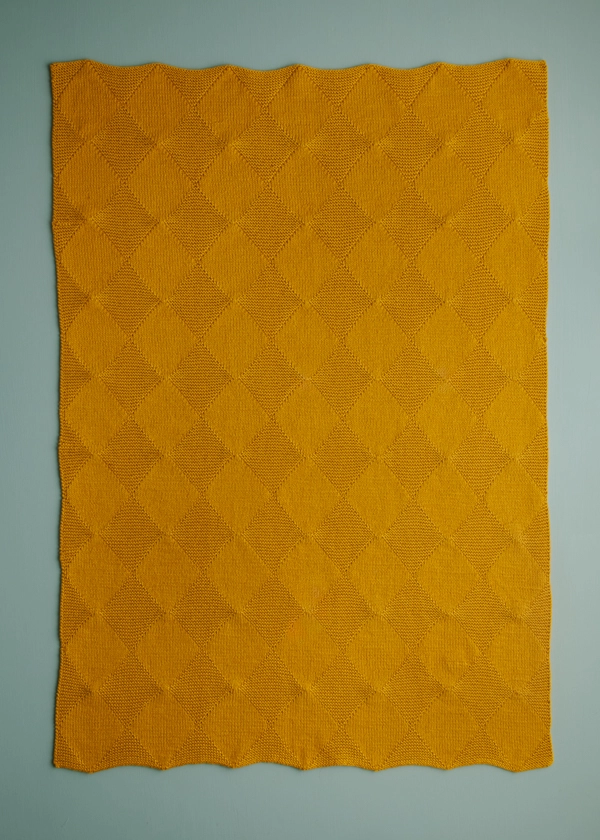
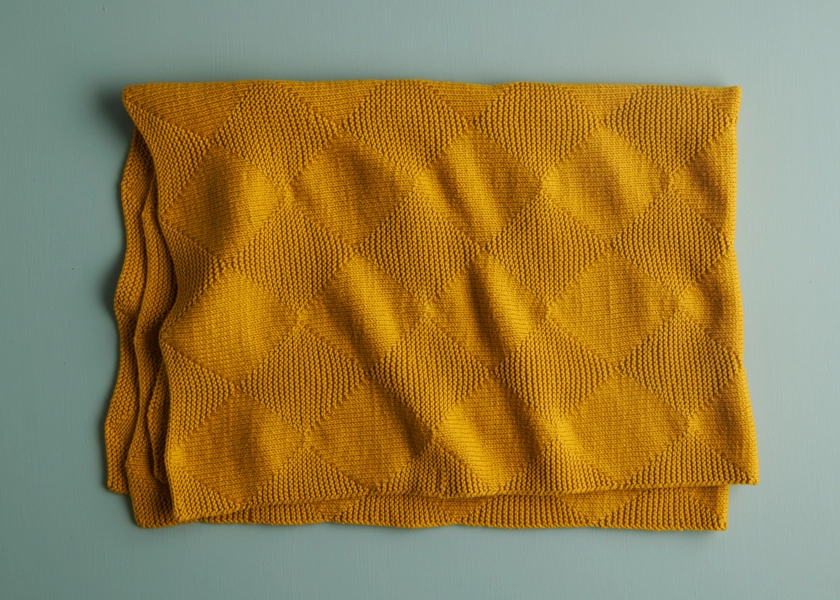
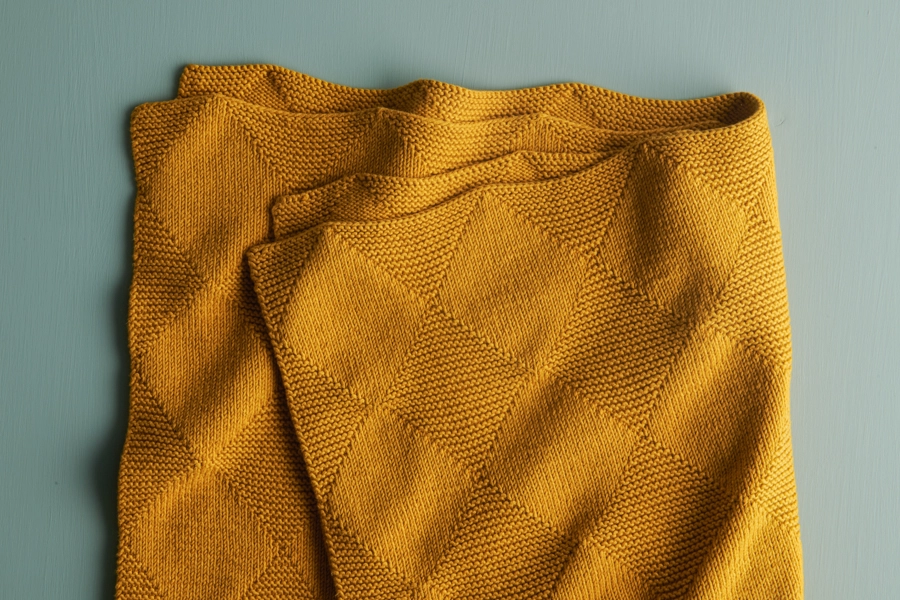
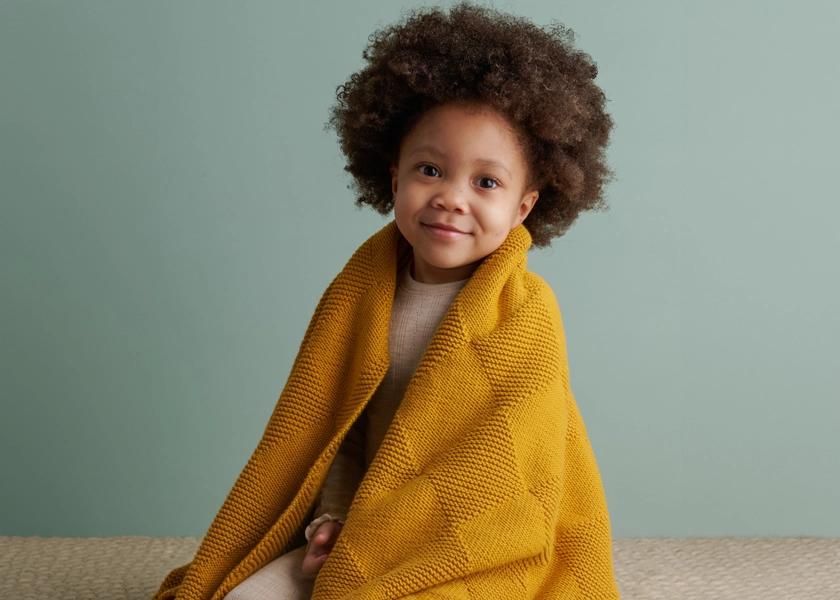
A simple yet striking setting for the jewel-like clarity of our Cotton Chirp DK yarn, our Gemwork Blanket is adorned with diamonds of stockinette and garter stitch—two facets of the most basic elements of knitting!
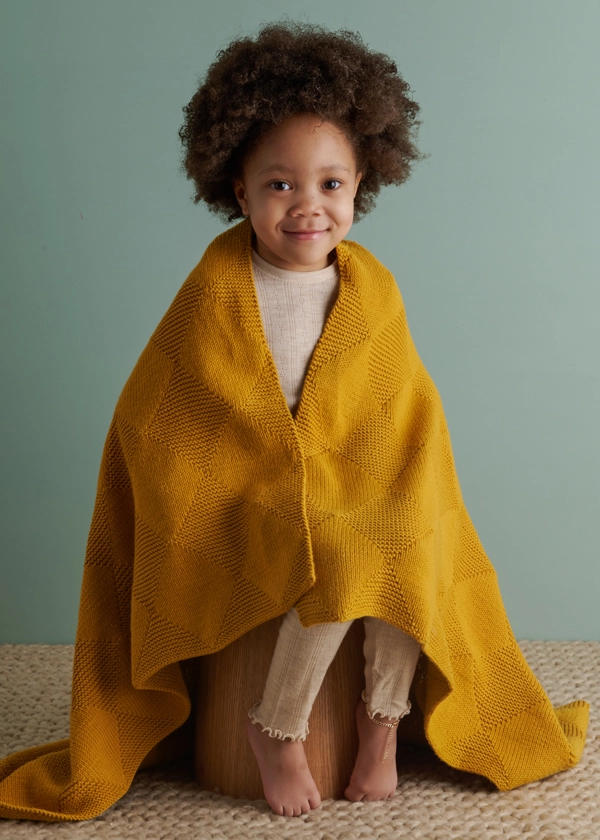
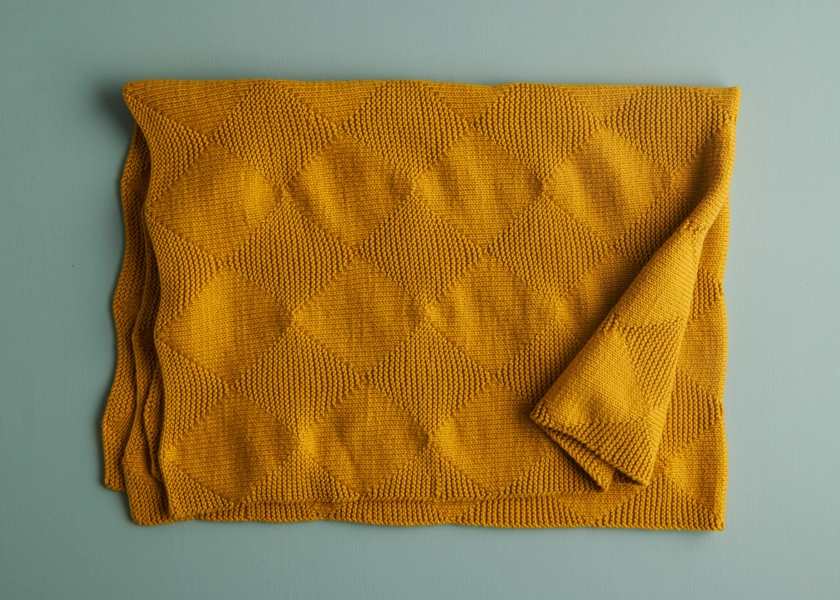
This easy blanket pattern is entirely knits and purls, and every right-side row is all knitting. On the wrong side rows, you simply alternate sections of knitting (for garter stitch sections) and purling (for stockinette sections), choosing whether to follow along with a chart or written-out instructions as you carve the diamond shapes. Depending on the size you choose, Crib or Throw, you’ll either work large or small diamonds—as shown below!
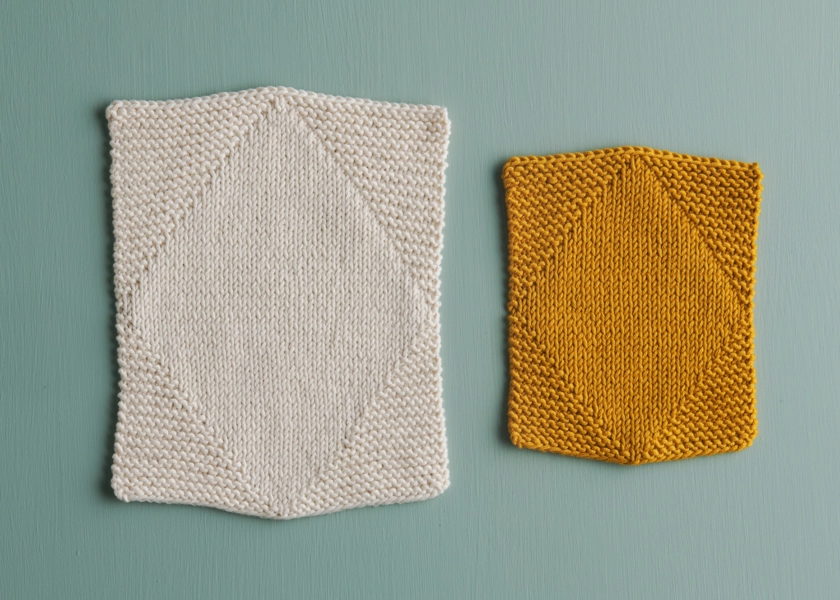
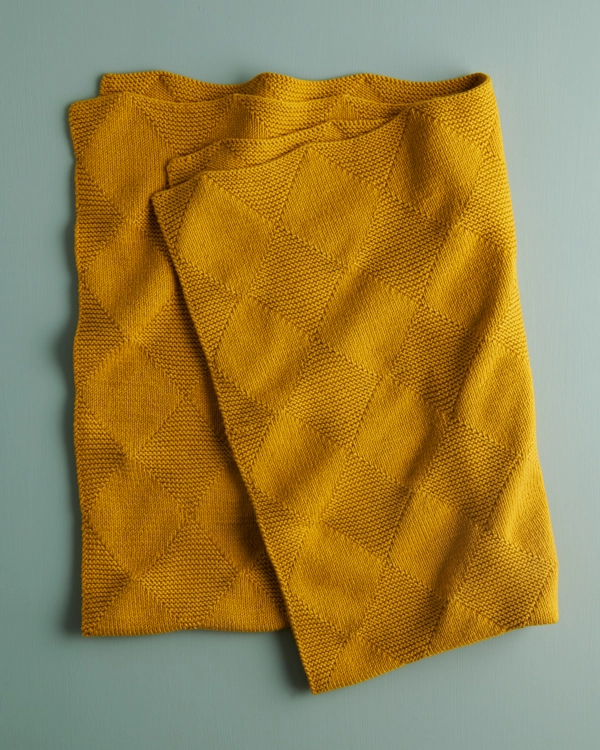
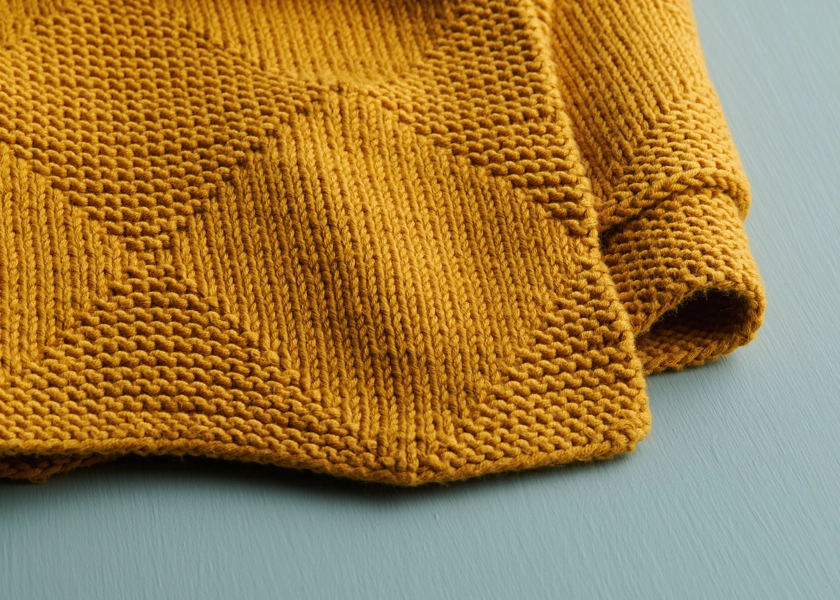
The Gemwork Blanket highlights an interesting bit of knitting knowledge: garter stitch has a denser row gauge than stockinette stitch. Over the whole blanket, the alternating sections of garter and stockinette even out. However, as you can see above, the top and bottom edges of the blanket have a pleasing ripple to them (while still lying perfectly flat)—we love using this natural tension difference to create a beautiful effect!
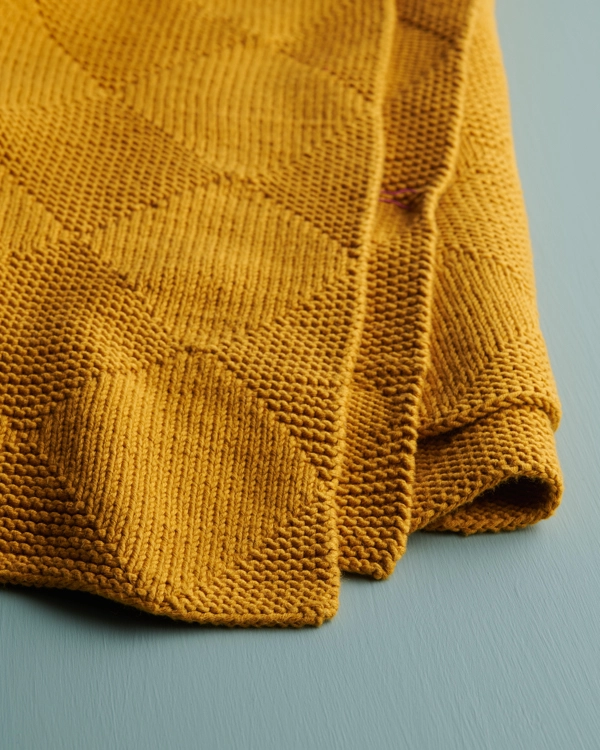
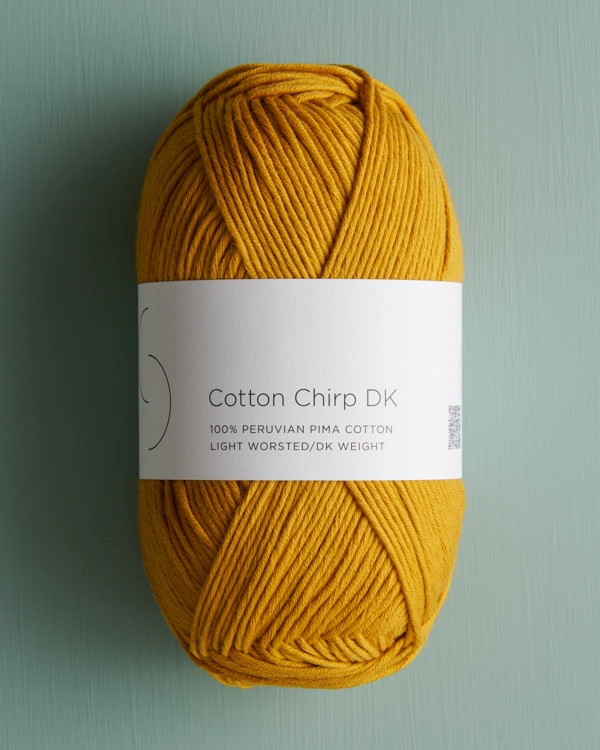
A real pleasure to knit with, Cotton Chirp DK is 100% unmercerized Peruvian Pima cotton, a special variety prized for its long, soft fibers and ready dye uptake, resulting in incredible jewel-like colors. This cotton also has a smooth surface and lovely luminosity, which makes the different textures of the Gemwork Blanket reflect the light like facets of a gem. It’s machine washable and dryable, too—in fact, we strongly recommend machine-washing and drying your blanket to even out your gauge and plump up the cotton.
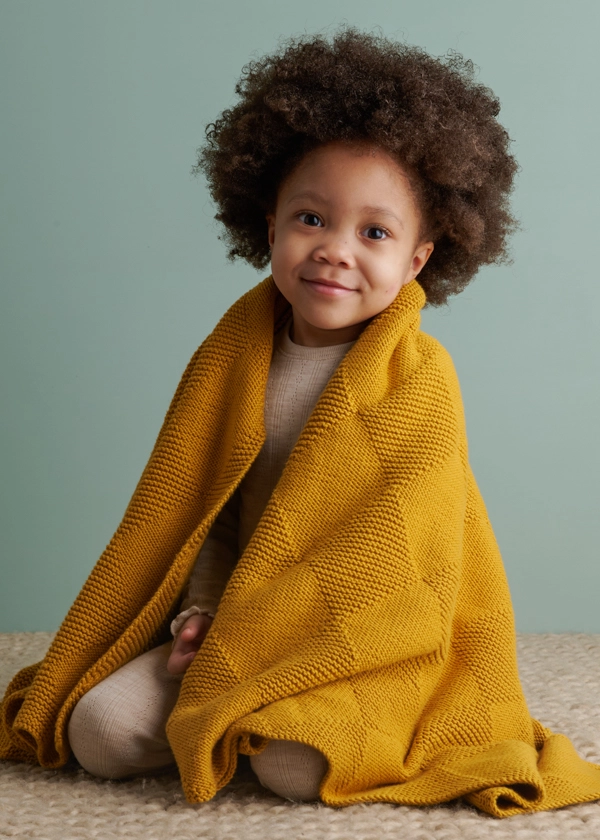
With exceptional clarity and brilliance, Cotton Chirp DK is a stunning choice for your Gemwork Blanket. Choose your favorite color and cast on for this lapidary masterpiece!
Yarn lovers, if you adore the yarn used in this project, you’ll love exploring all of our other yarn collections! Discover over 55 thoughtfully designed yarns in nearly every natural fiber and in every spectacular color you can imagine. Only available here at Purl Soho’s online yarn store, where every skein is created with care and your creativity in mind!
Pattern designed and written by Purl Soho designer, Gianna Mueller. See even more of Gianna’s work on her Instagram!
Story written by Andrea Lotz for Purl Soho.
Want to print this pattern? On desktop, find the “print” icon in the right margin, and on mobile, scroll to the end of the pattern for it. Use the on-screen instructions to remove anything you don’t want to print!
Materials
- 7 (12) balls of Purl Soho’s 100-gram Cotton Chirp DK, 100% Peruvian Pima cotton yarn. Each ball of this light worsted/DK-weight yarn is 232 yards/ 100 grams; approximately 1620 (2784) total yards required. We used the color Golden Honey.
- US 5 (3.75 mm), 32- or 40-inch circular knitting needles
GAUGE
23 stitches and 38 rows = 4 inches in stockinette stitch, blocked
SIZES
Crib (Throw)
Finished Dimensions: 31¾ inches wide x 45½ inches long (44 inches wide x 57¼ inches long), blocked
Sample: We knit the Crib size.
NOTES
STITCH MULTIPLE
The Crib size works over a multiple of 26 plus 1 stitches and has smaller diamond motifs (see photo in story, above).
The Throw size works over a multiple of 36 plus 1 stitches and has larger diamond motifs (see photo in story, above).
PATTERN
Cast on 183 (253) stitches. We used a basic Long Tail Cast On.
Continue to work either from Written Instructions or Chart, both below.
GEMWORK PATTERN: WRITTEN INSTRUCTIONS
CRIB SIZE ONLY
Row 1 (wrong side): K13, p1, *k25, p1, repeat from * to last 13 stitches, k13.
Row 2 (right side) and all following right-side rows: Knit to end of row.
Row 3: K12, p3, *k23, p3, repeat from * to last 12 stitches, k12.
Row 5: K11, p5, *k21, p5, repeat from * to last 11 stitches, k11.
Row 7: K10, p7, *k19, p7, repeat from * to last 10 stitches, k10.
Row 9: K9, p9, *k17, p9, repeat from * to last 9 stitches, k9.
Row 11: K8, p11, *k15, p11, repeat from * to last 8 stitches, k8.
Row 13: K7, p13, *k13, p13, repeat from * to last 7 stitches, k7.
Row 15: K6, p15, *k11, p15, repeat from * to last 6 stitches, k6.
Row 17: K5, p17, *k9, p17, repeat from * to last 5 stitches, k5.
Row 19: K4, p19, *k7, p19, repeat from * to last 4 stitches, k4.
Row 21: K3, p21, *k5, p21, repeat from * to last 3 stitches, k3.
Row 23: K2, p23, *k3, p23, repeat from * to last 2 stitches, k2.
Row 25: K1, p25, *k1, p25, repeat from * to last stitch, k1.
Row 27: Repeat Row 23.
Row 29: Repeat Row 21.
Row 31: Repeat Row 19.
Row 33: Repeat Row 17.
Row 35: Repeat Row 15.
Row 37: Repeat Row 13.
Row 39: Repeat Row 11.
Row 41: Repeat Row 9.
Row 43: Repeat Row 7.
Row 45: Repeat Row 5.
Row 47: Repeat Row 3.
Row 49: Repeat Row 1.
Row 50: Knit to end of row.
Repeat Rows 3–50 seven more times, then repeat Rows 3–49 one more time.
Go on to Finishing, below.
THROW SIZE ONLY
Row 1 (wrong side): K18, p1, *k35, p1, repeat from * to last 18 stitches, k18.
Row 2 (right side) and all following right-side rows: Knit to end of row.
Row 3: K17, p3, *k33, p3, repeat from * to last 17 stitches, k17.
Row 5: K16, p5, *k31, p5, repeat from * to last 16 stitches, k16.
Row 7: K15, p7, *k29, p7, repeat from * to last 15 stitches, k15.
Row 9: K14, p9, *k27, p9, repeat from * to last 14 stitches, k14.
Row 11: K13, p11, *k25, p11, repeat from * to last 13 stitches, k13.
Row 13: K12, p13, *k23, p13, repeat from * to last 12 stitches, k12.
Row 15: K11, p15, *k21, p15, repeat from * to last 11 stitches, k11.
Row 17: K10, p17, *k19, p17, repeat from * to last 10 stitches, k10.
Row 19: K9, p19, *k17, p19, repeat from * to last 9 stitches, k9.
Row 21: K8, p21, *k15, p21, repeat from * to last 8 stitches, k8.
Row 23: K7, p23, *k13, p23, repeat from * to last 7 stitches, k7.
Row 25: K6, p25, *k11, p25, repeat from * to last 6 stitches, k6.
Row 27: K5, p27, *k9, p27, repeat from * to last 5 stitches, k5.
Row 29: K4, p29, *k7, p29, repeat from * to last 4 stitches, k4.
Row 31: K3, p31, *k5, p31, repeat from * to last 3 stitches, k3.
Row 33: K2, p33, *k3, p33, repeat from * to last 2 stitches, k2.
Row 35: K1, p35, *k1, p35, repeat from * to last stitch, k1.
Row 37: Repeat Row 33.
Row 39: Repeat Row 31.
Row 41: Repeat Row 29.
Row 43: Repeat Row 27.
Row 45: Repeat Row 25.
Row 47: Repeat Row 23.
Row 49: Repeat Row 21.
Row 51: Repeat Row 19.
Row 53: Repeat Row 17.
Row 55: Repeat Row 15.
Row 57: Repeat Row 13.
Row 59: Repeat Row 11.
Row 61: Repeat Row 9.
Row 63: Repeat Row 7.
Row 65: Repeat Row 5.
Row 67: Repeat Row 3.
Row 69: Repeat Row 1.
Row 70: Knit to end of row.
Repeat Rows 3–70 six more times, then repeat Rows 3–69 one more time.
Go on to Finishing, below.
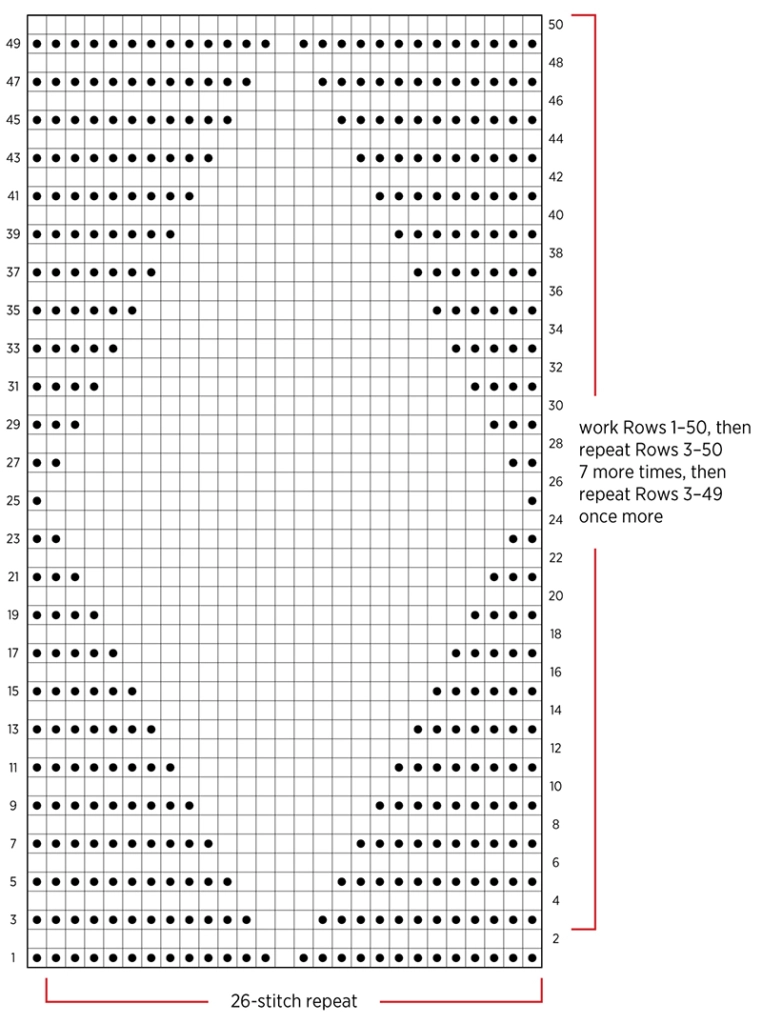
GABLE PATTERN: CHART
NOTE: New to reading charts? Unravel the mysteries with our Reading A Chart Tutorial!
Starting in the bottom right corner of the Crib or Throw Charts below, work right-side (odd number) rows from right to left and wrong-side (even number) rows from left to right.
For Crib, work Rows 1–50 one time, then repeat Rows 3–50 seven more times, then repeat Rows 3–49 one more time.
For Throw, work Rows 1–70 one time, then repeat Rows 3–70 seven more times, then repeat Rows 3–69 one more time.
Go on to Finishing, below.
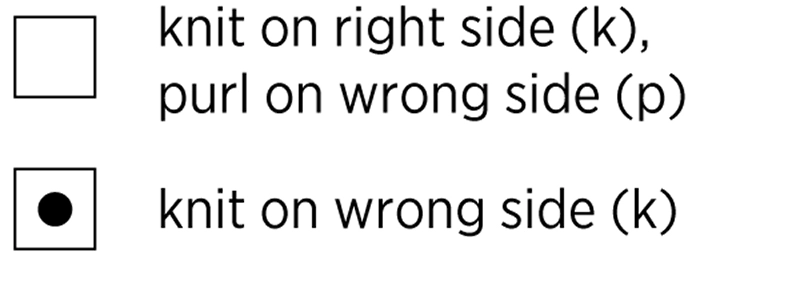
KEY
CRIB CHART
THROW CHART
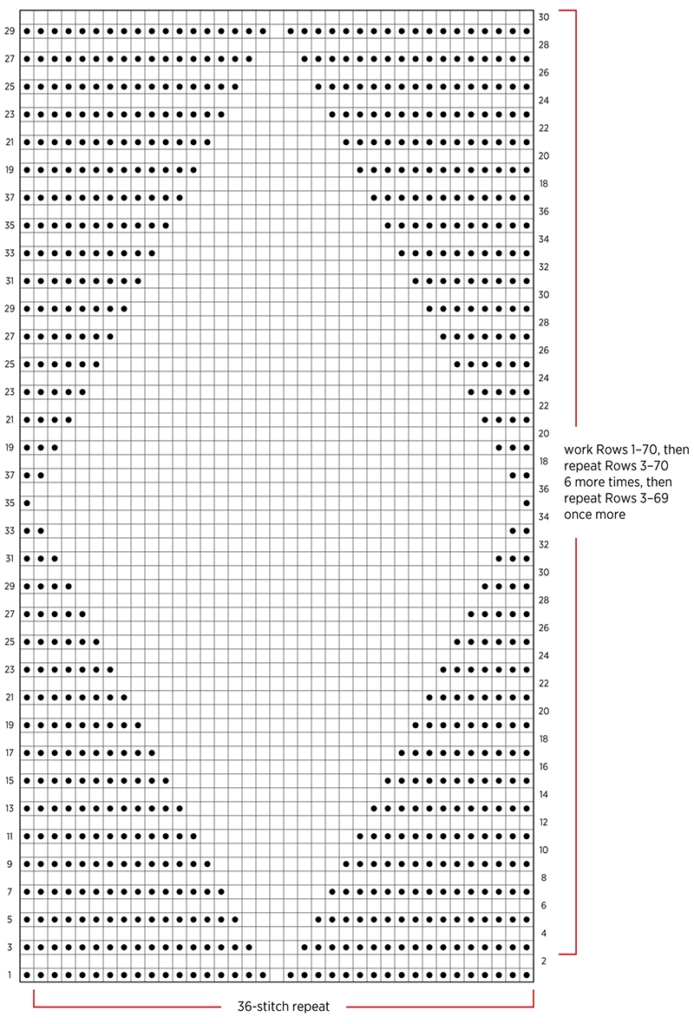
NOTE: Want to see it bigger? Download these charts (and key) as a PDF!
FINISHING
With right side facing you, bind off all stitches knitwise.
Weave in all ends and gently wet block, or if using Cotton Chirp DK, machine wash gentle and tumble dry low!
Share your progress and connect with the community by tagging your pics with #PurlSoho. We can’t wait to see what you make!
Learn About Cotton Chirp DK + All Our Beautiful Yarns
This project absolutely glows in our Cotton Chirp DK yarn! A celebration of 100% Peruvian Pima cotton, this very special yarn is beautifully soft, amazingly strong, machine washable, and a real joy to knit. It’s perfect for everything from warm-weather garments and baby knits to colorful housewares and blankets! The 32 colors in the palette are as brilliant as tropical birds, with a silky luster that catches the light and delights the eye. For smaller amounts and creative color play, check out our Cotton Chirp DK Minis, 25-gram balls of the same yarn in the same colors!
More Free Knitting Patterns
- Be sure to explore our growing collection of free Cotton Chirp DK knitting patterns and cast on!
More Light Worsted/DK-Weight Yarns
- Shop our entire collection of light worsted/DK-weight yarns (What does DK-weight yarn mean, really? Our guide to DK yarn will answer your questions and demystify.)
- If you want to use a different yarn, be sure to take the time to get the correct gauge. Need help? Check our All About Gauge Tutorial, our Yarn Substitution article, and our Complete Guide To Yarn for lots of helpful information.
More Yarns With Similar Fiber
- Shop cotton yarn (What helps cotton keep its cool? Learn all about this soft, natural fiber in our guide to cotton yarn!)
- Shop plant-based yarn
- Shop machine-washable yarn
Looking for more inspiration? Explore all of our knitting patterns (including tons of free knitting patterns) and knitting tutorials, buy one of our many knitting kits and yarn bundles, and shop for beautiful yarn. We have over 55 gorgeous natural fiber yarns in 1,000s of magnificent colors, designed to bring integrity, beauty, and joy to your next knitting project and only available at Purl Soho!

Similar Posts You Might Enjoy:


Are all even rows knitted or purled.
Hi Kristi!
Thanks for writing in with your question! I’m so glad you’re interested in the Gemwork Blanket!
All even rows should be knit. I hope this helps!
Happy knitting!
Hills
What is the finished dementions of throw size?
Hi Carolyn!
Thanks for writing in. I’m so glad the Gemwork Blanket caught your eye!
The finished throw blanket will be 44 inches wide x 57¼ inches long, blocked.
I hope this helps and happy knitting!
Hills
Hello ; this is Yvonne in Detroit.
This pattern design is FABULOUS!!
Thank you 4 designing it 👍🏾👍🏾
Hi Yvonne,
Thank you so much for your kind words. I’m so glad to hear you love the Gemwork Blanket as much as we do!
Please feel free to reach out with any other comments or questions you might have.
Happy knitting!
Hills
Love the pattern, the model, and the way the diamonds ripple. Thank you!
How can I make a 1/2 size of the crib size for stroller use. Can you help me to alter the stitches. Thanks
Hi Hoyu,
Thank you so much for your question! I’m so glad the Gemwork Blanket stood out to you.
The smaller blanket is worked over a stitch pattern of 26+1 stitches. For a blanket close to half the size, you could cast on 79 stitches (26×3+1). For a slightly larger than half size, you could cast on 105 (26×4+1) I would follow the stitch pattern for the smaller size rather than trying to make the diamonds smaller… and work the pattern repeat less times rather than changing the stitch pattern.
I hope this helps!
Happy knitting!
Hills
Hi friends, What a great pattern – would I be able to substitute the Cotton Pure yarn instead? Prefer to choose an organic cotton yarn.
Thanks!
Hi Jo!
Thanks so much for reaching out! I’m so glad the Gemwork Blanket is on your radar.
It looks like Cotton Pure would be a great substitution for this project as its gauge is 5.25-6 stitches per inch and the pattern calls for 5.75 stitches per inch. I would recommend knitting (and blocking) a gauge swatch to ensure you meet gauge and like the look and feel of the finished fabric.
I hope this helps! Happy knitting!
Hills
If I use size 6 needles, how would that change the look of the design, and the blanket size?
Hi Christy,
Thanks so much for reaching out with this great question.
The most important part of the pattern is typically the gauge. It is less critical for unfitted projects like blankets, though. Some knitters find they need to go up or down one (or several!) needle sizes to achieve gauge.
This shouldn’t impact the overall design, but it may impact the finished fabric, depending on your gauge. I’d suggest knitting (and blocking) a gauge swatch to see how your gauge compares to the pattern’s. If you’re knitting fewer stitches per inch than our gauge, your blanket will be bigger. If you are knitting more stitches per inch, your blanket will be smaller.
Swatching is a great opportunity to change your needle size and to judge how you like the finished fabric. You’ll be able to see, at this step, if your fabric is a bit hole-y or maybe a bit stiff, etc.
I hope this helps! Please reach back out with any other questions!
Happy knitting,
Hills
Could I use the cone of yarn for this project
Hi Barbara,
Thanks so much for your question. I’m really glad you’re considering the Gemwork Blanket!
It looks like Cotton Pure on a Cone would work well for this pattern (which calls for a 5.75 stitch/inch gauge), as Cotton Pure’s gauge falls between 5.5 and 6 stitches per inch. I would recommend knitting (and blocking) a gauge swatch to ensure you reach gauge and that you like the look and feel of the fabric.
I hope this helps, and happy knitting!
Hills
Hi there. Loving this pattern and just received my gorgeous Nickel Blue yarn! I started knitting but after a few rows wondered if I should have done a slip stitch for the first stitch to get a nicer edge. Is there a reason I wouldn’t do that with this pattern? Not sure if the way the diamonds reach the very edge in some rows might make this strategy not superior part for this pattern… Please advise. I’d rather start over now before I get too much further along!
Thanks so much for all you contribute to us knitters!
Hi Julia,
Thanks so much for reaching out! I’m so glad to hear you’re loving the Gemwork Blanket as much as we do.
I think this sounds like a lovely idea! I do want to note that the pattern is designed to have a subtle rippled edge… this effect is created due to the difference in tension between the garter sections and the stockinette sections. While a selvedge edge (created by slipping your first stitch), would look lovely (I’d suggest adding the stitch on either end at your cast-on), it is unlikely to resolve that difference. It should maintain a cleaner edge, but I did want to note that the ripple is likely to remain.
I hope this helps, and please feel free to reach out with any other questions you might have!
Happy knitting,
Hills
One more question. When adding a new skein, do you recommend we do that at an edge rather than the middle? I didn’t plan ahead and got unlucky, having to change half way across a row, but I know cotton is tricky for weaving in the ends. Any tricks you recommend for this yarn and pattern? Thanks so much — it’s going to be a beautiful keepsake blanket!
Hi Julia,
Thanks so much for your great question! This sounds like it’s turning into a really lovely project!
I would suggest adding a new ball at the beginning of the round. From there, you could either weave the ends in as you go or weave them in at the end of the project as part of your finishing.
It’s sometimes easier to weave in ends horizontally in stockinette, but it should be easy enough to weave them into the garter on an angle as well. I’m a big fan of duplicate stitch, but I totally get that everyone has their own style! My tip is to leave a longer tail, so you have plenty of yarn to work with when weaving in the ends. If you’re working with yarn that’s a bit finicky, I like to do at least an inch of duplicate stitch in one direction, then go back over it in the other direction to give it extra strength and a nice finish.
I hope this helps, and happy knitting!
Hills
Hills
I would love to make this gemstone blanket in a throw size – how many balls would I need and how do I work the pattern for the larger size. Interested in the sale price of the cotton yarn, so I hope to hear from you soon. Thanks so much
Hi Fraida,
Thanks so much for reaching out! I’m so glad the Gemwork Blanket stood out to you for your next project, and I’m happy to help.
For the throw-sized blanket, we used 2,784 yards, or 12 balls of Cotton Chirp DK. You can read more under the “materials section” for handy reference.
I hope this helps, and happy knitting!
Hills
The written and chart directions for the throw size do not seem to match up. Written directions have 70 rows where the chart has 30 rows.
I have not read line by line matching the two sets of directions but something is incorrect.
The crib size match up. This is cause my friend having a difficult time knitting this and has asked me for help.
Please let us know if there is really an error. Thank you,
Edit: I see what you did. In the throw size, You changed the numbering. The chart go to the center then starts numbering down but the written continues to 70. In the crib size the chart is numbered 1-50. Very confusing to beginners.
Hi Martha Jane,
I’m so sorry to see that you’ve run into a bit of a pickle here. I think I can see where the hiccup may be, and I’m happy to help clarify!
When reading the chart for the throw blanket, you may notice that the midpoint is at Row 36. The row numbers stop increasing there on the chart itself, as you’re repeating previous rows. You’ll see that there are an additional 34 rows after Row 36, so there are technically 70 rows in the chart for the throw, as well. They’re just numbered differently to better align with the written instructions.
I hope this helps! Please feel free to reach back out with any other questions.
Happy knitting,
Hills
Would the DK on a cone work for this pattern
Hi Barbara,
That’s a great question, and you can definitely use Knitting Yarn DK On A Cone! We just recommend swatching before starting your project, as this is especially important when substituting yarn.
I also want to note that for the Crib size blanket, 1 cone will work but if you’re making the throw size then you will need 3 single skeins of Knitting Yarn DK in addition to the cone. I hope this helps, but please reach back out if you have any other questions!
Happy knitting,
Sam
Help! Is there a way to use markers or some other technique to signal when it’s time to switch from knit to purl stitches? I’m having trouble keeping count and reading my stitches.
Thanks.
P.S. I’m a social knitter! I need to be able to chat and knit at the same time.
Hi Ann,
I completely understand how counting gets in the way of a good knitting chat, so I’m happy to let you know about a way you can add stitch markers for a more enjoyable experience!
Since each diamond in the pattern is knit from bottom to top, I recommend placing stitch markers in the following intervals to help you reference each section. You’ll place your first marker after the first stitch on Row 1 (wrong side), and then place a marker every 26 (36) stitches until the end (8 markers total). If you lose your place at any point, you can then reference the pattern chart by finding your row and checking the number of knit/purl stitches between markers to make sure they match!
I hope this technique helps you keep track of the stitch pattern without so much counting! Additionally, if you ever have trouble distinguishing between stitches, please feel free to send a picture to [email protected] and we’ll be happy to help.
Happy knitting,
Sam
Thanks!
Hello! I love the Gemwork Blanket in the color shown on your website as it really emphasizes the stitches in the pattern very nicely. My dilemma is I would like to make this blanket fora newborn baby girl in the Pink Ice or the Pale Celadon (keeping inline with the nursery color scheme). I am not certain how the lighter color choices that I have chose in the Cotton Chirp yarn would look. Will the stitch definition pop as it does in the darker color shown on your website, which by the way, I love that color and would choose it if it was for me ..but it is not.
Hi Donna,
Thanks so much for reaching out! I’m so glad the Gemwork Blanket caught your eye. This sounds like a beautiful project, and I’m happy to help!
Traditionally, stitch definition increases when you use lighter shades. Think vintage or traditional aran cabled sweaters, fisherman sweaters, Gansey sweaters, etc. They tend to be in white or cream! While this is also due to the untreated nature of the wool (to increase weather resistance), it also has the added benefit of highlighting the intricate stitch details.
With that in mind, I think this blanket would look fantastic in Pale Celadon or Pink Ice. If you’re still hesitant, though, you might consider working up your gauge swatch first, and if you don’t adore the look, you can reach out to us at [email protected]. We would be happy to help you set up an exchange or find another solution.
I hope this helps you knit on with confidence! Please feel free to reach back out anytime.
All the best,
Hills
Hello Hill!
Thank you so much for your response and explanation about colors and stitch definition! This was very helpful to me.
Looking forward to the Gemwork blanket my next project.
Sincerely,
Donna
Hiya Donna,
Thanks so much for your reply! We’re always so glad to help. Can’t wait to see what you make!
Warmly,
Hills
Hi,
Sybille from Germany here.
I already knit a Tumbling Block Blanket for my Grandson, who will be born in December. As they will be twins, I would like to make a Gemwork Blanket for the other twin.
I love the I-Cord-border of the Tumbling Blocks.
Do you think this will work on the Gemstone pattern as well?
(Sorry. I hope my English is good enough to understand).
Hi Sybille,
Congratulations on your new grandsons! What an amazing gift you’re making for them! 🙂
I think you can absolutely add an i-cord border to the sides of this blanket, working it just as you did for the Tumbling Blocks Blanket. To do this, you’ll want to cast on 8 extra stitches for the Gemwork Blanket, which will form the 4-stitch selvage at each side. Then you can just work the selvage stitches as written for the Tumbling Blocks Blanket, while working the Gemwork Blanket pattern between them!
I hope this helps! Please let us know if you have any other questions.
Kindly,
Allison
I would like to knit the swatch in the pattern. What do you suggest to cast on and how to follow. Im a new knitter i want to make sure I can knit the pattern.
Hi Monica,
Thanks so much for reaching out! Knitting a swatch is not only a great way to see how your gauge is working out, but it is also a great opportunity to test out the stitch patterns! To practice the stitch pattern of the Gemwork Blanket, I recommend casting on 53 stitches and working from the Crib Size instructions. Fifty-three stitches will be enough to work one full repeat of the instructions between the asterisks in each wrong side row, so you will get to practice the full pattern!
I hope this helps! Please let us know if you have any other questions!
Kindly,
Andrea
has anyone done this blanket with two shades of yarn (two skein)
and how would i go about it?
Hi Ruthy,
Thanks for writing in! I have not seen anyone knit the Gemwork Blanket in multiple colors, though I’m sure it would be possible with the use of intarsia. If you are looking to use Cotton Chirp DK for a multi-colored baby blanket or throw, we do have quite a few Light Worsted/DK Blanket Patterns available on the site, including the Good Morning Blanket which is designed in the very same yarn! Other alternatives you could knit if you wanted to give intarsia a try would be the Four Corners Baby Blanket or Topiary Blanket.
I hope this helps and happy knitting!
Mia