Your basket is empty.
Continue Shopping
Two-Color Brioche Hat
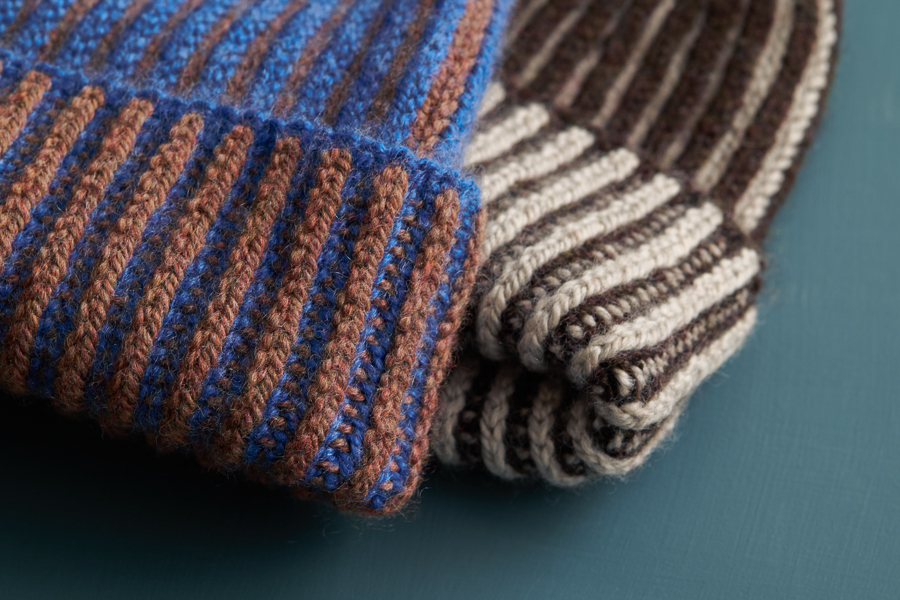
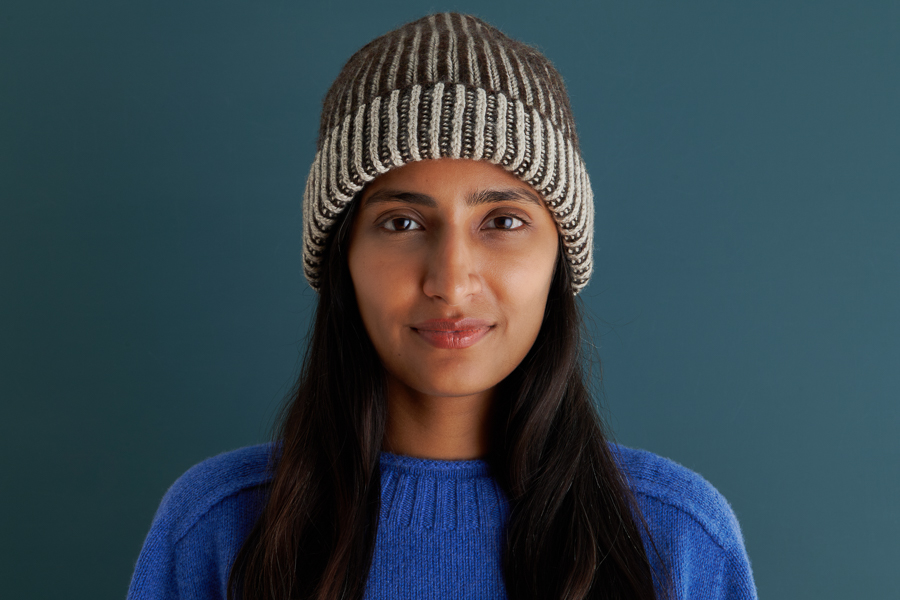
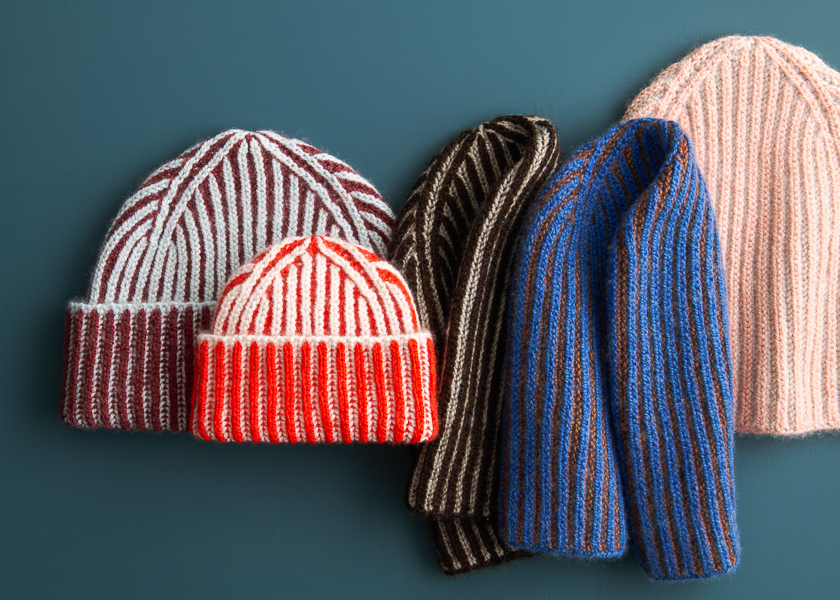
Our new Two-Color Brioche Hat pattern is just as snuggly as the original one-color version… But now with twice the color and twice the charm! The squishy loft of Cashmere Merino Bloom is just right for the squishy loft of brioche stitch, and now you have five new colors of this beloved yarn to mix and match!
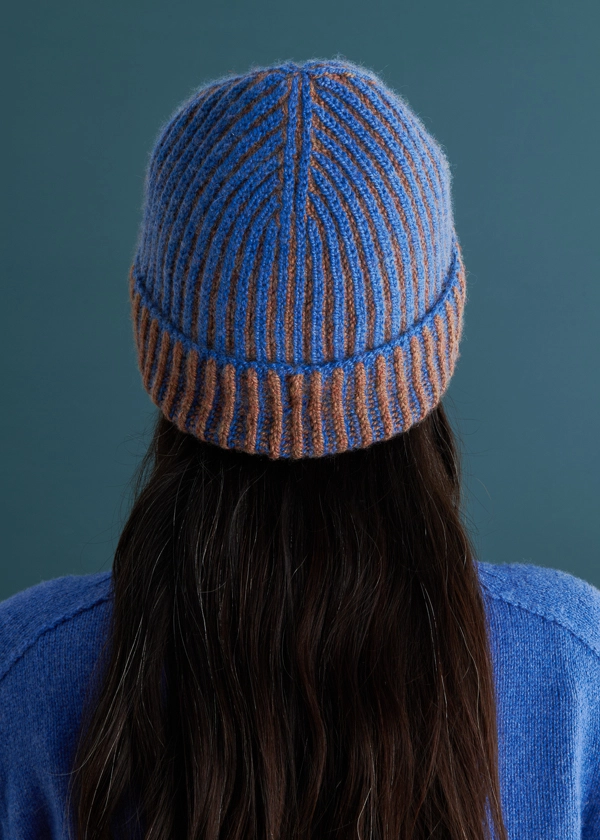
This hat is classic in shape with sizes from baby through adult, so everyone gets to share the fun. The real magic is the brioche stitch, a rib-like pattern that incorporates yarn overs for plush depth and cozy insulation. Worked in two colors, brioche creates a wonderfully graphic, two-sided fabric… Fold up the brim and the colors flip!
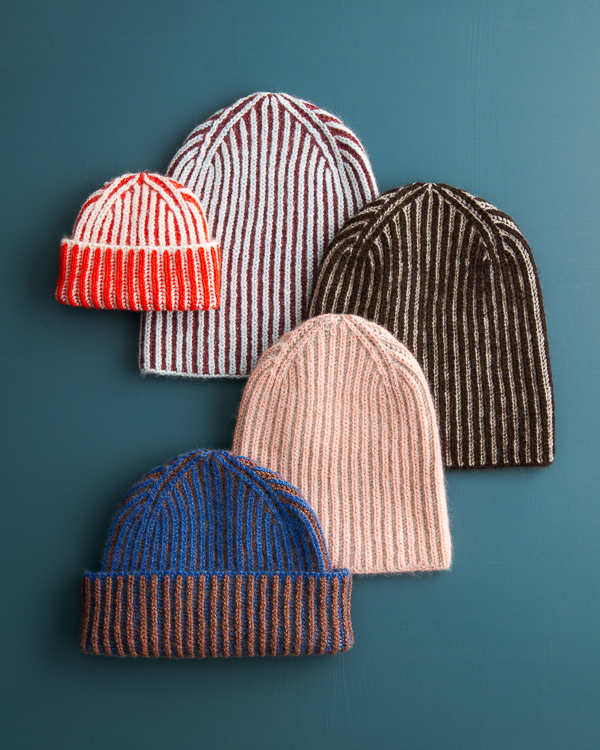
Brioche has an unfair reputation for being intimidating, but we promise it’s friendlier than it looks. In fact, many knitters find two-color brioche even easier than one-color! This pattern is a perfect introduction: practice simple two-color brioche all the way up the body of the hat, then learn a couple of simple decreases to shape the crown, with our step-by-step tutorials at your side the whole way.
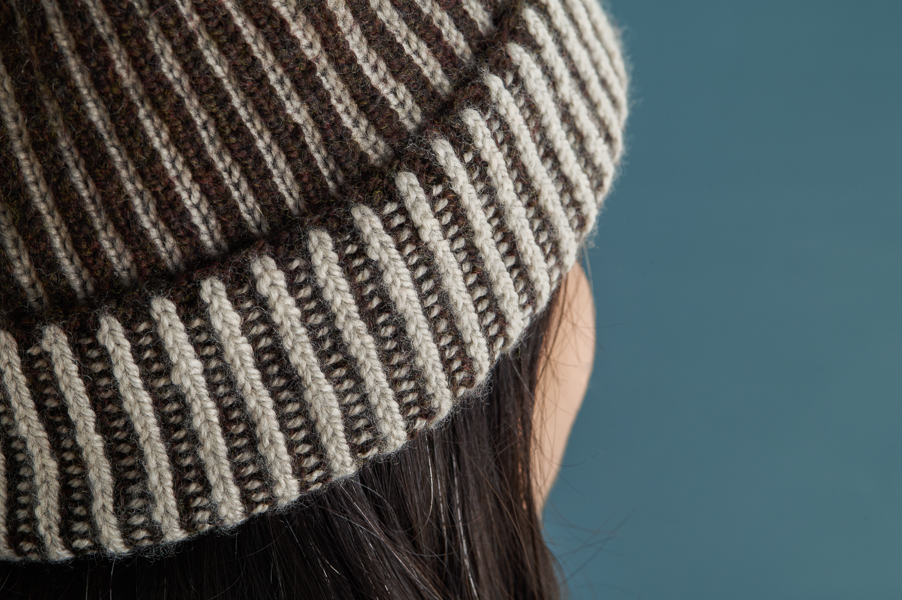
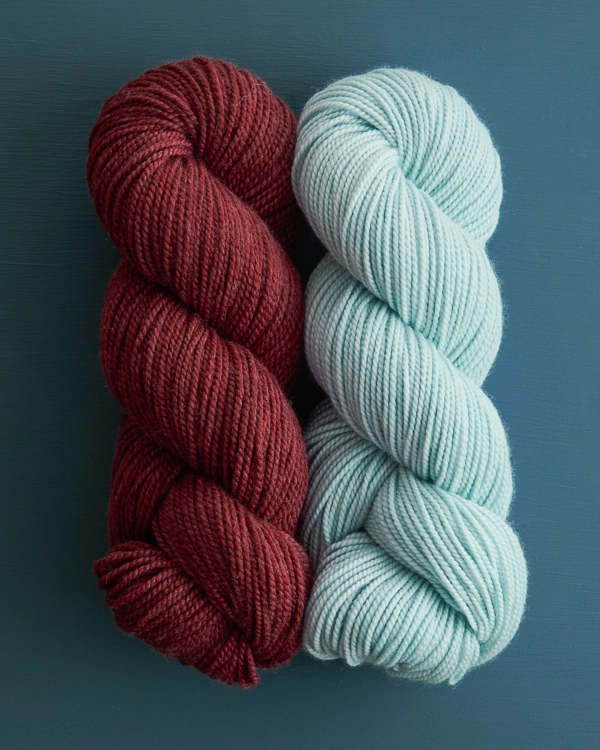
A perfect yarn for brioche stitch and a favorite for hats, Cashmere Merino Bloom is one of those yarns you just have to feel to believe. A blend of 25% cashmere and 75% extra fine merino wool, it combines decadent softness, beautiful bloom, and enough resilience to hold its shape. It’s gentle for sensitive skin and toasty warm against the cold, too.
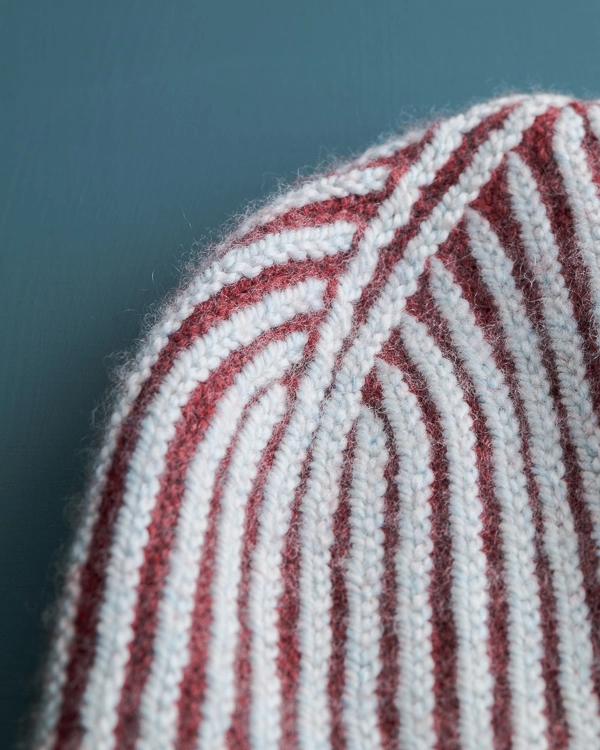
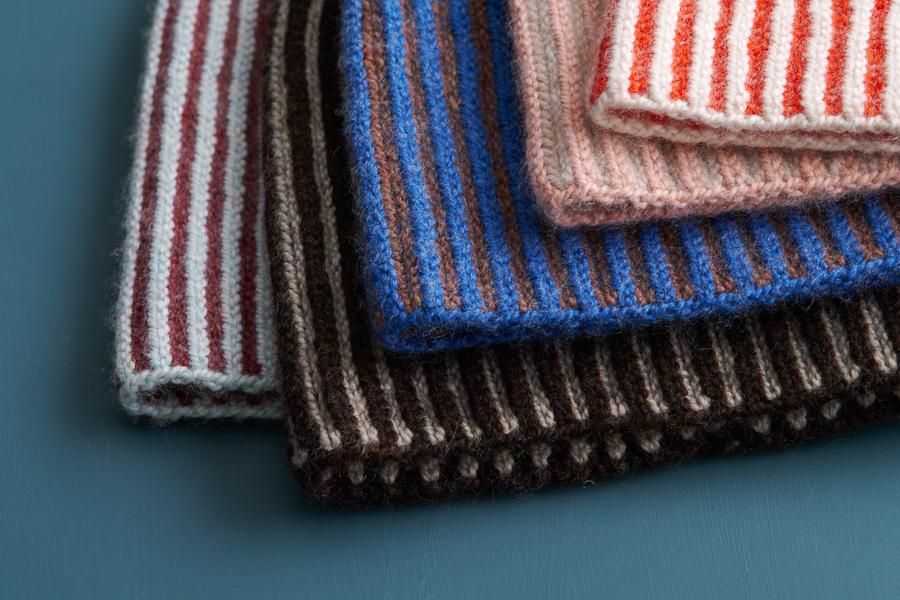
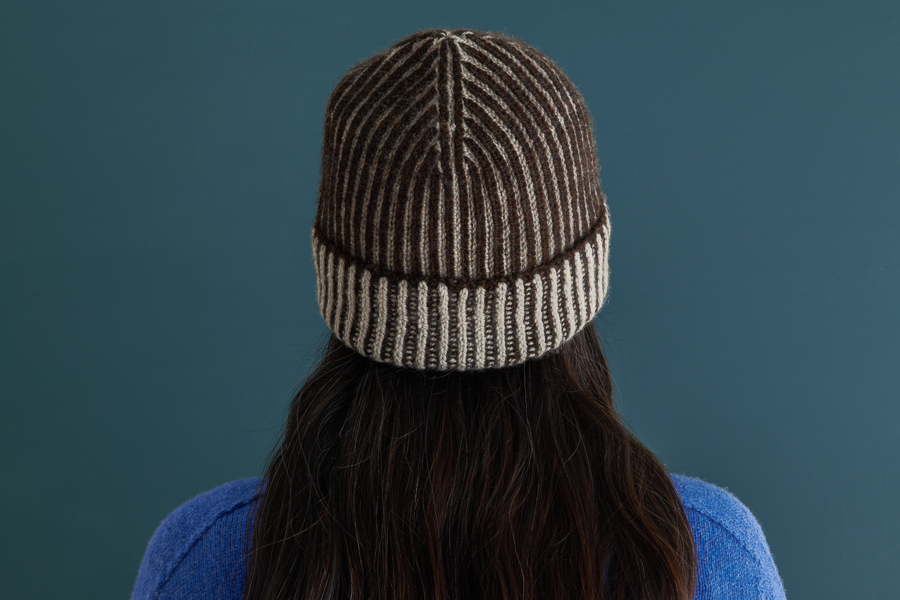
What better pattern to celebrate a new color launch? Our hats show off new colors like Black Coffee, Lapis Blue, and Pearl Blue paired with some of our all-time favorites. Try high contrast, tone-on-tone, or whatever else you can think of… With 33 colors in total, you’ll find endless combinations to make the Two-Color Brioche Hat your own.
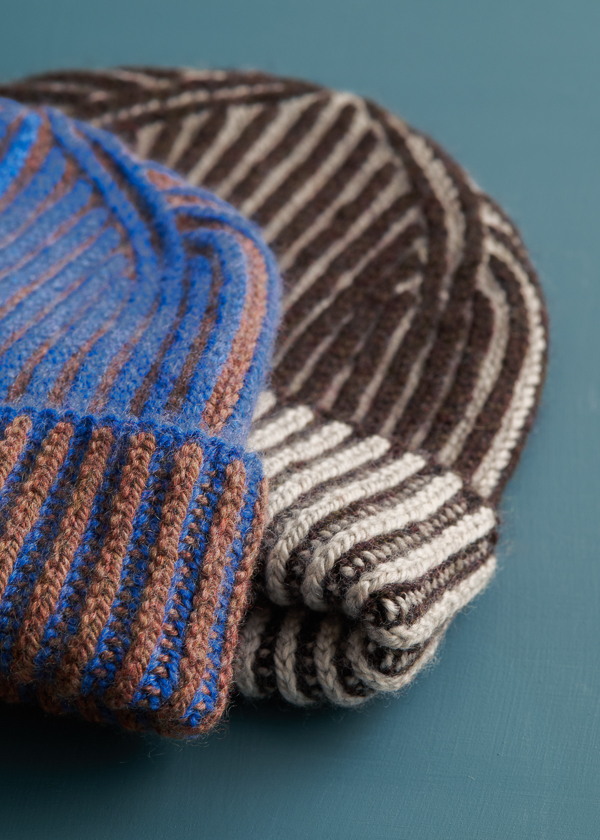
Grab a pair of colors that make you smile (just one skein each!) to cast on for a Two-Color Classic Brioche Hat in Cashmere Merino Bloom. Discover the joy of brioche and one of knitting’s most satisfying stitches!
Yarn lovers, if you adore the yarn used in this project, you’ll love exploring all of our other yarn collections! Discover over 55 thoughtfully designed yarns in nearly every natural fiber and in every spectacular color you can imagine. Only available here at Purl Soho’s online yarn store, where every skein is created with care and your creativity in mind!
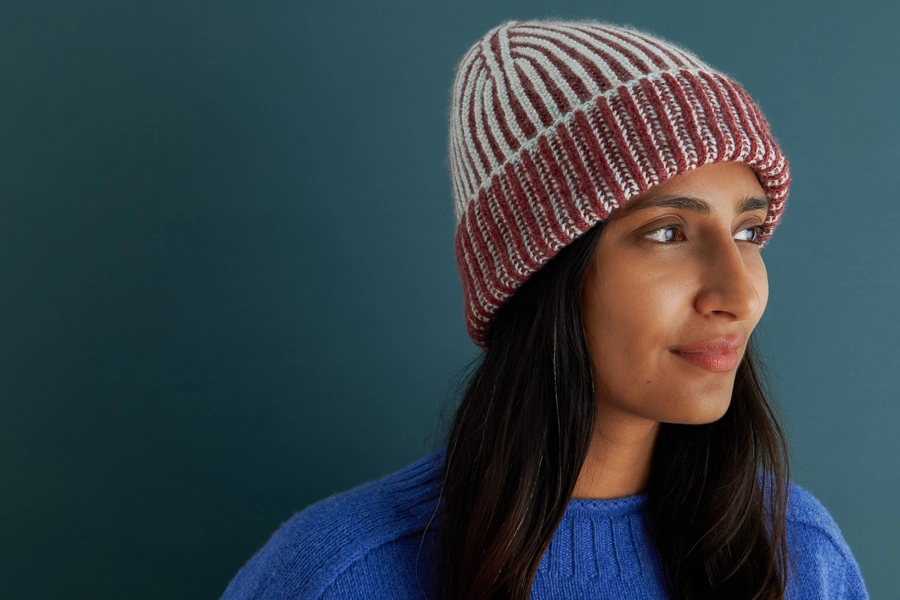
Pattern designed and written by Purl Soho designer, Gianna Mueller. See even more of Gianna’s work on her Instagram!
Story written by Andrea Lotz for Purl Soho.
Want to print this pattern? On desktop, find the “print” icon in the right margin, and on mobile, scroll to the end of the pattern for it. Use the on-screen instructions to remove anything you don’t want to print!
Materials

- Purl Soho’s Cashmere Merino Bloom, 75% extra fine merino and 25% cashmere. Each skein of this light worsted/ DK-weight yarn is 218 yards/ 100 grams.
- Color A: 1 skein; approximately 65 (80, 100, 125, 155) total yards required
- Color B: 1 skein; approximately 70, (90, 110, 140, 170) total yards required
- US 4 (3.5 mm) 12- or 16-inch circular knitting needles, depending on size you are making, or US 4, 32-inch circular needles for Magic Loop
- A set of US 4 double pointed needles, if using short circular needles (not necessary, if doing Magic Loop)
- Stitch markers, including one unique
We knit our samples in these colors and sizes (NOTE: Some colors are no longer available)…
- Baby: Color A- Heirloom White + Color B- Red Poppy
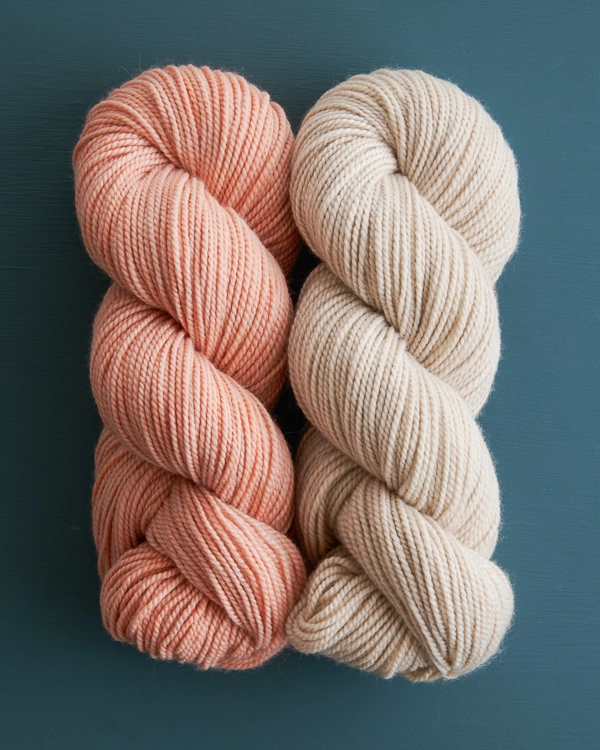
- Kid: Color A- Conch Shell + Color B- Wheat Flour
- Adult Small: Color A- Pearl Blue + Color B- Red Mulberry
- Adult Small: Color A- Black Coffee + Color B- Wheat Flour
- Adult Small: Color A- Lapis Blue + Color B- Fresh Nutmeg
GAUGE
20 stitches and 52 rounds (26 countable rounds) = 4 inches in Brioche Stitch
NOTE: To count rounds in Brioche Stitch, count only the number of visible knit stitches in a single brioche column. Be aware that the real number of rounds worked is twice this number, as each visible stitch is actually two rounds.
SIZES
For help choosing a hat size, check out our complete guide on How to Knit the Right Hat Size!
Baby (Toddler, Kid, Adult Small/Medium, Adult Medium/Large)
- Finished Circumference (unstretched): 12 (14½, 16¾, 19¼, 21½) inches, comfortably stretching to approximately 14 (17, 20, 23, 25) inches
- Finished Height (uncuffed): 7¾ (8¾, 9½, 11, 12¼) inches
NOTES
SLIP STITCHES
Slip all slipped stitches purlwise with yarn in back.
BRIOCHE ABBREVIATIONS
YOS (Yarn Over Slip): Bring yarn forward, slip 1 purlwise, bring yarn over right needle (to back of work, if knitting the next stitch; or to back of work and then between needles to front of work, if purling the next stitch).
BK2TOG (Brioche Knit 2 Together): Knit the next stitch together with its paired yarn over.
BP2TOG (Brioche Purl 2 Together): Purl the next stitch together with its paired yarn over.
For a video tutorial and tips on working the steps of Two-Color Brioche Stitch, please visit our Brioche Stitch: Two-Color Brioche + Fixing Mistakes Tutorial.
BRIOCHE DECREASES
LEFT LEANING BRIOCHE DECREASE
BSK2P (Brioche Slip Knit 2 Pass): Slip 1 brioche stitch with its paired yarn over knitwise, k2tog (the next purl stitch with the following knit stitch and its paired yarn over), pass the slip stitch and its paired yarn over together over and off the right needle. [2 stitches decreased]
RIGHT LEANING BRIOCHE DECREASE
BK3TOG (Brioche Knit 3 Together): K2tog (the next knit stitch with its paired yarn over and the following purl stitch), slip the resulting stitch back to the left needle, pass the following stitch (a knit stitch and its paired yarn over) over the first stitch on the left needle and off the left needle, move the resulting stitch back to the right needle. [2 stitches decreased]
For tips on working the steps of Brioche Decreases, please visit our Brioche Stitch: Basic Decreases Tutorial!
PATTERN
BODY
With Color A, cast on 60 (72, 84, 96, 108) stitches. We used a basic Long Tail Cast On.
Place unique marker and join for working in the round, being careful not to twist the stitches.
Set-Up Round: With Color A, *k1, yos (see Notes), repeat from * to end of round.
Round 1: With Color B, *yos, bp2tog (see Notes), repeat from * to end of round.
Round 2: With Color A, *bk2tog (see Notes), yos, repeat from * to end of round.
Repeat Rounds 1 and 2 until piece measures 6¼ (6¾, 7, 8, 8¾) inches from cast-on edge, ending with Round 2.
CROWN
NOTE: If using short circular needles, change to double pointed needles when necessary.
Set-Up Round: With Color B, *[yos, bp2tog] 10 (12, 14, 16, 18) times, place marker, repeat from * to end of round, omitting marker on final repeat. [2 markers placed]
Round 1: With Color A, [bsk2p (see Notes) *yos, bk2tog, repeat from * to 5 stitches before next marker (not counting yarn overs), yos, bk3tog (see Notes), yos, slip marker] 3 times. [12 stitches decreased]
Round 2: With Color B, *yos, bp2tog, repeat from * to end of round.
Round 3: With Color A, *bk2tog, yos, repeat from * to end of round.
Rounds 4 and 5: Repeat Rounds 2 and 3.
Round 6: Repeat Round 2.
Repeat Rounds 1–6 two (3, 4, 5, 6) more times, then repeat Rounds 1 and 2 one more time. [12 stitches remain]
Cut yarns and thread Color B tail onto a tapestry needle. Thread tail through remaining stitches. Pull taut and bring tail to inside of hat to weave in.
FINISHING
Weave in the ends and block as desired.
Share your progress and connect with the community by tagging your pics with #PurlSoho. We can’t wait to see what you make!
Learn About Cashmere Merino Bloom + All Our Beautiful Yarns
Soft, supple, and toasty warm, Cashmere Merino Bloom is an absolute knitting joy! A light worsted/DK-weight yarn, it is made with 25% of the most exquisite cashmere in the world and 75% extra fine merino wool and benefits from both fibers: cashmere for over-the-top softness and beautiful bloom and merino for resilience, durability, and even more softness. Cashmere Merino Bloom has an incredible hand feel with a gentle halo that illuminates your knitting… A gorgeous choice!
More Knitting Patterns
- Be sure to explore our collection of (mostly free!) Cashmere Merino Bloom patterns and cast on!
More Light Worsted/ DK Weight Yarns
- Shop our entire collection of light worsted/DK-weight yarns (What does DK-weight yarn mean, really? Our guide to DK yarn will answer your questions and demystify.)
- If you want to use a different yarn, be sure to take the time to get the correct gauge. Need help? Check our All About Gauge Tutorial, our Yarn Substitution article, and our Complete Guide To Yarn for lots of helpful information.
More Yarns With Similar Fiber
- Shop cashmere yarn (What makes cashmere so special? Learn all about this amazing fiber in our guide to cashmere yarn!)
- Shop merino wool yarn
Looking for more inspiration? Explore all of our knitting patterns (including tons of free knitting patterns) and knitting tutorials, buy one of our many knitting kits and yarn bundles, and shop for beautiful yarn. We have over 55 gorgeous natural fiber yarns in 1,000s of magnificent colors, designed to bring integrity, beauty, and joy to your next knitting project and only available at Purl Soho!




Wow that looks lovely, can’t wait to try this pattern
I love your patterns i am wondering ,do you have matterns that can be used on the adis express kingsize round loom?
Hi Margie,
I’m afraid we don’t currently have any patterns that can be made on a knitting machine. We’re so sorry about that!
All the best,
Gavriella
Is the hat reversible? Is it possible to modify pattern as you knit, to make it reversible, if it is not written as such?
Hi Becky,
Thank you for asking! While the hat is not completely reversible, if you knit the decreases of the hat neat enough, you could definitely get away with wearing the hat with either side facing out.
Happy knitting,
Gavriella
Thanking you for all the support and information!! I am 84 years old and I enjoy reading and knitting. Thank you all for extending your information!!
This is so cute and is getting me in the mood for cooler temps! I am pretty sensitive to most wools and even though this is merino/cashmere blend I am still a bit paranoid. Would this pattern work with 100% cashmere or would it not have the right structure? Any other substitutions I should consider? THX!!
Hi SJ,
Thank you! We’re looking forward to cooler temps as well. You can certainly make this pattern with 100% cashmere for a nice soft hat!
Happy knitting,
Gavriella
Please excuse my earlier comment about decreases in the crown . I read them again carefully and understood that you decrease every 6 rows!
Hi Frida,
So sorry that we didn’t get to your comment before you were able to figure it out. Either way we are happy you are back on track and please let us know if you have any other questions!
All the best,
Gavriella
I am struggling with round 1 (Color B “yos, bp2tog” – actually i am struggling with the very first stitch – how do i do a yarnover on it? I am new to brioche so please bear with me. Also the two color brioche stitch tutorial is helpful but is it possible to get a tutorial for this specific pattern (working in the round).
YOS – I am bringing the yarn forward and slipping the stitch then knitting (row 1) BUT I think i forgot the yarn over – so if done correctly does that mean I will have 144 stitches on the needle instead of 72 (toddler size)?
Hi Rosa,
Thanks for getting in touch! This pattern is a great one for learning brioche. It sounds like you figured out the initial Yarn Over Slip (YOS) when you joined Color B, but in case you need guidance on it, here’s a quick overview: To YOS when you’re joining Color B, you’ll have the tail of Color B in the back of your work, then bring the working yarn (Color B) to the front between your needles, slip the first stitch, and yarnover with Color B. It can feel a little awkward getting started, but you only need to join a new color once in this pattern!
In brioche knitting, the yarnovers don’t count as separate stitches since they’re worked together with the slipped stitches, so you’ll keep your original stitch count (72 sts for the toddler size) throughout the body of the hat.
We hope this helps, but let us know if you have any more questions. We’re happy to chat!
And thank you for suggesting a brioche-in-the-round tutorial. We’ll pass along the idea to our design team!
All the best,
Allison
Hi I have a question as well! For that first round where we are adding in Color B with the yarn overs are the bp2tog stitches meant to just be one single purl after bringing the color B yarn to the front or do we then using the Color B yarn purl two of color A stitches together? This has been confusing me as doing that would cause decreases all around. So should it be just YOS purl YOS purl that first round with Color B then the rest of the rows after would be YOS bp2tog with 1 stitch and 1 YO thereafter? This first set up row with Color is just confusing me a bit with the directions being to purl two together where its supposed to be the YO that is not yet added in.
Hi Emily!
Thanks so much for your thoughtful question! Learning two-color brioche is tricky and especially tricky on the first row. Your instinct is spot on, though. The bp2tog creates one single purl stitch which combines your purl and the yarn over next to it. You’ll work that after bringing the yarn forward and over the top of the needle to create a yarn over before a purl stitch.
One tip, every row should be worked with one color only. So if you are working with Color B on the rows with bp2tog, then you will be using Color B to combine two stitches from the previous row together… Color A (purl) combines with its complimentary yarn over.
The additional yarn over from YOS is the set-up for the next row where you will bk2tog.
I hope this clears up some confusion, please feel free to reach out with any other questions or if I am misunderstanding your question.
Happy knitting!
Hills
Can this be knit in dpns instead of a loop? Will that affect the pattern instructions?
Hi Ashley,
You can definitely use DPNs if you prefer and work the pattern as is.
Happy knitting,
Gavriella
Hi there. I would like to try this with an fisherman’s rib instead (personal preference). Do I have to consider major adjustments? Thank you so much.
Hi Gesa,
Thank you for writing in! I’m afraid in order to use fisherman’s rib, you’d need an entirely different pattern but you are in luck! Our Color Dipped Hat that would be a wonderful alternative.
Happy knitting!
Gavriella
Thank you!
Hi – I second the request not only for a brioche in the round video but one that uses double pointed needles for a baby or toddler sized hat. I tried the magic loop and failed (too much going on between the pattern and the magic loop!) – the only hope I have for making this for my grandson is to do it using regular needles and sewing the seam. What adjustments to the pattern would I need to make (1 extra stitch? What do I do with each selvedge end?)?
Signed,
Frustrated 🙂
Hi Deborah,
We are so sorry you are running into issues with this pattern. I’m afraid we don’t have any modifications to knit this hat flat but one thing you can do it knit a flat piece, as in our two color brioche tutorial. From there you can seam the sides and cinch the top of the hat. Just in case you would like to give it another try, we’d be happy to review this pattern in one of our free 1-on-1 knitting help sessions but there are also many wonderful tutorials on youtube as well. I hope this helps and happy knitting!
All the best,
Gavriella
I’m using 16 inch circulars to make the toddler size and I feel like I’m stretching the yarn too much. Do I need to knit it on dpns?
Thanks
Hi Megan,
Thanks for reaching out! If you are achieving the correct gauge and still feel the stitches are a bit too tight, it might be best to switch to DPNs. Another alternative would be working the hat using magic loop. I hope this helps and please let us know if you have any other questions!
All the best,
Gavriella
I am having a lot of difficulty with the pattern. I’ve watched the video several times. I’m a fairly experienced knitter.
I’ve successfully complete the setup row and row 1. I think.
In Row 2, should the brioche stitch knit two of the same color together, or should it line up with one of each color. Should the slipped stitch be color B or A. I think I’m struggling with the placement of the yarnovers, they could sort of come out on either side of the slipped stitch.
Thank you
Hi Janet,
Thanks so much for reaching out! In Row 2 you are working with Color A. You’ll knit the stitches that are Color A (the same color as your working yarn) and a yarn over of Color B together and slip the Color B stitches while making the yarn over. I think the first few rows of brioche can be a bit fiddly, but once you have a foundation of fabric the stitches settle into place on your needles better. I hope this helps clarify! Please feel free to reach out to us at [email protected] for more personalized assistance. We’re happy to look at photos, send photos, and troubleshoot!
Kindly,
Andrea
I finally got it! However I disregarded the first note about slip stitches. It says to keep yarn in back, but the brioche note says to keep it in front.
Hi Norma!
Thanks for writing in! Brioche can be tricky. I’m so glad you got it! And great eye noticing the difference in the notes. The slip-stitch note refers to the regular slipped stitches worked with yarn in back, while the brioche note applies only to the brioche stitches, which are slipped with yarn in front.
Happy Knitting,
Megan
Would this pattern work with the gorgeous Paintbrush Mohair?
Hi Sol,
Wonderful question! Paintbrush Mohair is quite a bit thicker than Cashmere Merino Bloom, so your best bet will be to follow the instructions for a smaller size hat. Your first step is to make a gauge swatch to see if you like how the two-color brioche looks in such a different yarn and also to see how many stitches per inch you get. From there, you multiply your gauge by the hat circumference you want and that gives you your ideal cast-on number. Then, follow along with the size whose cast-on number is nearest your ideal one. One little thing to keep in mind is to stick to the height instructions for the size you’re going for, not the size you’re following!
We’d love to know if go along with this idea… It sounds beautiful! And whatever you decide, we’re happy to answer any questions that come up along the way!
Happy knitting!
Whitney
Can someone demonstrate the Round 1 of the crown decrease? Once I’ve done the set up row, I have a brk at the beginning of the round, so I don’t know what to YOS before you slip the brk knit-wise.
Hi Amanda!
Thanks for writing in! The crown decreases can definitely feel a little confusing the first time around. To make sure we can walk you through Round 1 clearly and show you exactly where that stitch belongs, I’d recommend sending us a quick note at [email protected] or even better, feel free to sign up for our free 1-On-1 Help, where we can demo it for you over Zoom.
We’re happy to get you through that decrease round!
Warmly,
Megan
Hello, I’m also starting the crown and having trouble understanding the set up round where it seems to imply that there are only 2 markers for the 84 stitch size. Is that right? Or, does the original marker stay in its place, then there are 3 markers. I see it says to omit marker on final repeat which confuses me. Thank you in advance. Took me a while of practice and I love the look of this hat.
Hi Julie,
Thank you for your question! You’re reading it correctly. For the 84-stitch size, you’ll end up with three markers total: your original beginning-of-round marker plus two markers placed during the set-up round.
The note “omitting marker on final repeat” just means you don’t add another marker at the very end of the round. You simply knit back to the beginning-of-round marker.
It sounds like you’re doing beautifully so far!
Warmly,
Megan
When knitting this 2 colour hat to you get jogs where you change colour? Jogs drive me crazy!
Hi Cynthia,
Thanks for reaching out!
Because of the way that stitches stack into columns in brioche, there are no jogs!
I hope this helps! Please let us know if you have any other questions!
Warmly,
Andrea
I have a little experience with brioche but I have never worked with double-pointed needles nor have I tried magic loop. Of these two alternatives would you recommend one over the other? I watched both tutorials and can’t decide.
I am interested in which one will be ‘better to learn’ (?), not necessarily easier. (I knit continental style and am so glad I learned even though it was harder at first.)
Hi Kristie,
Thanks for reaching out!
Magic Loop and double pointed needles are both great ways to knit small circumferences, and one is not generally more helpful to know than the other. I prefer Magic Loop specifically for brioche because I think it is a little easier to keep track of all the yarnovers without anything falling off the tips of your needles.
I hope this helps! Please let us know if you have any other questions!
Warmly,
Andrea
I’m new to knitting…. this will hopefully be my first hat, my first time knitting in the round, my first brioche lol! I’m struggling with the instructions, the video shows joining the contrasting color on the knit row (makes sense) but the instructions are on the purl row (confused). The hat does not really seem to be joining together, what should happen on the last stitch of the round and the first of the next? Also it took me awhile watching the tutorial to figure out that it is not necessary to work 4 row patterns. Any help is appreciated!
Hi Neva,
Thanks so much for reaching out! Welcome to the world of hats, brioche, and knitting in the round! Our tutorial on knitting brioche is for knitting in the flat, so that is why is says four rows. When knitting in the round, you only need two rows. Each time you come back to your unique marker, you change color and work another row in the same direction. When the last stitch is a yos, it can get a little lost sometimes, so on the rows you work the last stitch, just make sure you have a yarn over from the previous round there as well.
In the repeats of Row 1, you use color B to bp2tog the Color B stitches from the previous Row 1 (along with their yo in Color A from the previous Row 2) and yarn over slip (yos) the Color A stitches from the previous Row 2. In repeats of Row 2, you use Color A to bk2tog the Color A stitches from the previous Row 2 (along with their Color B yo from the previous row) and yarn over slip (yos) the Color B stitches from the previous row. It sounds really complicated all typed out like this, but the short version is you work every other stitch in each row and work the same color stitches (when you are using Color B you work the live Color B stitches on your needles.)
I hope this makes sense! Please let us know here, at [email protected] if you have any other questions, or you can sign up for a 1-On-1 Help appointment and a member of our staff will get on a zoom call with you to get you moving in the right direction!
Warmly,
Andrea
I have 6” of the 2-Color Brioche Knit Hat done. Thought I was knitting to gauge, but it’s going to be loose. Not to worry, I’ll crochet elastic thread into it.
Need to knit another. Do I go down one needle size (size3) or make the next size (Kid).
First time with Brioche and it’s GREAT!
Purl Soho 100% merino wool
Hi Rita,
Thanks so much for reaching out! Sometimes the best gauge swatch is a completed hat! Since you are finding that your gauge is not quite right in your hat, I recommend going down a needle size for your next one to get your gauge back on track.
I’m so glad you love brioche! I hope this helps, and please let us know if you have any other questions!
Warmly,
Andrea
Hi, I love the hat that is black coffee colored (looks brown though). What other color is used with it? I can’t figure it out.
Hi Faith,
Thanks so much for asking! We paired Black Coffee with Reed Gray for this project!
Please let us know if you have any other questions!
Warmly,
Andrea
I seem to be going wrong in the set-up round, as when I get to the end of round 1 I am a stitch short at the end (only 2 stitches to perform the final slip, YO, P2tog).
I can’t work out what I’m doing wrong…any suggestions??
Thank you 🙏
Anne-Marie
Hi Anne-Marie!
Thank you for your question! One possibility is that the final yarn over from your set-up round may have slipped past your beginning-of-round marker. It’s a really common little hiccup, and it can make it look like you’re short a stitch when the stitch has actually just wandered to the wrong side of the marker.
If that’s not the case and you’re still coming up short, feel free to send us a photo at [email protected]. We’re always happy to take a closer look and help you sort it out!
Warmly,
Megan
Thanks Megan, I worked it out eventually!
I had the same problem! It’s possible as you say that the yarn over slipped under the marker- but I wanted to double check that when it says to ‘join to work in the round’ this does not mean to knit an additional stitch? I assumed that joining occurred in the first noted K1. Thanks so much for any insight!
Hi Emma!
Thank you for writing in! You’re exactly right, “join to work in the round” does not mean to knit an extra stitch. The join simply happens when you begin working the first stitch of the round as written, which in this case is that first K1. No additional stitch is created at the join. I hope this helps, and you’re very welcome to reach out if anything else feels unclear!
Warmly,
Megan
Hey! Loving this pattern so far. Wondering how long the body of the hat should be if you’re not cuffing it?
Hi Annie!
Thank you so much for writing in! I’m so glad you’re loving the pattern! If you’re making the hat without a cuff, you’ll want the body to measure about 6¼ (6¾, 7, 8, 8¾) inches before starting the crown decreases, depending on the size you’re knitting. Once the crown is complete, that gives you a finished uncuffed height of 7¾ (8¾, 9½, 11, 12¼) inches.
That said, hats are wonderfully flexible. If you prefer a slightly shorter or slouchier fit, feel free to adjust the body length to suit your style!
Warmly,
Megan
How long should the body be if you do want it to be cuffed? I’m doing an adult large (108 sts) hat.
Thanks!
Hi Ashley!
Thanks so much for writing in! Just to double check, were you interested in wearing this hat with or without a cuff? The pattern is written to allow for a cuff, and you could continue with the pattern as written. If you follow the instructions for the adult size, your hat should come out to be 9½ inches tall. That will allow you to fold a cuff up to 3-4 inches.
If you prefer the hat to be uncuffed, you could knit for about 6.5 inches as an estimate. That’s the amount we suggest for the cuff to hit right above the eyes and fit comfortably on top of your head. This is an estimate however, and we would recommend trying the hat on as you go to test the fit and height that works best for you. Alternatively, you can measure a favorite hat you have around so you can reference your preferred height.
I hope that helps answer your question, but please let us know if we misunderstood what you’re asking!
Happy knitting!
Hills
Would you kindly explain why the note “Slip all slipped stitches purlwise with yarn in back.” when the YOS note says “YOS (Yarn Over Slip): Bring yarn forward, slip 1 purlwise”. The two seem to contradict. I must be missing something. Thank you, Julia
Hi Julia!
Thank you for your question! You’re not missing anything, and it’s a very reasonable thing to pause over. The key is that the general note (“Slip all slipped stitches purlwise with yarn in back”) applies unless otherwise specified. The YOS is one of those exceptions. When the pattern calls for YOS (Yarn Over Slip), you follow that instruction exactly: bring the yarn forward, then slip the stitch purlwise. I hope this helps!
Warmly,
Megan
Starting the decreases the pattern only mentions the right leaning decreases infront of the Marker, but not the left ones after the marker. Am I reading it wrong or are the instructions missing?
But so far a really fun knit!
Hi Kati!
Thanks for writing in, and we’re so glad you’re enjoying the knit! You’re reading it correctly. The left-leaning decreases do begin in Round 1, but after that the pattern intentionally uses mostly right-leaning decreases to shape the crown evenly. No instructions are missing!
Happy Knitting!
Megan
I had this same confusion! I didn’t see in the instructions where to decrease on the other side of the marker so I got through my decreases and realized my hat looked different than the photos. Still cute and I love the hat but also confused on that as well.
Hi Mil,
I’m so sorry you ran into some trouble with the crown of your Two-Color Brioche Hat! I’m really glad you’re still happy with how it came out, and I’d be glad to clarify these instructions in case you’d like to make another (and to help others in the future!).
I’ve expanded Round 1 for the Crown and bolded the decreases:
Round 1: With Color A, [bsk2p *yos, bk2tog, repeat from * to 5 stitches before next marker (not counting yarn overs), yos, bk3tog, yos, slip marker][bsk2p *yos, bk2tog, repeat from * to 5 stitches before next marker (not counting yarn overs), yos, bk3tog, yos, slip marker][bsk2p *yos, bk2tog, repeat from * to 5 stitches before next marker (not counting yarn overs), yos, bk3tog, yos, slip marker] [12 stitches decreased]
I hope this is helpful, and please feel free to reach out to us here or at [email protected] with any other questions you might have! We’re always happy to help.
All the best,
Hills
Hi there, I am making this hat for my partner with a large head, 62 cm. I calculate with my gauge to get his circumference + the 13 percent negative ease that I need 142 stitches cast on. How long would you say should i make the hat before i start with the crown? 9 inches? 10?
Thank you for your help
Sarah
Hi Sarah,
Thanks so much for a great question! 62cms is approximately 24.5 inches, so I would knit the body of the hat to approximately 8.75 inches before starting the crown shaping similarly to the Adult Large size.
I hope this helps! Please let us know if you have any other questions!
Warmly,
Andrea
Hi PS,
I successfully got started on this pattern but keep getting thrown off when switching colors at the beginning of each round. I have a stitch marker at the beginning of the round but I’m wondering if I have accidentally moved it by a stitch. Do you have any recs for keeping track at each round?
Hi Julie!
Thank you for your question! Since this is a brioche hat worked in the round, it’s very common to feel turned around when changing colors at the beginning of the round. A few things that really help with brioche specifically: Make sure your beginning-of-round marker always sits between the same two stitches (never on a stitch). In brioche, it’s easy to accidentally knit past it because the fabric is so rhythmic. Use a locking or unique marker for BOR so it’s easy to spot and less likely to get nudged along. When you switch colors, pause and confirm you’re starting with the correct brioche stitch for that color (brk or brp, depending on the round). That quick check often reveals if the marker has shifted.
If you suspect the marker has moved and the stitches no longer line up, feel free to send us a photo at [email protected]. Brioche is much easier to diagnose with a visual, and we’re happy to help you get back on track!
Warmly,
Megan
Hi, I have learned a lot with this hat. It’s so pretty and soft. I’ve taken it out so many times, I’m worried that it will be felted by the time I finish it!
My current problem is the first row after the decrease row. The stitches line up fine for the left leaning decrease, but when I knit across to where the right leaning decrease was made I’m missing a stitch. I’ve watched your decrease video as well as many other, and I’m pretty sure that I’m doing it right, it when I go to do the next row it doesn’t look right. Any suggestions? Thanks
Hi Megan!
Thank you so much for writing in! It sounds like you’ve really been sticking with it, which is amazing!
It can be tricky to troubleshoot brioche without seeing the stitches. The best way for us to help is if you could send a photo of your work to [email protected]. That way we can take a close look and give you more specific guidance!
Warmly,
Megan
Hello, I’m confused about when to first join in yarn B. Does it get joined as part of the set-up round somehow, or is it first introduced in round 1? Thanks!
Hi Natalie!
Thank you so much for writing in with your great question! You’ll knit your set-up round first. Then on round 1, you simply start knitting with color B and drop color A. When you come back around to the beginning of the round, you will carry up color A into the round 2 and drop Color B.
I hope this helps, but if you have any other questions please don’t hesitate to reach out!
Happy knitting!
Hills
Hello,
I am having a difficult time with the set up row for decreasing. I am doing the 84 stitch hat. If I place a marker after each set of 14 yos, bp2tog, I have 3 markers plus the beg of round marker. What am i missing here? Pattern says there should be only 2 additional markers placed (excluding the beg of rd marker).
Thank you,
Mary
Hi Mary Jean!
Thanks so much for writing in with your question! Two-Color Brioche is notorious for being a bit tricky to get the hang of, and I’m happy to help! Rest assured, once you get the hang of it, you’ll flow right through it!
I think I may see where there may be some confusion, but please let me know if I’m misunderstanding your question! You’ll do the 14 repeats three times, yes! So you’ll have two markers placed, but you’ll skip the last one because you already have your unique beginning-of-round marker.
I hope this helps, but please feel free to reach out with any other questions you might have!
Happy knitting!
Hills
With the number of stitches I have (cast on 84), I did the 14 repeats 4 times which completed one full round.
Hi Mary Jean!
Thanks for your reply! I hear that you’re still maybe a bit stuck, and that’s totally normal for two-color brioche… It’s a tricky new skill, and I’m happy to help!
If you have 84 stitches cast-on, you should only be doing this repeat 3 times because 84 divided by 28 is 3. There are 14 repeats of a two-stitch pattern (yos, bp2tog), so that should be 28 stitches (repeated 3 times). The yarnovers don’t count as stitches, technically (not unless they’ve become worked separately as a new stitch rather than worked in a bk2tog or bp2tog).
I’d suggest double checking your stitch count, while keeping in mind that yarnovers don’t count as stitches (only the slipped stitches themselves and the stitches which are brioche-knit or brioche-purled count as stitches). If you did the 14 repeats of (yos, bp2tog) 4 times, that would suggest you might have 112 live stitches currently. That would indicate you may have knit some of your yarnovers to create new stitches at some point, but it is really hard to tell without seeing your work.
Please feel free to send us a photo of your work with a small note to [email protected] and we would be happy to take a look and make sure we’re on the same page to get you on track for your crown decreases. You’ve done such great work so far, and we’d love to help!
I hope this helps clear up any confusion, but if you’re still running into trouble, please don’t hesitate to schedule time with us through our 1-on-1 Help sessions… we’re here to help!
Happy knitting!
Hills
Hello, am I reading the instructions for the crown set up row correctly? The whole row is repeating the yarn over and the decrease bp stitch? So if Im making the 96st size, will I end up with 72 stitches? Just seems strange to me to do decreases across the whole row rather than only either side of the stitch markers. Thanks in advance
Hi Lucie!
Thanks so much for reaching out! Great work so far on your Two-Color Brioche Hat! You’re almost to the finish line, and I’m happy to help you get there.
Here’s the decrease round written again:
Round 1: With Color A, [bsk2p (see Notes) *yos, bk2tog, repeat from * to 5 stitches before next marker (not counting yarn overs), yos, bk3tog (see Notes), yos, slip marker] 3 times. [12 stitches decreased]
The decrease stitch is the bk3tog done 4 stitches before the marker (1 stitch after the “yos” where it says to stop 5 stitches before the marker). The bk2tog isn’t really a decrease stitch, so much as it is the way you are resolving your yarnovers from the round before with the knit stitches in the current round. So it looks like you’ll be decreasing just before the stitch markers and that will give you that polished “seam” up the back you can see in the photo under “finishing.”
I hope this helps clear things up a bit, but please feel free to reach out with any other questions you might have!
Happy knitting!
Hills
Thank you for your patient reply Hills. I think I got the abbreviations mixed up. I figured it out 😁
Hi Lucie!
I’m so glad this worked well for you! Fantastic work finding your hiccup, that’s how we build mastery! I hope you continue to enjoy knitting this project and congrats on figuring out two-color brioche!
Happy knitting!
Hills
Hi Hills,
I’ve searched the comments and can’t quite seem to find my answer. For the crown setup row, for the 96sts size, placing a marker every 16 sts would result in 5 new markers + BOR marker, correct (96/16=6)? For the round1 of the crown, it says to repeat only 3 times but should I be repeating for each marker? IE 6 times? Please let me know if my understanding is correct or where I went wrong.
Thank you>_<
Hi Christine!
Thanks so much for reaching out with your question! Great work so far on your project! Two-color brioche can be a little tricky, and I’m happy to help!
For the crown, the portion that is being repeated 16 times is actually a two-stitch pattern repeat (yos, bp2tog). So you’ll be slipping one stitch with a yarn over, and then resolving last row’s yarn over. This two stitch pattern is what’s repeated 16 times. 96/32=3… this will be repeated 3 times total, and you can place 2 stitch markers and have the last BOR marker to mark the last repeat.
I hope this helps! Please feel free to reach out with any other questions you might have!
Happy knitting!
Hills
Hello,
I need clarification for the crown. I am knitting the kid’s size and after repeating Rounds 1-6 four times and repeating Rounds 1 and 2 one more time, I have 24 stitches remaining.
Is the pattern meant to say,
Repeat Rounds 1-6 two (3, 4, 5, 6) MORE times
Thank you!
Hi Tania!
Thanks so much for reaching out with your question! Great work so far on your Two-Color Brioche Hat! Two-Color Brioche can be a little tricky to get the hang of and I’m happy to help.
For the kid’s size, you’ll be starting your crown with 84 stitches. It looks like there are 12 stitches decreased in the decrease round. You’ll do Rounds 1, 2, and 3. You’ll repeat Round 1 and 2 again. (24 stitches decreased). Then you repeat Rounds 1-6 four times total. (48 stitches decreased). That is a total of 72 stitches decreased. 84-72=12. You should be left with 12 stitches.
If you are still running into trouble, please feel free to send a photo of your work (with a little note) to [email protected] or set up a 1-on-1 Help session with us… we’re always happy to help!
I hope this help… please don’t hesitate to reach out!
Happy knitting!
Hills
Hi Hills!
Thank you for your prompt reply!
Where do you see these steps in the pattern?
This has been a great pattern to learn brioche and I’m happy with the result so far.
Thank you!
Hi Tania!
Thank you so much for your reply! I’m so glad to hear you’re loving the pattern so far! I worry I may have highlighted the wrong Round for you, and I’m including the instructions below for CROWN (including the decrease rounds bolded for extra clarity). My sincere apologies for any confusion!
Round 1 is your decrease round. It’s knit once, and then you’ll have five plain rounds (Rounds 2 and 3 repeated). You’ll proceed to another decrease round (and the same plain rounds) another 4 times. Then, once more, you’ll work Round 1 and 2 for your sixth (and final) decrease for 72 stitches decreased total.
Thank you so much for reaching back out. I so hope this clears up any confusion, please don’t hesitate to write back on this topic or with any other questions you might have!
Happy knitting!
Hills
Hi Hills!
Thank you so much for the clarification!
I think that part of the pattern would clearer with a small edit.
Here are my ideas. I put my changes in cap because I can’t bold them.
Repeat Rounds 1–6 two (3, 4, 5, 6) MORE times, then repeat Rounds 1 and 2 one more time. [12 stitches remain]
OR
Repeat Rounds 1–6 a TOTAL of THREE (4, 5, 6, 7) times, then repeat Rounds 1 and 2 one more time. [12 stitches remain]
Thank you again! I love the hat I knit.
Tania
Hi Tania!
Thanks so much for your reply! We’ve updated the page to correct this error, thank you for bringing this to our attention!
Happy knitting!
Hills
i finally figured out the brioche stitch and finished my first hat. my question is when you go to dpns do you use 3 plus the working or 4 plus the working since the crown is in 3 sections. am on my way to decreasing on second hat ..i used 3 on first hat and it was awkward but with the sections it felt like the thing to do?
tricia
Hi Tricia,
Congratulations on figuring out brioche! It can sometimes be a little tricky… great work!
I would suggest using whatever configuration feels most natural to you, rather than trying to partition each section by the “slices” between markers. If you have 72 stitches when you begin your crown, you might distribute 18 stitches over 4 needles (with an additional, 5th, working needle), regardless of where the markers fall. This would mean that sometimes your marker will be in a different spot on each needle, and you may have to adjust the distribution over time. I do think, however, the work moves a bit faster (and feels more natural) if you imagine the project as you would on circular needles (just split evenly over double pointed).
I hope this helps! Please feel free to reach back out!
Happy knitting,
Hills
On the crown decrease rows with the first BSK2P being at the beginning of the round, should the yarn be forward or back before executing the slip stitch knitwise?
Hi Anne-Marie,
Thanks so much for writing in! You will want to make sure your yarn is in the front before slipping the brioche stitch with its paired yarn over knitwise.
We have a Brioche Stitch: Basic Decreases Tutorial that you might find helpful in visualizing the steps. Just scroll down to the Left Leaning Brioche Decrease Tutorial: BSK2P section of the article for step-by-step instructions. I hope this helps!
Happy knitting!
Mia
This is my first brioche project and I am about 4 inches into the hat. I am switching from Row 1 to Row 2 when I get to the other color yarn and where that is, seems to be moving to the right of where my very first row began. The pattern looks fine, but this certainly will be a problem when I start on the next pattern rows. What am I doing wrong? Can I fix it before I get to the decreases. At this rate, I suspect I might get the yarn change back to the beginning by time I get to 8 inches.
Hi Ann,
I’m sorry that you’ve run into some trouble with your Two-Color Brioche Hat, and I’m happy to help!
Since you’re working on a brioche hat in the round, it’s pretty common to feel a bit lost when you change colors at the start of each round. Here are a few tips that can really make brioche easier: First, always keep your beginning-of-round marker between the same two stitches (never directly on a stitch). Since brioche has such a rhythmic pattern, it’s easy to accidentally knit past it. Using a unique locking marker for the BOR can make it super easy to spot and less likely to get nudged out of place. When you switch colors, take a moment to double-check you’re starting with the correct brioche stitch for that round (whether it’s bk2tog or bp2tog). A quick peek often helps catch if your marker has shifted.
If you think your marker has moved and your stitches don’t seem to line up anymore, don’t hesitate to send us a photo at [email protected]. Brioche can be tricky to troubleshoot without seeing it, and we’re more than happy to help you get everything back on track!
All the best,
H
Hi. I’m just finishing your stroller sized Pocket full of Posey blanket, and I think I have enough yarn left over to make this hat to go with it in a toddler size, But I need to know if there is a way to use fingering yarn. What do you think?
Hi Donna,
Thanks so much for reaching out, and congratulations on finishing your
Pocketful of Posy Blanket! A blanket is such an undertaking… great work!
This pattern is worked with two light worsted/DK-weight yarns. Hats require more specific shaping than other accessories to fit properly. Unfortunately, because of this, it’s beyond the scope of our resources to rewrite this pattern for agauge.
You would need to change the cast-on as well as the crown decreases if you would like to try it out yourself! Once you have your swatch knit and blocked, you can see how many stitches are worked in an inch and cast on for that weight yarn. You’ll want to keep in mind that the row gauge for brioche is read a bit differently:
You might also consider taking a look at the Foggy Day Hat, Timeless Hat, or the original Tiny Stripes Hat for some ideas of hats worked in fingering-weight yarn.
I hope this helps point you in the right direction and that you find the perfect yarn and pattern combination for you! Please feel free to reach back out anytime.
All the best,
Hills