Your basket is empty.
Continue Shopping
Portal Blanket
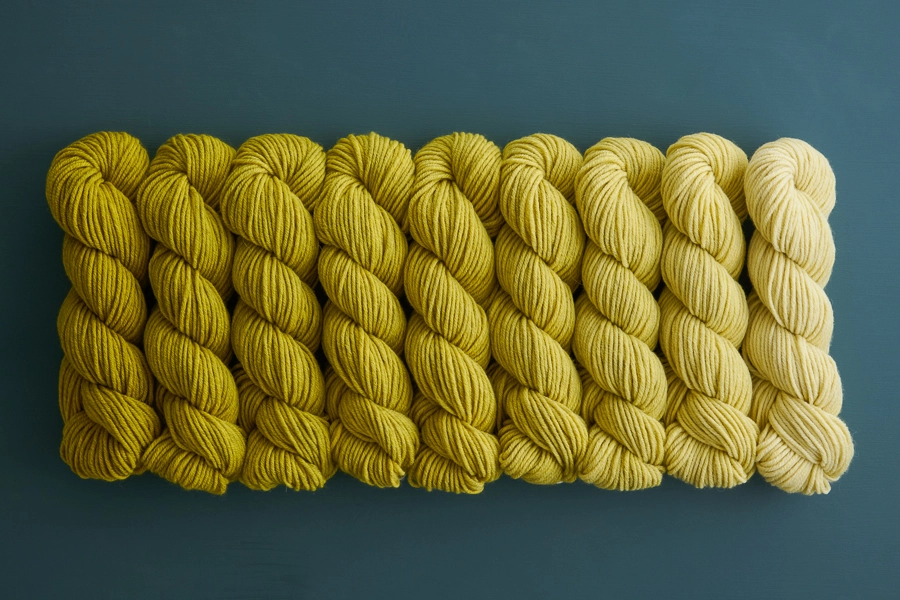
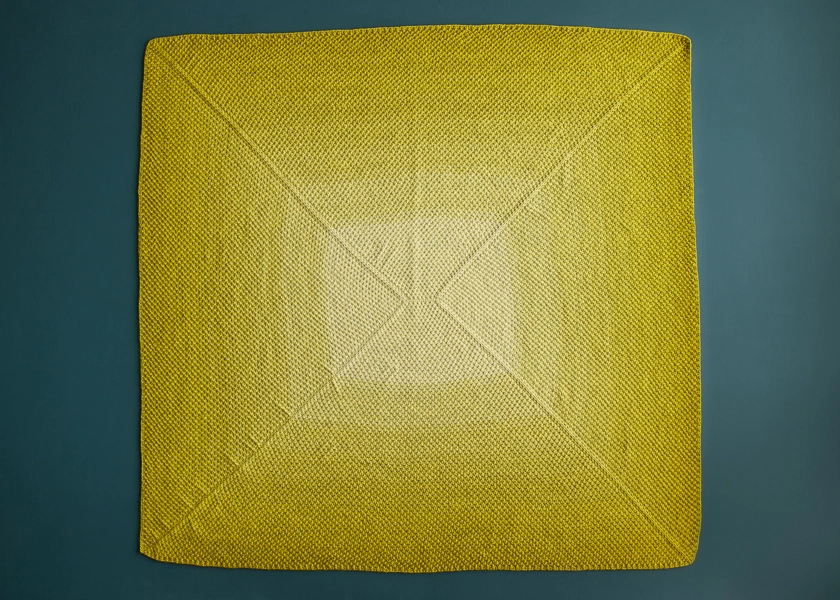
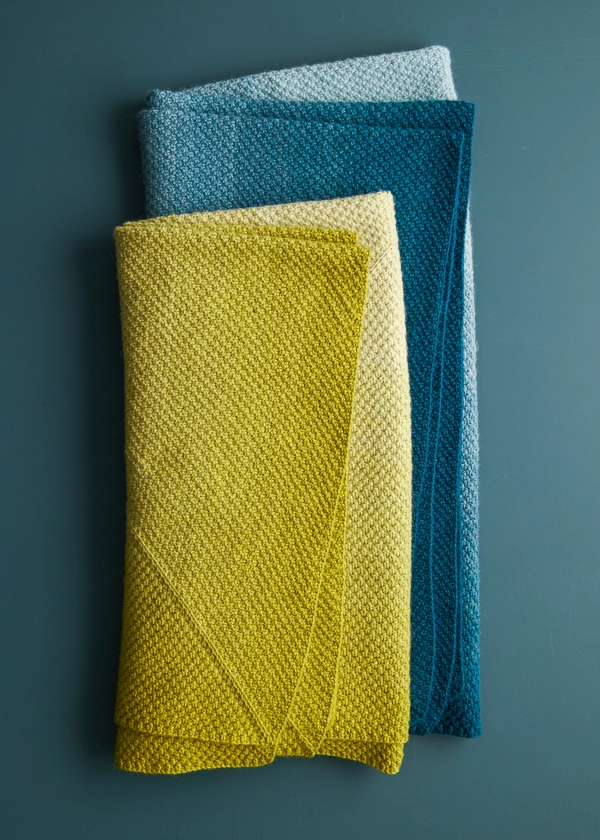
Like a doorway that beckons, our Portal Blanket knitting pattern invites you to step into color and light. Knit up in our Nine-Note Bundle, a gentle gradient creates a luminous gateway in the softest yarn you can imagine.
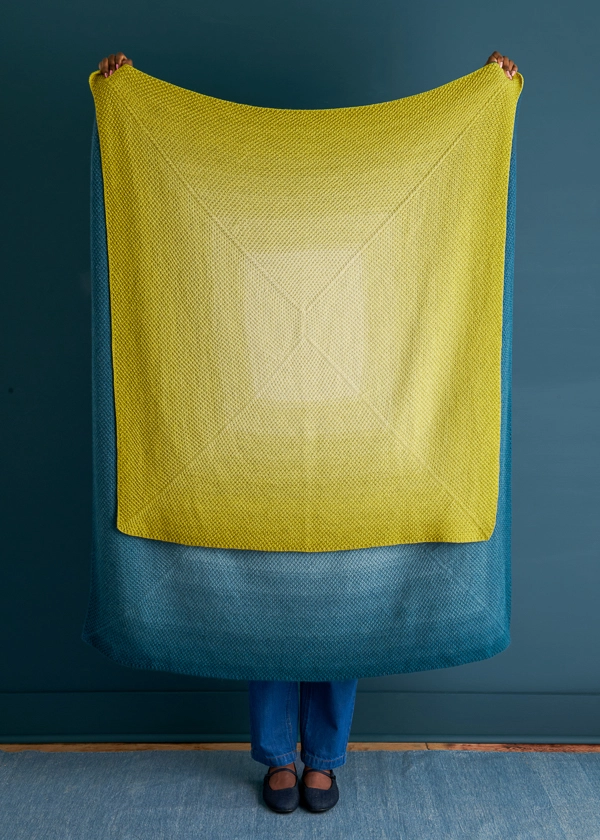
The knitting is easy yet compelling, perfect for confident beginners and satisfying for all skill levels! Starting with a warm glow at the center, you’ll knit in the round in double seed stitch, working simple increases at each corner. Each new color radiates outward as the shades deepen, and a quick final seam closes the center.
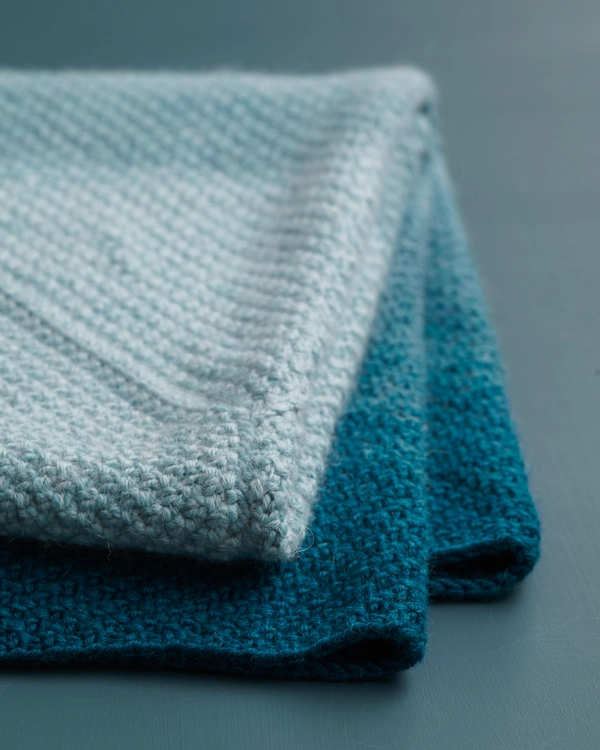
The yarn we use for our Nine-Note Bundles is completely unforgettable, with a beauty you can see and feel in every stitch. The softest extra fine merino wool in the world mingles with velvety baby alpaca, while its multi-ply structure creates a round, lofty DK-weight yarn with a clear stitch definition that makes every detail shine.
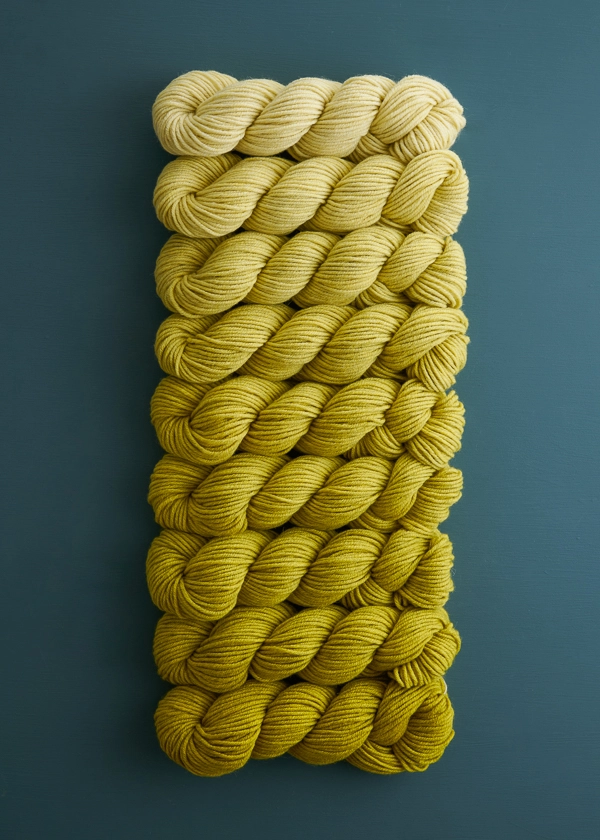
Every Nine-Note Bundle is a gateway to wonder. Some palettes glow with sun-drenched warmth, others with moody twilight tones, each one an immersive world of color. Choose your favorite and pick up one, two, or three yarn bundles depending on the size Portal Blanket you want to knit.
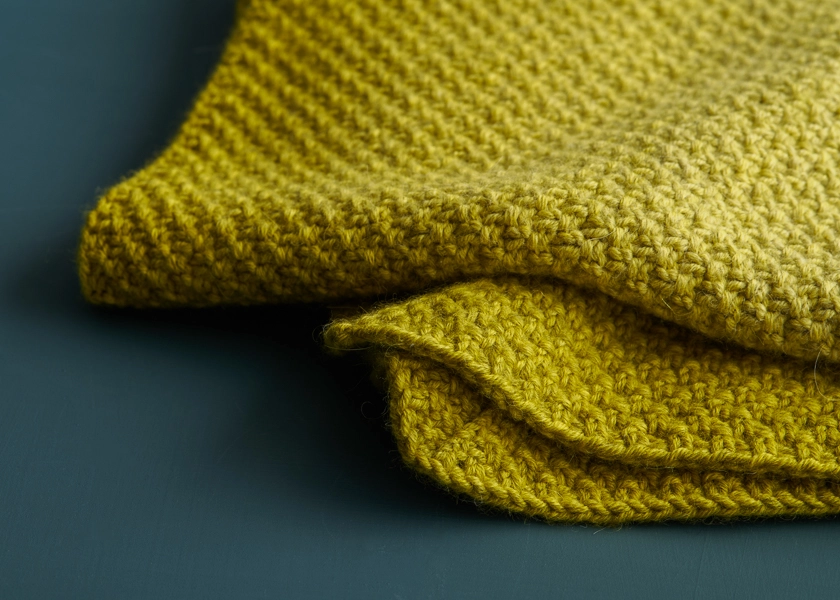
Ready to step through a portal of your own? Cast on for the Portal Blanket and watch as each color in your Nine-Note Bundle emerges, stitch by beautiful stitch.
Yarn lovers, if you adore the yarn used in this project, you’ll love exploring all of our other yarn collections! Discover over 55 thoughtfully designed yarns in nearly every natural fiber and in every spectacular color you can imagine. Only available here at Purl Soho’s online yarn store, where every skein is created with care and your creativity in mind!
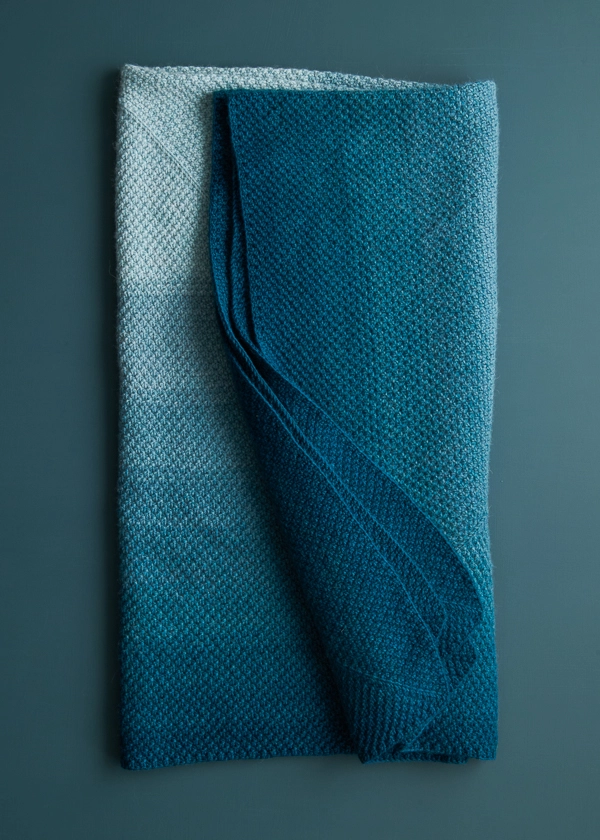
Designed by Purl Soho designer, Jake Canton. Click here to see even more of Jake’s designs!
Story written by Andrea Lotz for Purl Soho.
Want to print this pattern? On desktop, find the “print” icon in the right margin, and on mobile, scroll to the end of the pattern for it. Use the on-screen instructions to remove anything you don’t want to print!
Materials
For a Crib (Small Throw, Large Throw) size, you need…
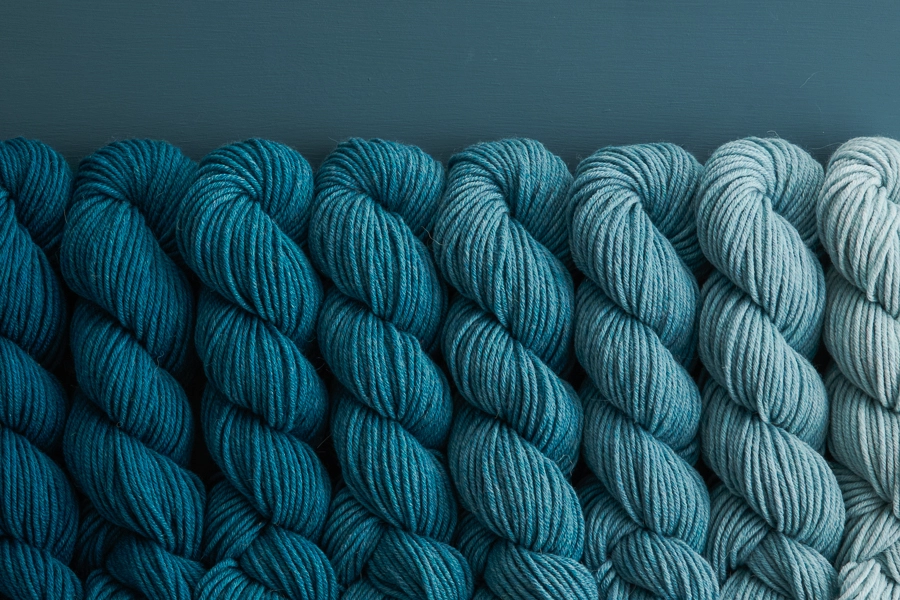
- 1 (2, 3) of Purl Soho’s Nine-Note Bundle(s). One bundle includes…
- 9 skeins of 80% extra fine merino wool and 20% baby alpaca yarn. Each bundle of this light worsted/dk weight yarn is 900 yards/ 450 grams; approximately 885 (1745, 2485) total yards required. We used Pomelo and Bluegrass bundles for our samples.
You will also need…
- US 5 (3.75mm), 16-, 32-, and 60-inch circular knitting needles OR an interchangeable needle set with multiple cord lengths
- A spare needle 1–2 sizes larger for the bind off
- A set of US 5 double pointed needles
- Stitch markers, including one unique
NOTE: If you want to use Magic Loop at the beginning of this project, you won’t need the 16-inch circular or double pointed needles listed above… Just stick with the 32- and 60-inch ones!
GAUGE
18 stitches and 36 rounds = 4 inches in Double Seed Stitch (see Stitch Patterns in the Notes section below)
Note: We designed these blankets to use as much of the skeins as possible, so achieving this gauge is critical. To avoid running out of yarn, check your gauge, be sparing with your tails, swatch using the darkest color (Color 1), and reuse your swatch yarn, if necessary. If gauge is a new concept for you, our All About Gauge tutorial is a helpful primer!
SIZES
Crib (Small Throw, Large Throw)
Finished Dimensions: 28½ (40½, 51½) inches wide x 31 (43, 54¼) inches long
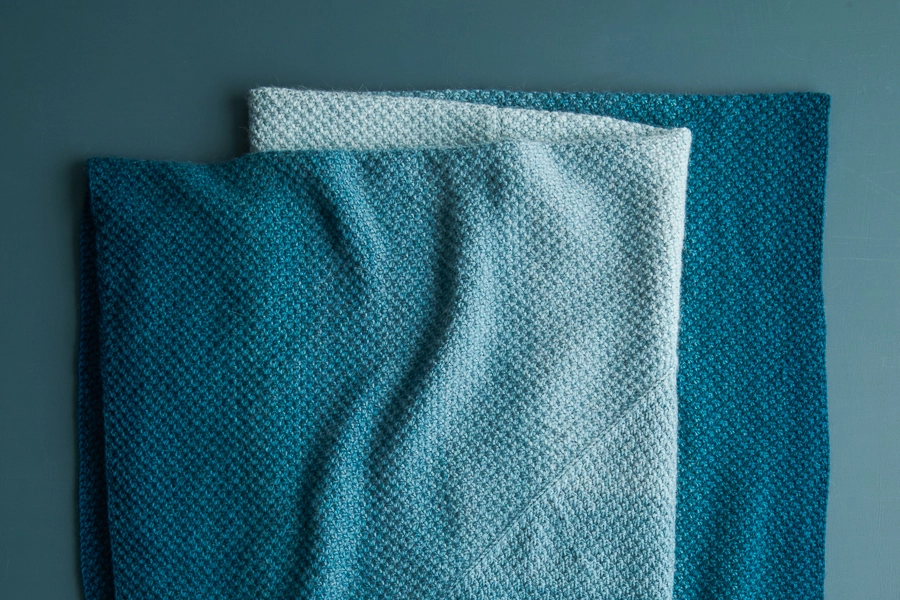
Samples: The Pomelo blanket is the Small Throw size, and the Bluegrass blanket is the Large Throw size.
NOTES
CONSTRUCTION + NEEDLES
You will knit this blanket in the round, starting in the center and increasing at each corner until you bind off around the entire perimeter. You will cast onto a set of double pointed needles or long circular needles for Magic Loop, and then switch to increasingly longer circular needles as the number of stitches grows.
COLORS 1–9
The darkest color skein is Color 1; the next lightest skein is Color 2; the next lightest skein is Color 3, and so on to the lightest color skein, Color 9.
STITCH PATTERNS
NOTE: Because you’ll be referencing these stitches throughout the pattern instructions, we highly recommend printing this pattern out so you don’t have to scroll back and forth. You’ll find some helpful tips for printing above the Materials section!
DOUBLE SEED STITCH (FOR GAUGE SWATCH)
Cast on an odd number of stitches.
Rounds 1 + 2: *K1, p1, repeat from * to last stitch, k1.
Rounds 3 + 4: *P1, k1, repeat from * to last stitch, p1.
Repeat Rounds 1–4 to desired length.
ONE-COLOR ROUNDS
Round 1: [Knit front and back (kfb), *k1, p1, repeat from * to one stitch before next stitch marker, kfb, slip marker (sm)] 4 times. [8 stitches increased]
Round 2: *K1, p1, repeat from * to end of round.
Repeat Rounds 1 and 2 specified number of times.
TWO-COLOR TRANSITION
Round 1: With new color, [kfb, *k1, p1, repeat from * to one stitch before next stitch marker, kfb, sm] 4 times. [8 stitches increased]
Round 2: With old color, *k1, p1, repeat from * to end of round.
Rounds 3 + 4: Repeat Rounds 1 and 2.
PATTERN
BEGIN AT CENTER
With Color 9 (see Notes) and using a basic Long Tail Cast On, cast 40 stitches onto 4 double pointed needles or onto circular needles for Magic Loop, leaving at least a foot-long tail.
Place unique marker and join for working in the round, being careful not to twist the stitches.
Set-Up Round: *[K1, p1] 8 times, place marker (pm), [k1, p1] 2 times, pm, repeat from * to end of round, omitting final marker (the unique end-of-round marker is the final stitch marker).
CONTINUE
NOTE: Change to increasingly longer circular needles as needed.
Continuing with Color 9, work Rounds 1 and 2 of One-Color Rounds (see Notes) 17 (25, 32) times. [176 (240, 296) stitches]
Join Color 8.
Using Color 8 as new color and Color 9 as old color, work Rounds 1-4 of Two-Color Transition (see Notes) one time. [192 (256, 312) stitches]
Cut Color 9.
With Color 8, work Rounds 1 and 2 of One-Color Rounds 8 (12, 16) times. [256 (352, 440) stitches]
Join Color 7.
Using Color 7 as new color and Color 8 as old color, work Rounds 1–4 of Two-Color Transition one time. [272 (368, 456) stitches]
Cut Color 8.
With Color 7, work Rounds 1 and 2 of One-Color Rounds 5 (8, 11) times. [312 (432, 544) stitches]
Join Color 6.
Using Color 6 as new color and Color 7 as old color, work Rounds 1–4 of Two-Color Transition one time. [328 (448, 560) stitches]
Cut Color 7.
With Color 6, work Rounds 1 and 2 of One-Color Rounds 4 (6, 8) times. [360 (496, 624) stitches]
Join Color 5.
Using Color 5 as new color and Color 6 as old color, work Rounds 1–4 of Two-Color Transition one time. [376 (512, 640) stitches]
Cut Color 6.
With Color 5, work Rounds 1 and 2 of One-Color Rounds 4 (6, 8) times. [408 (560, 704) stitches]
Join Color 4.
Using Color 4 as new color and Color 5 as old color, work Rounds 1–4 of Two-Color Transition one time. [424 (576, 720) stitches]
Cut Color 5.
With Color 4, work Rounds 1 and 2 of One-Color Rounds 3 (5, 7) times. [448 (616, 776) stitches)
Join Color 3.
Using Color 3 as new color and Color 4 as old color, work Rounds 1–4 of Two-Color Transition one time. [464 (632, 792) stitches]
Cut Color 4.
With Color 3, work Rounds 1 and 2 of One-Color Rounds 3 (5, 6) times. [488 (672, 840) stitches]
Join Color 2.
Using Color 2 as new color and Color 3 as old color, work Rounds 1 and 2 of Two-Color Transition one time. [496 (680, 848) stitches]
Cut Color 3.
With Color 2, work Rounds 1 and 2 of One-Color Rounds 2 (4, 6) times. [512 (712, 896) stitches]
Join Color 1.
Using Color 1 as new color and Color 2 as old color, work Rounds 1 and 2 of Two-Color Transition one time. [520 (720, 904) stitches]
Cut Color 2.
With Color 1, work Rounds 1 and 2 of One-Color Rounds 1 (3, 5) time(s), then repeat Round 1 one more time. [536 (752, 952) stitches]
With Color 1 and larger spare needle, bind off very loosely in (k1, p1).
FINISH
Seam the hole at the center of the blanket closed. Here’s how…
Share your progress and connect with the community by tagging your pics with #PurlSoho. We can’t wait to see what you make!
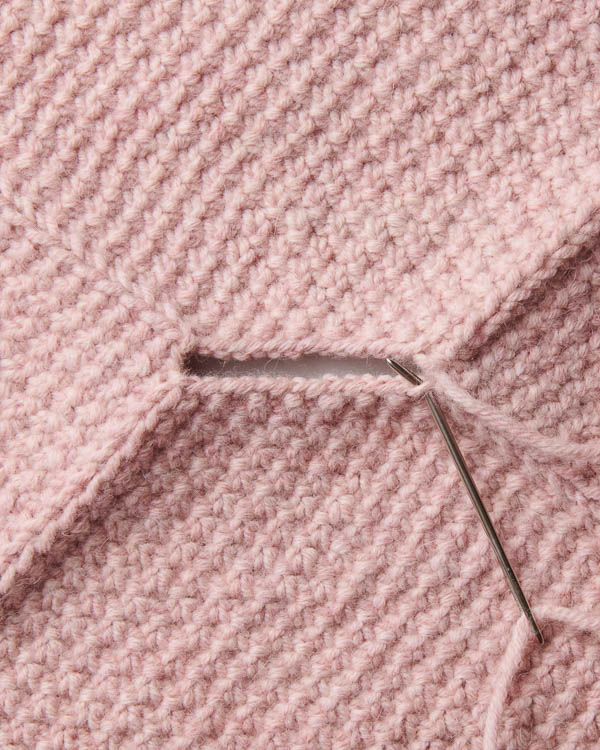
With right side facing you, turn the piece so the cast-on tail is at the right, and align the cast-on edges so the increase columns meet at each end. Thread the tail onto a tapestry needle and insert the needle through the lower leg of the first cast-on stitch on the bottom edge, moving your needle from bottom to top…
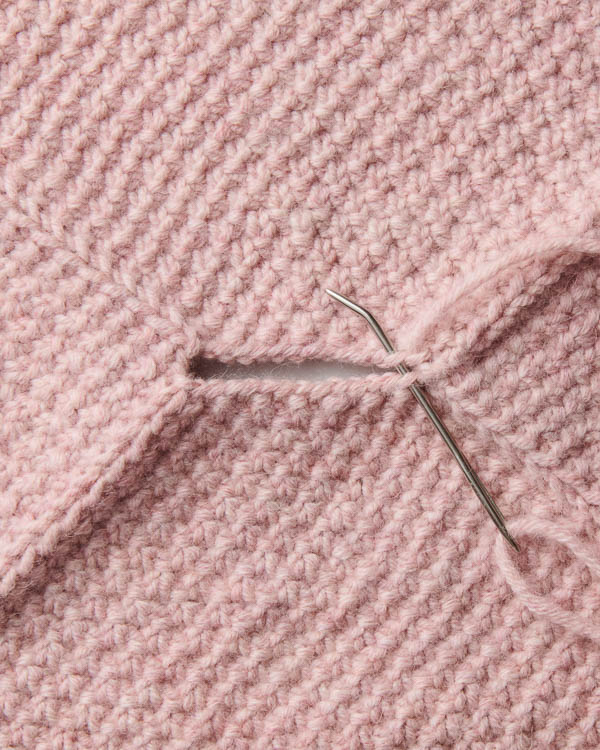
…then still moving from bottom to top, insert the needle through the upper leg of the next cast-on stitch on the top edge.
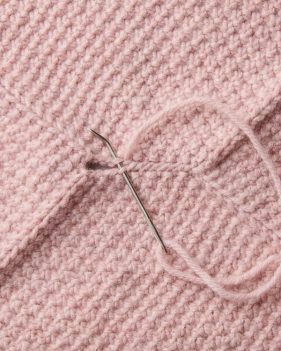

Repeat this whipstitch for the remaining cast-on stitches, then thread the tail to the back of the piece to weave in.
Weave in ends and gently wet block to finished dimensions.
LEARN ABOUT NINE-NOTE BUNDLES + ALL OUR BEAUTIFUL YARNS
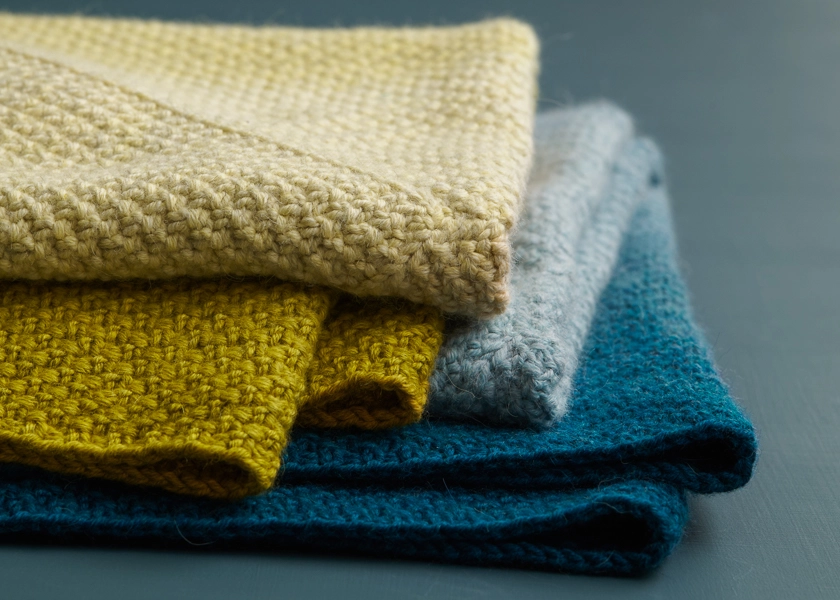
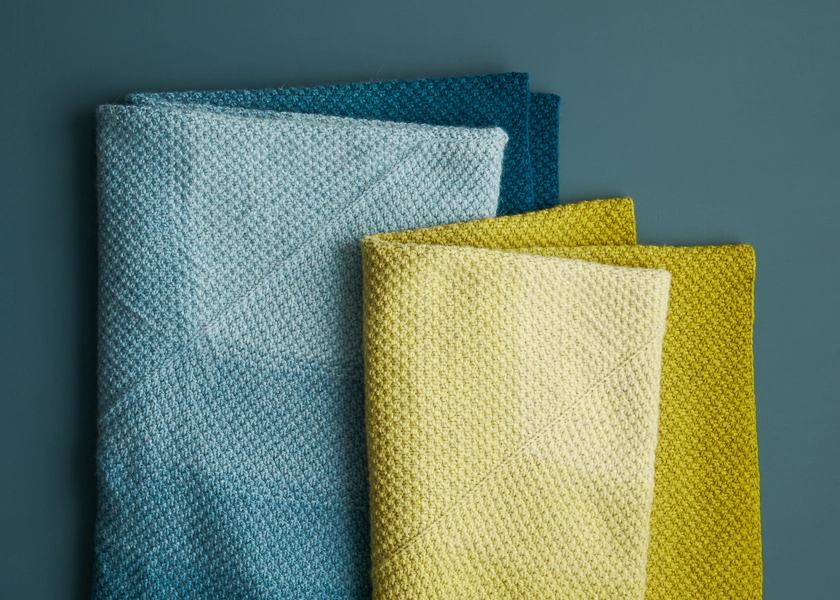
The gorgeous gradient of our Nine-Note Bundle makes this project sing! A carefully calibrated scale of nine skeins ranging from very pale to very saturated, there is beautiful complexity in every harmonious color. A light worsted/DK-weight yarn, our Nine-Note Bundles are a mix of 80% of the softest extra fine merino wool in the world and 20% incredibly soft baby alpaca… It must be experienced to be believed! For a coordinating color, pick up some Note, the same yarn with double the size per skein and its own unique palette of painterly heathered colors.
More Free Knitting Patterns
- Be sure to explore our growing collection of Nine-Note Bundle knitting patterns and cast on!
More Worsted/Aran-Weight Yarns
- Shop our entire collection of light worsted/DK-weight yarns (What does DK-weight yarn mean, really? Our guide to DK yarn will answer your questions and demystify.)
- If you want to use a different yarn, be sure to take the time to get the correct gauge. Need help? Check our All About Gauge Tutorial, our Yarn Substitution article, and our Complete Guide To Yarn for lots of helpful information.
More Yarns With Similar Fibers
- Shop merino wool yarn
- Shop alpaca yarn
Looking for more inspiration? Explore all of our knitting patterns (including tons of free knitting patterns) and knitting tutorials, buy one of our many knitting kits and yarn bundles, and shop for beautiful yarn. We have over 55 gorgeous natural fiber yarns in 1,000s of magnificent colors, designed to bring integrity, beauty, and joy to your next knitting project and only available at Purl Soho!



This looks lovely! Do you have any tips for weaving in ends in a double seed stitch pattern? It’s one where I feel like mine always show…
Thanks!
Hi Sandy,
Thanks for writing in! I’d recommend duplicate stitch as a wonderful way to weave in your ends so that the woven-in yarn tail blends in perfectly with the fabric! We’ve created a Weaving In Your Ends tutorial in case you’d like more information. Our tutorial shows how to do duplicate stitch for stockinette, reverse stockinette, and garter stitch; I think the garter stitch section is a good starting point as it shows how to weave in the tail following the knit stitch and through subsequent purl stitches as well!
For a visual reference for double seed stitch in particular, I’d recommend searching online for a video showing duplicate stitch and this stitch. We also offer a complimentary service called 1-On-1 Help where our team can chat with you over Zoom about your project and demonstrate this duplicate stitch method as well! You can also always email us at [email protected] and we can absolutely assist further there, too.
Thanks again for commenting!
Kindly,
Cat
The pattern starts with the darkest shade in the middle and both samples are the opposite! Is that on purpose?
Hi Sarah,
Thanks so much for writing in! The cast-on for this blanket begins at the center of the blanket with Color 9, the lightest color skein, so the pattern matches up with the samples. No worries on that front!
I hope this helps, and please let us know if you have any other questions!
Kindly,
Cat
Hi Cat,
I believe the original question may have originated from the wording within the GAUGE section of the pattern.
It states, “swatch using the darkest color (Color 1).”
Would you kindly clarify if the swatch should be done with the darkest color (Color 9) or the lightest color (Color 1).
Kind regards,
–>David.
Hi David!
Thanks for writing in! You’re right, the gauge swatch should be worked with the darkest color, and the pattern itself begins with the lightest color.
Warmly,
Megan
Lovely pattern! This may be an obvious question, but is it possible to adjust the pattern so that all yardage is used? I hate wasting yarn. Thanks!
Hi Jessica,
Thanks so much for your kind words! We’re so happy you’re a fan of this pattern! One way to utilize as much of the yardage as possible is to keep track of how much of each skein you’re using and knit an additional round here and there, as you see fit! I’d recommend using a kitchen scale as the most precise way of monitoring how many grams of yarn you have and determining when you’ll be able to work in an extra round, especially during the longer rounds as the blanket gets bigger.
The first two sizes do use up the majority of the bundles, though, so to play it safe, another idea is that you could also use the remaining yardage at the end of the project by adding on some decorative tassels or some cute pom poms to this blanket! For some tassel and pom pom inspiration, you can check out our Little Tassels Wrap and Pom Pom Trim Scarf. These patterns include tutorials for how to make the tassels and pom poms, too!
I hope this helps!
Kindly,
Cat
Thanks, Cat! I was looking at the large throw so this is helpful! Funnily enough, when I switch around yarn weights or alter a pattern in another significant way, I always have a kitchen scale close to hand.
So this is a baby blanket then?
Hi Susan,
Thank you for asking! The Portal Blanket comes in 3 seperate sizes including Crib (Small Throw, Large Throw). The measurements for each size can be found in the SIZES section of the pattern but I have also listed them here below:
Finished Dimensions:
Crib: 28½ inches wide x 31 inches long
Small Throw: 40½ inches wide x 43 long
Large Throw: 51½ inches wide x 54¼ long
I hope this helps and happy making!
All the best,
Gavriella
Do we need the 60 inch cables for the baby blanket?
Hi Stacy!
Thank you for your question! Yes, we do recommend using the 60″ circular needles for the baby blanket. As the blanket grows, the stitch count becomes quite large (the finished circumference is about 119″), and the longer cable will comfortably hold all the stitches and make knitting much easier to manage.
Warmly,
Megan
I have completed the set-up row. I am now on row 1 and continue to get 46 stitches when I should be at 48. I am increasing the stich before the marker and as there are only 3 markers, that’s 3 increases. Where am I missing the other 2 increases.
Thank you
Hi Sharon,
Thank you for writing in! After you place your BOR marker and knit the set up round, you will have a total of 4 stitch markers rather than 3. This means after working round 1, you will have increased a total of 8 stitches. I hope this helps clarify but please let us know if you have any other questions!
All the best,
Gavriella
Gavriella, I’m having the same stitch count issue as the comment from Sharon.
I’m using the magic loop method.
Thank you for your explanation. I will keep trying.
Lenore
Hi Lenore!
Thank you for writing in! I’m glad the explanation was helpful. Magic Loop can definitely make stitch counts feel extra tricky at first, but it sounds like you’re on the right track. Keep going, and don’t hesitate to reach out to us at [email protected] if you’d like another set of eyes or a quick check-in. We’re always happy to help!
Warmly,
Megan
In the pattern you give double seed stitch (for gauge swatch): Rounds 1+ 2: *k1, p1, repeat from *to last stitch, k1
Rounds 3 + 4: *P1, k1, repeat from * to last stitch, p1. I am on one-color rounds where I work rounds 1 & 2 (25 times in my case). This is not giving me double seed stitch pattern. Rounds 3 & 4 have to come in some where. What am I doing wrong? Thanks for your help
Hi Sally,
Thank you for writing in although we are sorry to hear you are running into issues here. Could you please send a photo of your project to [email protected] so we can have a deeper look? We’ll be able to better visualize what’s going on that way!
All the best,
Gavriella
When I made my nine-note scarves I just felted the ends of yarn together when switching skeins. It ensures less wasted yarn and no tales sticking out. Is there a way to do that with this pattern or does the rows of color change need to be a certain way?
Hi Ashley,
This pattern is written to blend the colors together by alternating the colors over four rows. You can absolutely proceed with your method though instead of alternating the skeins as written and the pattern should work just fine. I hope this helps but please let us know if you have any other questions.
All the best,
Gavriella
Help with pattern. Is the pattern the double seed stitch which was used for gauge purpose? I see repeat row 1 and 2 . On increase row 1 am I knitting the purls and purling the knits? Row 2 I knit
Knits and purl the purls? Where are rows 3 and 4 as in the gauge swatch? Sorry a new knitter!
Hi Louise,
Thanks for reaching out! For the one color section, you are only knitting rows 1 and 2 repeatedly. It would look something like this:
R1: row 1
R2: row 2
R3: row 1
R4: row 2
R5: row 1
and you will continue in the same fashion for the specified amount of times. I hope this helps but please let us know if you have any other questions!
All the best,
Gavriella
I am having the hardest time the pattern says cast on 40 stitches. I am doing the one color rounds. I go to the pattern section and the set up round has more markers than the one color rounds. Which do I use. It has been so hard to start.
Hi Donna,
We are so sorry you are running into trouble here. You will have a total of 4 markers throughout this pattern. So whether you are working the single or two color sections, you will always have 4 markers allowing you to increase 8 stitches each increase round. I hope this helps but please let us know if you have any other questions!
All the best,
Gavriella
If I want it to be more of a rectangle…how would I place the markers with the original 40 cast on to make that happen? or does it not work. Since it is a blanket… I am guessing even a movement of two stitches will work?
Hi Dina,
That sounds like such a fun idea! I’d recommend playing with your stitch marker placement over a small swatch to see how you like the way the fabric grows and is working up with a new placement. From there you should be all set to continue in your newly placed stitch marker placement.
Happy knttting,
Gavriella
I must be missing something completely- when I do the first increase round (round 1) I end up with 45 stitches. The way I am reading the pattern, I am starting with a kfb at the beginning of the row and then doing one kfb before each of the four stitch markers. So I am doing 5 KFB stitches total in round 1. Each KFB yields 1 new stitch so since I am doing 5 I am getting 5 new stitches for a total of 45 not 48 stitches at the end of the first row. Please tell me what I am doing wrong. I am trying to finish this baby blanket before my friend has her baby 🙂 Thank you!!
Hi Jennifer,
You will want to make sure that you are working 2 increases per marker. This works out to a KFB on either side of each marker for a total of 8 stitches increased.
Happy knitting,
Gavriella
Thank for you this clarification. Much clearer than pattern wording.
I’m wondering about the yarn. I’d like to make this as a baby shower gift but think hand wash only yarn is setting a new
Mom up for disaster. Do you have a yarn that has ombré colors and is washable?
Hi Karen,
I’m afraid we don’t necessarily have a another yarn with a color transition similar to our Nine-Note bundles but you could definitely choose a palette of similar colors for a lovely transition. I’d recommend Cotton Chirp for its wide color selection. I hope this helps!
Happy knitting,
Gavriella
In knitting the blanket I am not getting the four spines defining the four quadrants. If you keep the k1 p1 through out you are sometimes putting a knit over another knit after doing an increase before and after the markers due to this you don’t get the spines as shown in the picture! Super frustrating, I have started and begun over numerous times with the same thing happening. Also it doesn’t call for a provisional cast on, which I found on a site to finish the blanket. The instructions are lacking so many things….
Hi Donna,
We are so sorry you are having a frustrating time with this pattern. Could you please send us a photo of your work so that we can have a deeper look? It sounds like your increases may not be lining up as intended so we’d love to help get you back on track. As for the provisional cast on, we didn’t use one in this pattern so you don’t need to worry about that at all here. A longtail cast on will work just fine with this specific pattern. In the meantime, we will keep an eye out for your reply!
All the best,
Gavriella
I am having trouble starting this pattern. I’ve tried numerous times so after the set up and then the first row with the increases on the next row, do you just knit the pearls and pearl the knits? Thank you
Hi Peggy,
We’re glad you wrote in about this and would be happy to clarify! You’re right, on Round 2 of the One-Color Rounds, you’ll knit the knits and purl the purls!
To give a little more perspective, each time you work a Round 1 of the One-Color Rounds, the increases shift your work by one stitch, which creates that beautiful double seed stitch texture. And then on each Round 2, you’ll just work in the established “k1, p1” pattern.
We hope this helps, but if you have more questions, we’re happy to chat!
Allison
On the one-color rounds section, should the asterisk be before the first ‘kfb’? Otherwise there aren’t enough increases to get 8 new stitches. I may be reading this wrong…Thanks! Meg
Hi Meg,
Thanks for asking! The repeat actually starts at the first bracket so that you increase 8 stitches in total on the increase round. I hope this helps clarify!
All the best,
Gavriella
Can you suggest a crochet pattern for a throw using the Nine-Note Bundle? Thanks!
Hi Jody,
Thank you for writing in! That is a great question! Crochet uses about 30% more yarn for similar size projects but with that in mind, I’d recommend our Super Easy Baby Blanket or even our Boundless Granny Square blanket using a larger size hook!
Happy crocheting!
Gavriella
Can a Turkish cast on be used for this pattern, please? Thank you
Hi Kim!
Thank you for your question! Yes, absolutely — you can use a Turkish cast on for this pattern! It’s a great alternative and works perfectly with the construction. Plus, no seaming at the end!
Warmly,
Megan
The initial increase row is very challenging! I must be missing something. 4 markers, increase one stitch before marker gives me 4 additional stitches.
Hi Lynn!
Thank you for your question! This setup can definitely feel confusing at first, so you’re not alone. You should have 4 stitch markers total, including your beginning-of-round marker. Here’s how the Set-Up Round breaks down:
Set-Up Round:
* [k1, p1] 8 times, place marker (pm), [k1, p1] 2 times, pm; repeat from * to the end of the round, omitting the final marker (your unique end-of-round marker counts as the last one).
This gives you 4 sections, each separated by 3 new markers and one unique end-of-round marker.
Then, on the Increase Round you’ll work:
Round 1: [Knit front and back (kfb), *k1, p1, repeat from * to one stitch before next stitch marker, kfb, slip marker (sm)] 4 times. 8 stitches increased in the round.
If you’d like to send a photo of your setup to [email protected], we’d be happy to double-check that everything lines up!
Warmly,
Megan
I’m wondering if I’m reading the pattern correctly.
In the set-up round you knit 1 purl 1 – 8 time, (total of 8 stitches) and place a marker; knit1 purl1- 2 times (2 stitches total) — place marker. This is repeated 4 times. In round 1, 8 stitches are added by knitting into the frond and back of the first stitch, and each stitch before each marker.
Hi Ann!
Thank you for writing in! You’re very close! In the Set-Up Round, when it says [k1, p1] 8 times, that actually equals 16 stitches total (since you’re working 2 stitches per repeat). Likewise, [k1, p1] 2 times equals 4 stitches total, not 2. Once the math clicks, the rest of the pattern will work out just fine! Your understanding of Round 1 is spot on: you’re increasing by working kfb at the beginning of the round and again one stitch before each marker, for a total of 8 stitches increased. I hope this helps!
Happy knitting,
Megan
Hi.
I’m moving right along with my blanket but my concern is about all the stitches fitting on the needle???
I am knitting the magic loop method and using #5US 60″ long circular needle. As the blanket continues to grow in stitches…I can’t see how they will all fit on the cord. I am knitting the small throw size.
Are there any hints or comments for this situation?
Should I be using two circular needles and divide the blanket in half?
Help or suggestions would be greatly appreciated.
Hi Lenore!
Thank you for your question! As the blanket grows, you’ll naturally stop using Magic Loop and simply let all the stitches rest on the cable. A 60″ circular needle should be plenty long for the small throw size. No need to switch to two circulars!
Warmly,
Megan
I am thinking of doing either a 2 or 3 stitch I-cord bindoff for my small throw Portal blanket. Which do you think would look better, and do you have any idea how much of my last color yarn will be required for either one?
Thanks, Shirley
Hi Shirley,
Thank you for writing in! That sounds like a beautiful way to finish your Portal Blanket.
For a small throw, the look of a 2-stitch I-cord bind off will gives a clean, polished edge without feeling too heavy. A 3-stitch I-cord is also lovely, but it creates a thicker, rounder “frame,” which will stand out a bit more.
For yarn usage, I-cord bind offs are definitely yarn-hungry. Your blanket will be 40 1/2″ x 43″, so the perimeter is 167 inches. A helpful estimate to figure out how much yardage is needed, is the 2-stitch I-cord will need about 3–4× the perimeter, and the 3-stitch I-cord will need about 4–5× the perimeter. So you’ll want roughly 14–19 yards for the 2-stitch, and 19-23 yards for the 3 stitch. Because this blanket is designed to use most of the yarn in the bundles (and gauge/tension can change the outcome), it’s a good idea to make sure you have at least 20 yards left for a 2-stitch I-cord, or 25 yards for a 3-stitch I-cord. I hope this helps!
Warmly,
Megan
For the crib blanket do you still need the 60″ circular needles?
Thanks
Stacey
Hi Stacey!
Thank you for your question! Yes, we still recommend using the 60″ circular needle for the crib size. Even though the finished blanket is smaller, it’s knit in the round, so you’ll eventually have a lot of stitches on the needle, and the longer cable helps accommodate them comfortably.
Hope that helps, and happy knitting!
Megan
Hi,
I just finished the largest size blanket! It’s not very rectangular, however, so hopefully when I block it today I can correct that. I made the largest size so this will be a challenge. Just checking that this is normal?
Hi Melanie!
Congratulations on finishing the blanket! That’s a big accomplishment! Yes, it’s completely normal for the blanket to look a bit uneven or not perfectly rectangular before blocking, especially with a larger piece. Blocking is an important step here and should help relax the fabric and even out the shape. When you block, gently stretch and shape it to your desired dimensions. It may take a bit of adjusting given the size, but you should see a big improvement once it’s dry.
Warmly,
Megan
Thanks, Megan. I decided to go with the 3-stitch I-cord bindoff. I’m about half finished with it and although it is taking a long time, it is a very neat finish and I’m very pleased with it.
Hi Shirley!
Thank you so much for writing back in! I’m so glad to hear you’re pleased with the 3-stitch I-cord bind-off. It really does make such a beautiful, polished edge, even if it takes a bit of extra time. It sounds like it’s going to be absolutely lovely when it’s finished.
Happy knitting!
Megan
Happy Day!
Could you complete this blanket in stockinette versus double seed? I have a cake of phased yarn I thought I’d try. Thank you!
Hi Debbie!
Thank you for writing in! Yes, you can absolutely work this blanket in stockinette stitch instead of double seed.
Happy knitting!
Megan
Please clarify something in the instructions.
It says “cast 40 stitches onto 4 double pointed needles or onto circular needles.”
But it says elsewhere to cast on 40 stitches.
Please clarify.
Thank you.
Hi Laurie!
Thanks so much for your question! We specify casting on to circular needles or double pointed needles here because this blanket pattern is a center-start pattern. That means the beginning will have a circular style start that gets seamed together at the end of the project for a clean finish! This can’t be achieved by casting on to straight needles, so we recommend circular needles or DPNs for this step (whichever method you prefer for knitting in the round!).
Just to double check, though, could you let us know where else you’ve seen details for how to do the cast-on? We’re happy to take a look and see how we can assist further! Please feel free to reach out to us at [email protected] with any other questions you might have as you’re working through your Portal Blanket.
Happy knitting!
Hillary
Hello! Just curious, but did this blanket used to be called the Nine-Note Double Seed Stitch Blanket? I’m going through my pattern library and adding notes.
Hi Esther,
Thanks so much for reaching out. I’m so impressed by this…fantastic eye!
Yes…the Portal Blanket was once upon a time named the “Nine Note Double Seed Stitch” blanket. We re-released this pattern with new colors and felt it deserved a special name!
I hope you love the pattern, and please feel free to reach out with any other questions!
Happy knitting,
Hill
Hi, like many folks, I am having a hard time getting this started and have the same question as other knitters, but there seem to be two approaches above, so I can’t figure it out from reading other answers.
In the set up round, are we placing markers after the 16, 20, 36 and 40th stitch — for a total of 4 markers? Then, per one responder we increase before and after each marker to get 8 increases.
Or are we placing markers after the 8, 10, 18, 20, 28, 30, 38, 40 stitch — for a total of 8 markers, increasing before each marker?
Also, if the kfb falls on purl stitch, do we purl the front and knit the back … help! Thank you!
Hi Susan,
I’m really sorry you’re having some trouble, and I’m glad to help clear things up!
For the markers, you’ll want to put one after the 16th, 20th, and 36th stitches. You don’t need a marker after the 40th stitch because the unique end-of-round marker will do the job there. I also went through the old comments again…thanks so much for catching that! I’ve updated the comments to reflect these clarifications, and I apologize for any frustration this may have caused.
It looks like you’ll only need to use kfb, not pfb. If you kfb on the wrong side, you might see purls on the other side…that’s sometimes intentional by design. Please don’t hesitate to reach out again if you run into any more issues!
Happy knitting!
Hills
Thank you for sharing this lovely pattern. I’m enjoying the pattern, have over 400 stitches currently on my 60” circular needles and my one concern is that all the stitches will not ultimately fit on the 60” needles. I’m making the large throw and know I will get up to over 900 stitches. Any suggestions for how to manage that large number of stitches?
Hi Judy,
Thanks so much for reaching out with your kind words. I’m really glad to see you’re enjoying the pattern so far… great work! I understand your hesitation here, and I’m happy to help consider some options.
If you’re using Magic Loop, you might find that 952 stitches can fit on a 60″ cable, maybe with a little extra squishing…that’s how our sample makers handled it. But if it feels a bit tight for your liking, no worries! You could try using an extra needle to work each row. That way, one needle holds the live stitches and the other acts as your working needle, and you can switch back and forth easily. Another fun option is to connect a few interchangeable cords to make a longer cable.
I hope this is helpful! Please feel free to reach back out with any other questions!
Happy knitting,
Hills
Hi! I love your patterns, thank you for making so many available. I am struggling with the gauge and not experienced on making adjustments. I went up a needle size to get the right stitch count but my row count is quite off – 6.2 per inch vs the 9 required. Is the best thing to do is multiply the required row count by .69 and then round to the nearest multiple of 4 to maintain the seed stitch repeat? I’m nervous to make such a dramatic change to a pattern and would appreciate an experience knitters viewpoint. Thank You!
Hi Jessica,
Thank you so much for your kind words. I am thrilled to see how much you love our patterns! I’m also very sorry to read that you’re running into a bit of a hiccup reaching gauge, and I’m happy to help troubleshoot this with you.
My first idea is that our gauges are listed for laundered swatches, and I wonder if your swatch has been blocked yet? My second idea: some folks, especially when used to knitting in the round, find that their tension is different between their knit rows and their purl rows when working flat. These folks tend to use a smaller needle as their “purl needle” for the wrong side rows to even out the tension a bit. It looks like this might not be the issue here, though, as you’re working seed stitch on each side. Finally, if you’re working on metal needles, you may have an easier time reaching gauge on wooden needles, as the stitches glide so smoothly off the needles that the tension has a tendency to tighten and make a shorter row comparatively.
I might be a little reluctant to make changes to this blanket pattern’s row gauge, as I can’t really predict how that would impact the overall geometry of the shape. Though I definitely want to encourage you to always try new things out and see what kind of problem-solving you can work through. The creative iteration process is one of the best ways to supercharge your knitting knowledge!
If you’re still running into trouble, please feel free to send us an image of your swatch(es) to [email protected] (with a little note, and a ruler in the image, pretty please). Thank you in advance! We would so love to get to the bottom of this for you and get you back to some fun, relaxing knitting.
Kindly,
Hills