Your basket is empty.
Continue Shopping

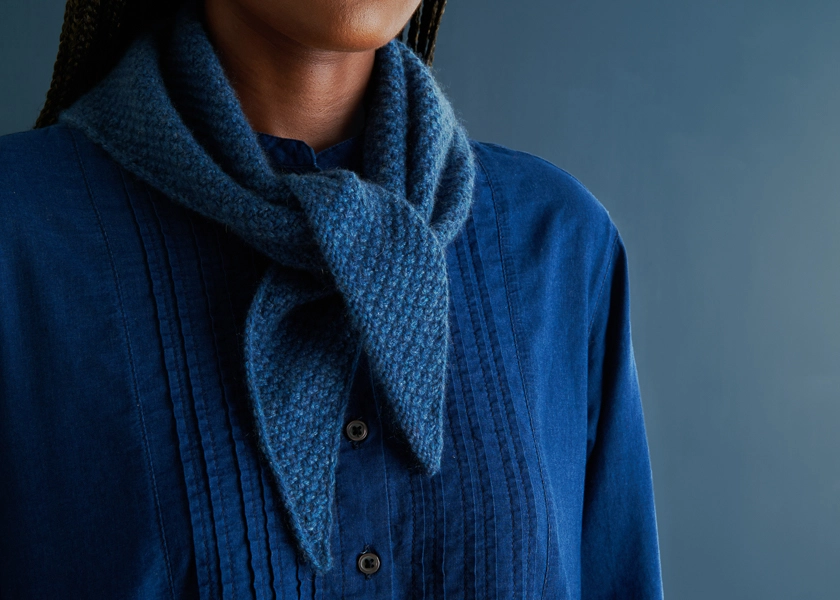
Cloudberry Bandana
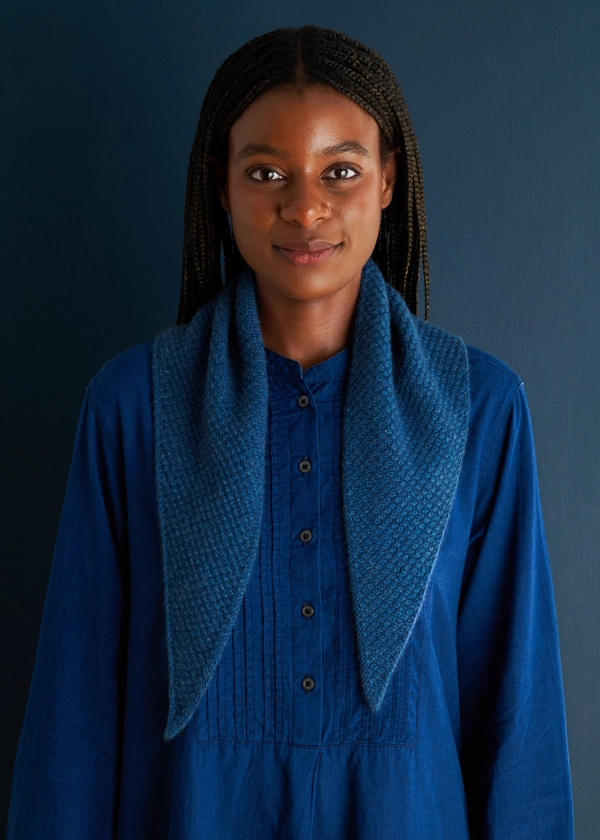
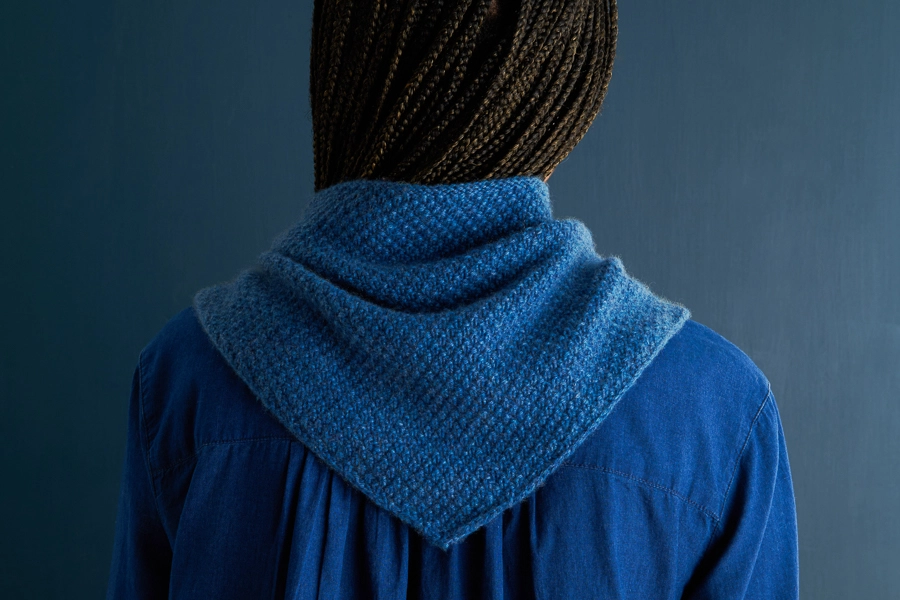
Far to the north, where cloudberries glow against the tundra like tiny embers, their jewel-like hues feel like gifts in themselves. And no matter the latitude, a cozy burst of color around your neck brings that same quiet joy! Our Cloudberry Bandana pattern, knit in our incredibly soft 100% cashmere Nigh DK yarn, is just such a treasure, the kind of present that warms the heart of giver and receiver alike.
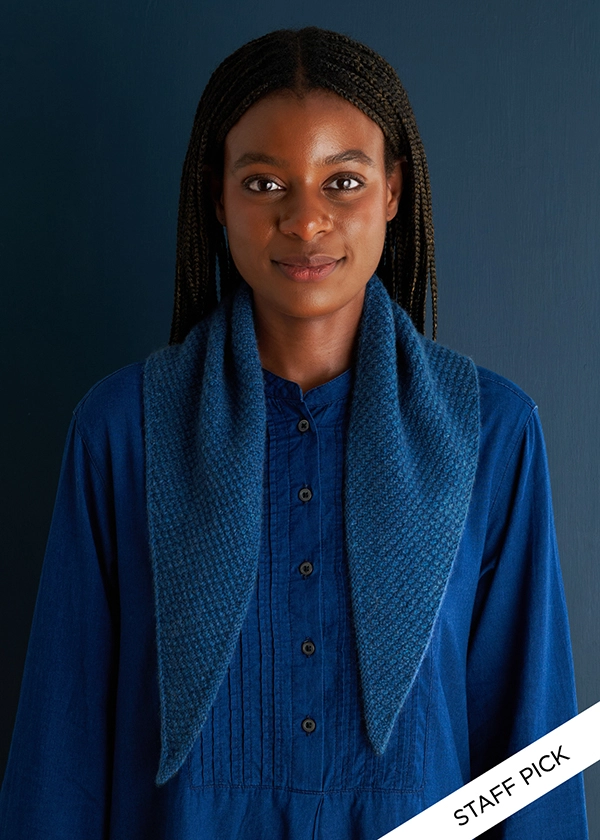
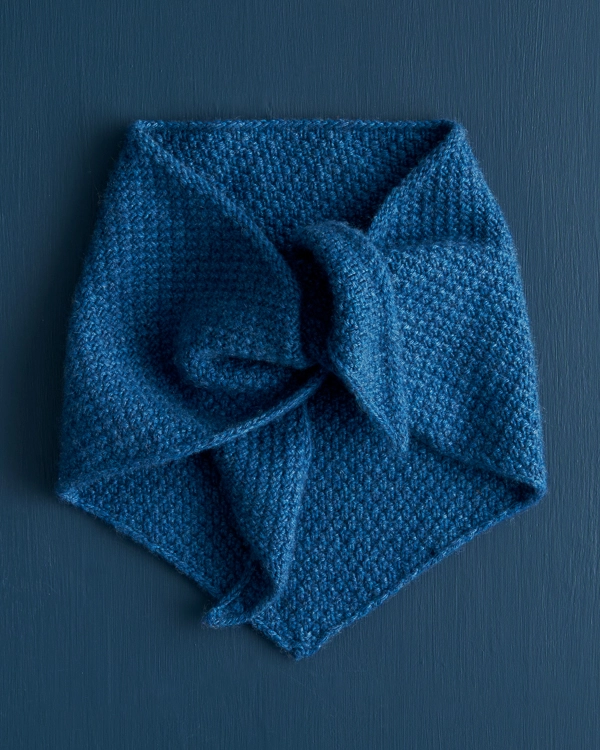
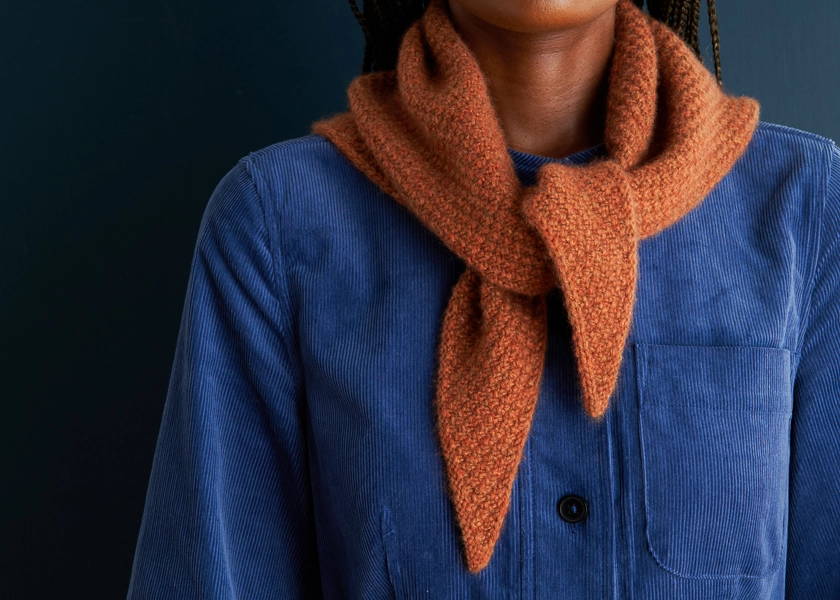
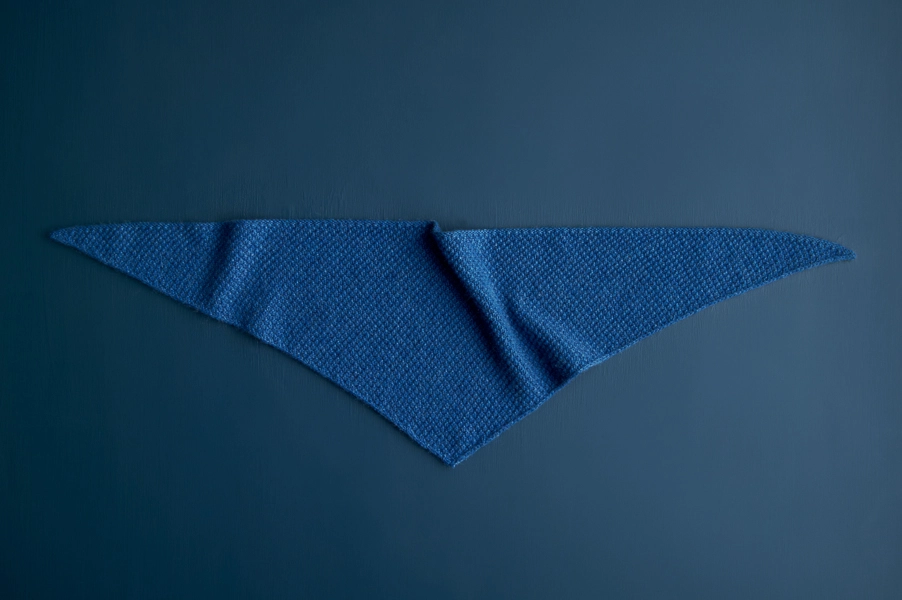
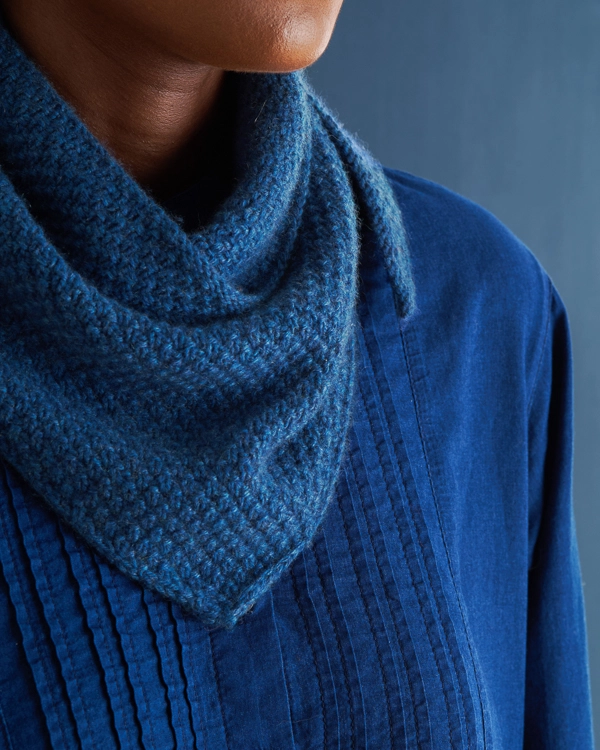
You’ll knit this bandana from the top edge down, starting with a tiny stockinette rolled edge and decreasing every row on both sides to create a shallow triangle. This versatile little scarf is totally adorable, whether styled with the bottom point in back or in front; worn loose or tied; wrapped once or wrapped twice!
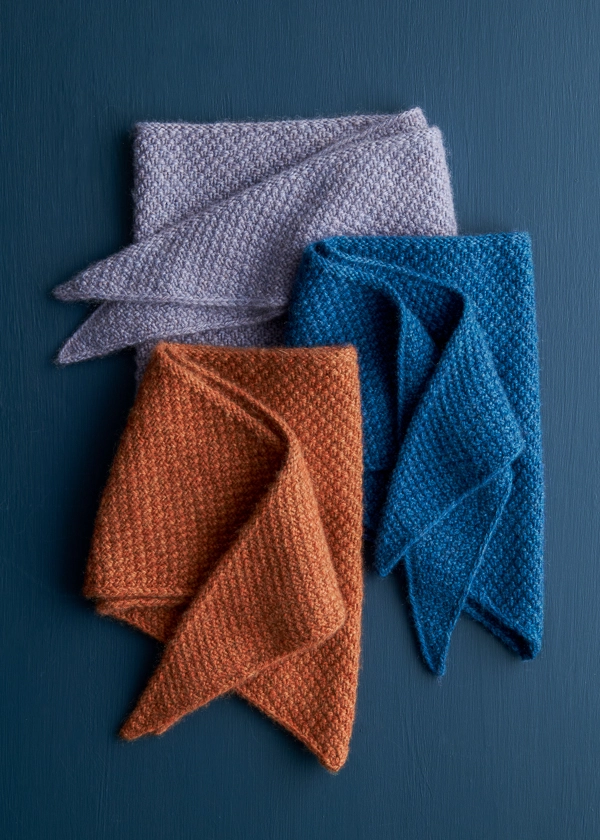
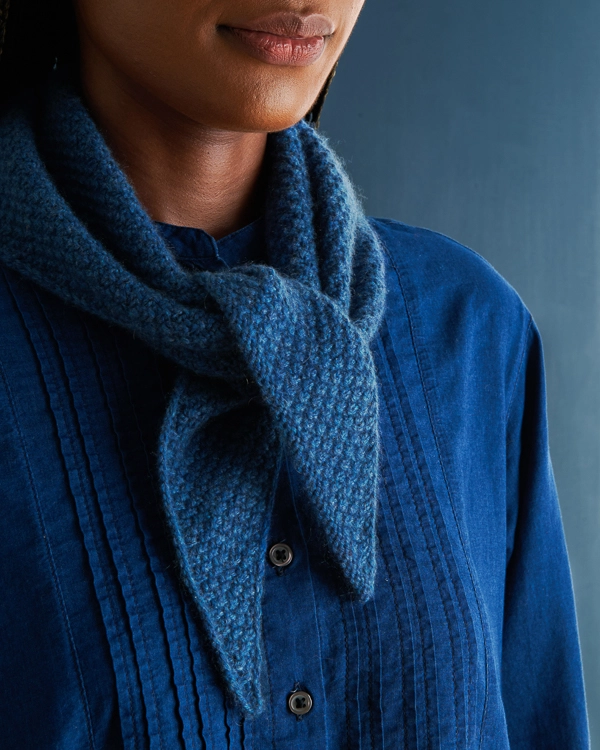
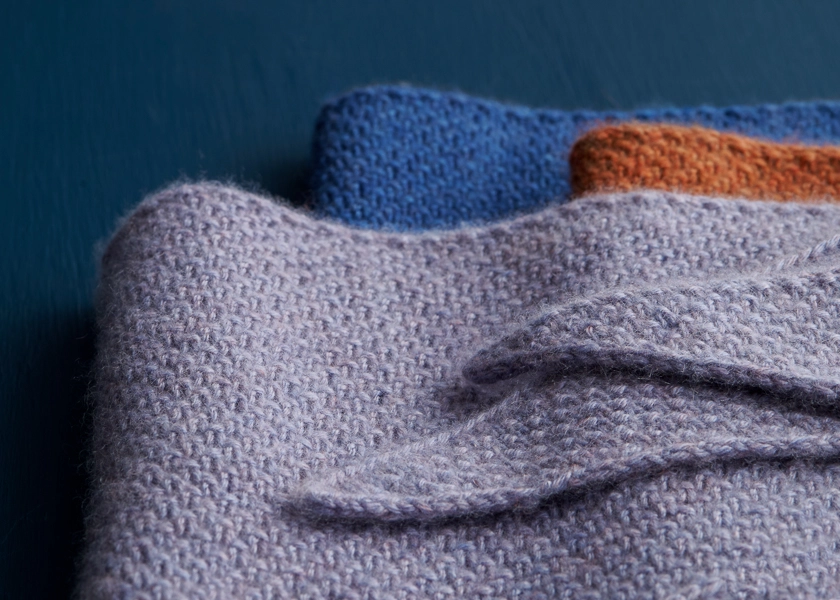
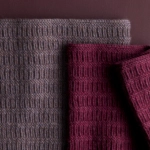
Reminiscent of the cloudberry’s plump, clustered form, double seed stitch gives this bandana its wonderfully squishy, touchable texture. Nigh DK’s round, even spin provides clear stitch definition, softened by the dreamy halo of pure cashmere.
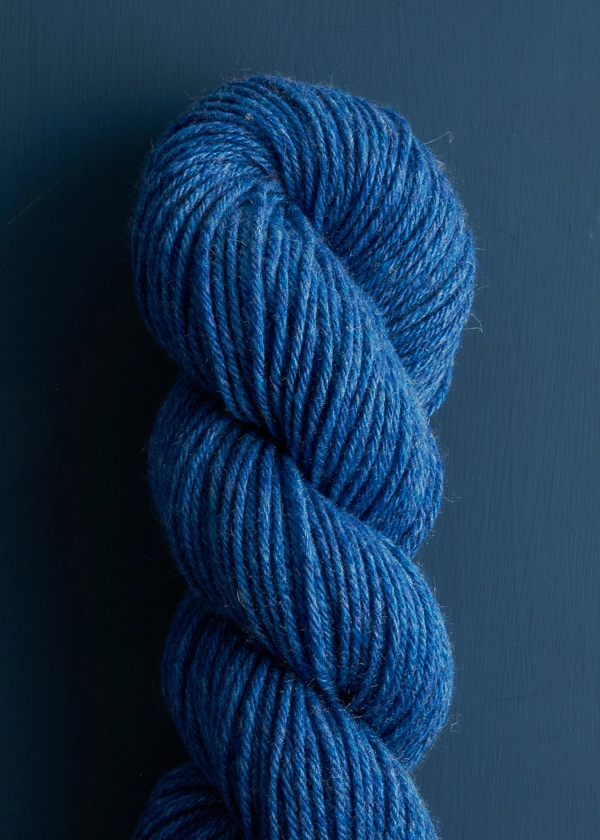
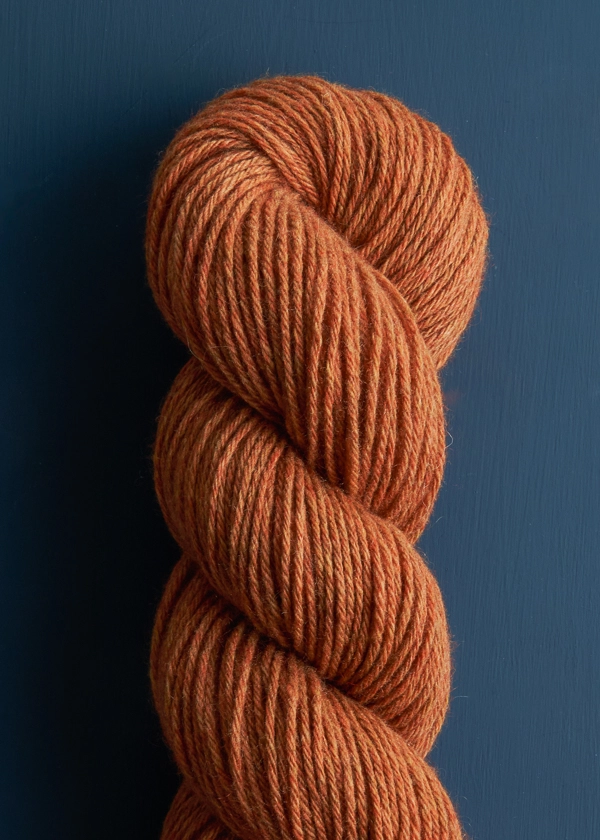
Made from the finest 100% Mongolian cashmere, Nigh DK is a streamlined yet substantial weight, feather-light yet toasty. It knits up into a gorgeous, kitten-soft fabric with a relaxed drape, heavenly for next-to-skin wear and an absolute joy on your needles!
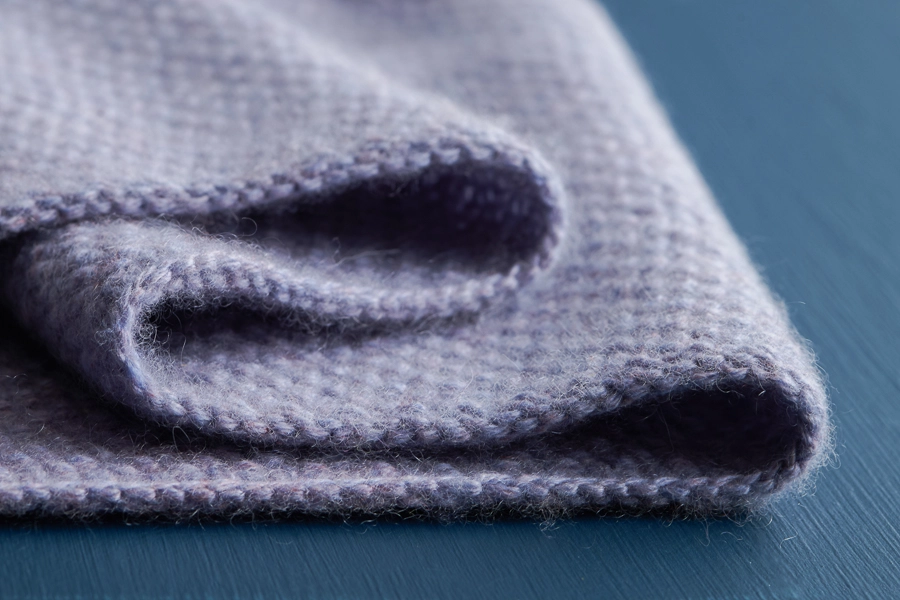
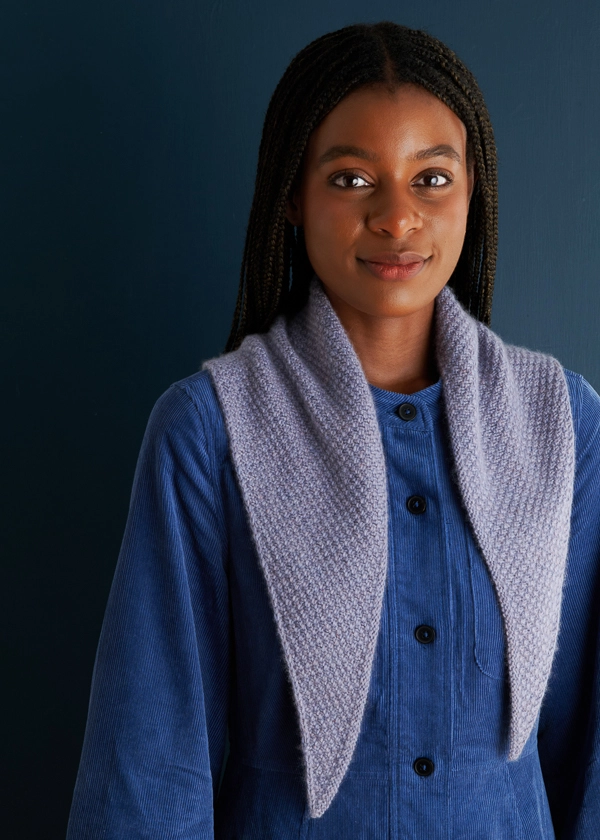
Choose from nearly two dozen inspiring colors, some heathered, some solid, from foggy Raindrop Blue to rich Warm Cognac and deep Harbor Blue… There’s a color of Nigh DK for everyone!
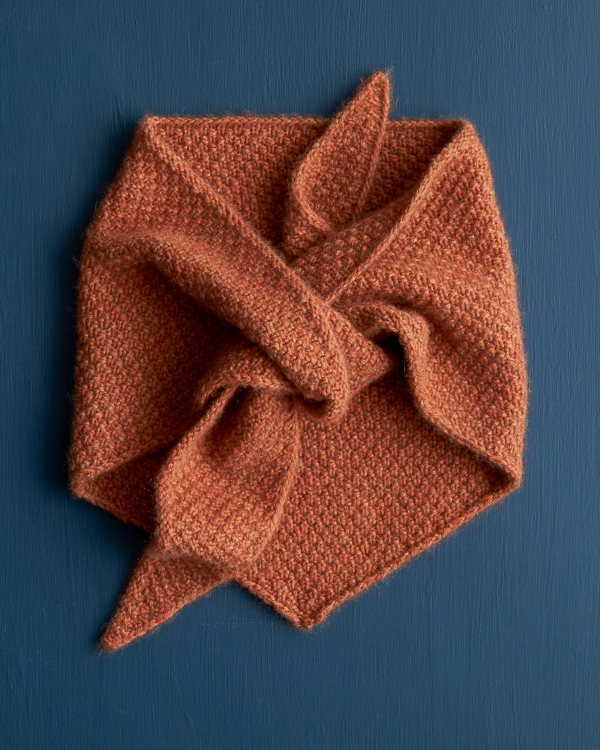
Two skeins of Nigh DK make one Cloudberry Bandana, or pick up a third skein, and you can make two! Soft as a cloud, sweet as a berry, and glowing with warmth and joy, it’s the perfect make-two, keep-one gift knit for your nearest and dearest.
Yarn lovers, if you adore the yarn used in this project, you’ll love exploring all of our other yarn collections! Discover over 55 thoughtfully designed yarns in nearly every natural fiber and in every spectacular color you can imagine. Only available here at Purl Soho’s online yarn store, where every skein is created with care and your creativity in mind!
Pattern designed and written by Purl Soho founder and co-owner, Joelle Hoverson.
Story written by Andrea Lotz for Purl Soho.
Want to print this pattern? On desktop, find the “print” icon in the right margin, and on mobile, scroll to the end of the pattern for it. Use the on-screen instructions to remove anything you don’t want to print!
Materials
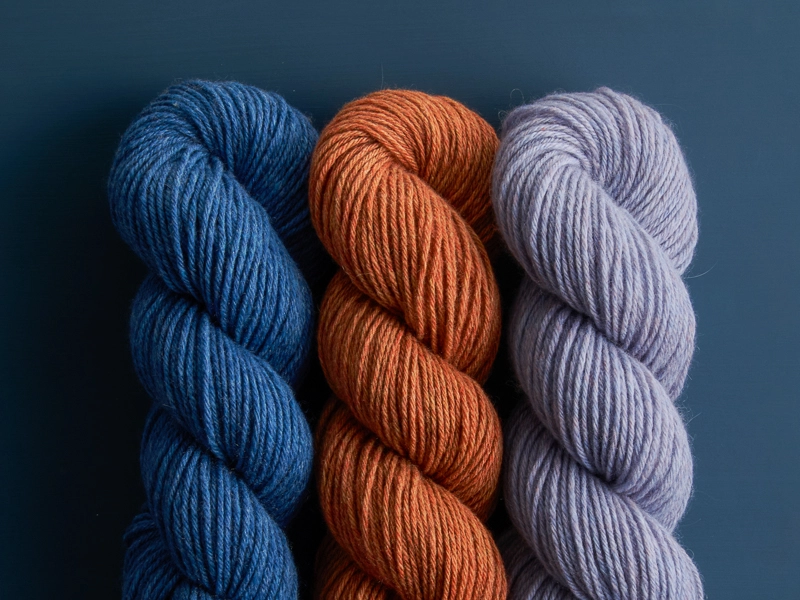
- 2 skeins of Purl Soho’s Nigh DK, 100% cashmere yarn. Each skein of this light worsted/ DK-weight yarn is 199 yards/ 55 grams; approximately 250 total yards required. We used the colors Harbor Blue, Raindrop Blue, and Warm Cognac (NOTE: Some colors are no longer available).
- US 5 (3.75 mm), 24-inch circular knitting needles (NOTE: You can use longer needles if you like, but they may feel a little finicky toward the end when you’re working on fewer stitches!)
GAUGE
22 stitches and 43 rows = 4 inches in double seed stitch (see Notes)
SIZE
- Finished Length of Wingspan: 41¼ inches wide
- Finished Depth from Point to Middle of Cast-On Edge: 10¼ inches
NOTES
STITCH MULTIPLE
This pattern works over a multiple of 2 plus 7 stitches.
TIPS
To avoid having misshapen points and taut edges, follow the pattern just as written and do not add an additional selvage stitch or slip the edge stitches. Keep your decreases loose and do not knit the edge stitches too tightly, and you’ll love how your bandana turns out!
DOUBLE SEED STITCH: FOR GAUGE SWATCH
Cast on an odd number of stitches.
Rows 1 and 2: *K1, p1, repeat from * to last stitch, k1.
Rows 3 and 4: *P1, k1, repeat from * to last stitch, p1.
Repeat Rows 1–4 for pattern.
PATTERN
Cast on 227 stitches. We used a basic Long Tail Cast On.
TIP: When you’re casting on so many stitches, it really helps to place a marker or piece of scrap yarn every 50 stitches. That way, if you lose count, you won’t have to recount all the stitches. Just remember to remove these markers when you work the Set-Up Row.
Set-Up Row 1 (right side): K1, slip slip knit (ssk), purl to last 3 stitches, knit 2 together (k2tog), k1. [225 stitches]
Set-Up Row 2 (wrong side): P1, purl 2 together (p2tog), knit to last 3 stitches, slip slip purl (ssp), p1. [223 stitches]
Row 1: K1, ssk, *k1, p1, repeat from * to last 4 stitches, k1, k2tog, k1. [2 stitches decreased]
Row 2: P1, p2tog, *k1, p1, repeat from * to last 4 stitches, k1, ssp, p1. [2 stitches decreased]
Row 3: K1, ssk, *p1, k1, repeat from * to last 4 stitches, p1, k2tog, k1. [2 stitches decreased]
Row 4: P1, p2tog, *p1, k1, repeat from * to last 4 stitches, p1, ssp, p1. [2 stitches decreased]
Repeat Rows 1–4 twenty-six more times until 7 stitches remain, ending with Row 4.
Next Row (right side): K1, ssk, k1, k2tog, k1. [5 stitches remain]
Next Row (wrong side): P2tog, p1, ssp. [3 stitches remain]
Next Row: Slip 1, knit two together, pass slipped stitch over (sk2p). [1 stitch remains]
Cut yarn and pull through remaining stitch.
Weave in ends and gently wet block.
Share your progress and connect with the community by tagging your pics with #PurlSoho. We can’t wait to see what you make!
Learn About Nigh DK + All Our Beautiful Yarns
Cast on for one of our free knitting patterns in Nigh DK, made with the most exquisite, amazingly soft 100% Mongolian cashmere you can imagine! This DK-weight yarn has four even plies and knits into a beautiful, even fabric with a soft halo that floats above the fabric’s surface, a distinctive characteristic of fine cashmere yarns. Choose from two dozen stunning colors and cast on for incredibly special accessories, baby gifts, and even socks. For more inspiration, explore all of our knitting patterns and all of our beautiful yarn!
More Knitting Patterns
- Be sure to explore our collection of (mostly free!) Nigh DK knitting patterns and cast on!
More Light Worsted/ DK-Weight Yarns
- Shop our entire collection of light worsted/DK-weight yarns (What does DK-weight yarn mean, really? Our guide to DK yarn will answer your questions and demystify.)
- If you want to use a different yarn, be sure to take the time to get the correct gauge. Need help? Check our All About Gauge Tutorial, our Yarn Substitution article, and our Complete Guide To Yarn for lots of helpful information.
More Yarns With Similar Fiber
- Shop Nigh Aran + Nigh Fine, this yarn’s aran-weight and lace- to fingering-weight siblings
- Shop cashmere yarn (What makes cashmere so special? Learn all about this amazing fiber in our guide to cashmere yarn!)
Looking for more inspiration? Explore all of our knitting patterns (including tons of free knitting patterns) and knitting tutorials, buy one of our many knitting kits and yarn bundles, and shop for beautiful yarn. We have over 55 gorgeous natural fiber yarns in 1,000s of magnificent colors, designed to bring integrity, beauty, and joy to your next knitting project and only available at Purl Soho!


Wow! Beautiful!
Can you tell me the estimated finished dimensions of the scarf?
Thank you,
Staci
Hi Stacy,
Thank you—we are thrilled you love it! The finished dimensions of this scarf are as follows:
Finished Length of Wingspan: 41¼ inches wide
Finished Depth from Point to Middle of Cast-On Edge: 10¼ inches
Happy knitting!
Gavriella
Thank you SO much for writing this pattern!! It’s exactly what I’ve been looking for and have not found until now. It’s perfect!!
Hi Kate,
We are so happy that you love the pattern! We can’t wait to see all the Cloudberry Bandana’s out in the world.
Happy knitting,
Gavriella
This is the pattern that I didn’t know I needed. BEAUTIFUL!!
Would it be possible to enlarge the scarf by casting on more stitches at the start?
Hi Maureen,
Thank you for asking! You can definitely enlarge this pattern to whatever size you like. All you need to do is cast on a multiple of 2 + 7 stitches for however long you want the longest edge/base of the triangle and work the pattern as written from there!
Happy knitting,
Gavriella
I guess I was wondering where to sub in the increases. The k2tog? The ssp? Or the ask? And how often, every row? One increase and one decrease per row?
Hi Rose,
Upon thinking on this further, modifying this pattern (while maintaining the double seed stitch) is a bit more complicated than we realized. It would require a complete rewrite, so it might be better to find a pattern we already designed that’s closer to what you’re looking for. We recommend taking a look the Simplicity Scarf and the Rosebud Shawl for some ideas!
We hope this helps!
All the best,
Allison
Wow I love this and your new patterns. I can’t wait to make this. Thank you!
Has anyone adapted this scarf into a crochet pattern?
Hi Rosamond,
That sounds like a great idea! While we haven’t tried a crochet version of the pattern ourselves, I’m sure there is a pattern out there. Please let us know if there is anything else we can answer for you!
All the best,
Gavriella
Do you recommend crochet for this project, and have instructions
Hi Irene,
Thank you for asking! I’m afraid we don’t currently have a crochet version of this pattern but I will be sure to pass your interest along to our design team for future pattern consideration! Please let us know if there is anything else we do for you!
All the best,
Gavriella
Love it! I assume that you can make it larger by casting on more stitches of an odd number. Am I correct?
Hi Louise!
Thanks for reaching out. Yes you can definitely modify the size. You will just want to make sure your cast on number is a multiple of 2 + 7.
Happy knitting!
Gavriella
Hi,
I am a little confused because there was a previous comment about casting on more stitches for a larger size, but the reply was saying that this would not be simple to do. Can you please address this? I also would like to make a longer/wider scarf.
Hi Natalie!
Thanks for reaching out! I can see how the earlier comments might have felt a little confusing. You can absolutely modify the size of the scarf. You’ll just want to make sure your cast-on number follows the pattern’s structure. To adjust the width, cast on any number of stitches that is a multiple of 2 + 7. Once you’ve done that, the rest of the pattern, including the decreases, can be worked exactly as written.
If you’d like help choosing a cast-on number for the width you have in mind, we’re happy to assist!
Warmly,
Megan
The pattern shows
Row 1 (RS): sl 3, k to end of row.
Row 2 (WS): sl 3, p to end of row.
Are the slipped stitches done as in the RS and WS rows (e.g., sl 3 knitwise; sl 3 purlwise)? Are the 3 slipped stitches knit or purled together to make a decrease? Or do the total number of stitches remain as the number of stitches you had when you started?
“Special Instructions” say
RS: sl sts pwise wyib
WS: sl sts pwise wyif
Is this the way I should be doing the slip 3 sts?
Would the RS be sl sts kwise wyib?
Thanks for clarifying!
Hi Jennifer,
I believe you meant to post this question to another pattern as there are no slip3 edges here. I went ahead and answered your question over on the wrap top pattern page but please let me know if I am mistaken!
All the best,
Gavriella
Would it be possible to adapt this pattern into a slim 2-3″ parallelogram scarf? Increases on one side, decreases on the other? I recall another pattern on here has a similar construction, but I don’t know how to work around the beautiful berry motif. Thank you for this beautiful design!
Hi Rose,
Thank you for writing in! I think this sounds like a wonderful idea and should definitely be possible. I’d recommend working it over a small swatch first just to practice a bit but the most important thing here would be how you want to work your increases. Since we used decreases in this pattern, you can just follow those instructions for the decreasing side and then be sure to keep the seed stitch pattern on the opposite side when you increase your stitches. I hope this helps you plan out your modified version but please let me know if you have any questions!
All the best,
Gavriella
Can we make this bandana using regular needles instead of circular needles ?
Hi Bahar,
Thank you for asking! You can definitely make this pattern with straight needles if you prefer!
Happy knitting,
Gavriella
Is it possible to size the pattern down so it only requires 1 skein (200 yds) of yarn? My math skills aren’t good enough to figure out how many stitches to cast on.
Just returned from Paris. These small cashmere bandanas were everywhere. They were 33.5” wide and 13” deep. Would love to make them for holiday gifts.
Hi Jane,
Thank you for writing in! While we don’t currently have a recipe for modifying the size of this pattern for certain yardages you could definitely start with the recommended amount of stitches and end the shawl once you are close to the end of your skein and then bind off. While this will result in more of a trapezoid shape like our Rosebud Shawl, it will still make for a lovely bandana. Another alternative is knitting one of our patterns that starts from a point in which the shawl grows until you have just enough yarn to bind off such as our Dovetail Scarf or our Triangle Garter Wrap. I hope this helps and happy knitting!
All the best,
Gavriella
Read this totally wrong and knitted w/ size US8 needles + a thicker yarn…it worked great but did require more yarn than I thought 😂
Hi Anna,
We totally get that! We’re so happy you still ended up with a great project. Maybe this means you need another haha!
All the best,
Gavriella
This is beautiful but maybe too ambitious for a first knitting project? Would you recommend to start with a simpler kit? Thank you!
Hi Sara!
Thank you for your comment! If you’re brand new to knitting, one of our Learn to Knit Kits might be the best place to start. Once you’re comfortable with the basic stitches, the double seed stitch used in this pattern will be easy to pick up.
Warmly,
Megan
If I wanted to modify to all stockinette instead of seed stitch would I need to make any modifications to the increase/decrease instructions?
Hi Natasha!
Thank you for your question! If you’d like to work this pattern in stockinette instead of seed stitch, you won’t need to modify the increase or decrease instructions. The knit-side decreases happen on the right side and the purl-side decreases on the wrong side, so they’ll still behave exactly as they should.
Happy knitting!
Megan
Hi,
After setup row 1 i tried to do setup row 2 – I opened the instruction video for ssp and I think I did something wrong – in second row I am on the right side and ssp should be done on the wrong side. But setup row 1 includes all those stiches purled, which creates the right side in the next row. Help!
Anna
Hi Anna!
Thanks so much for writing in! I can absolutely see how that would feel confusing. In these setup rows, you can think of the fabric as reverse stockinette, where the right side is the purl side and the wrong side is the knit side. So even though it feels like you’re purling on the setup row, you are ending up on the correct side for the SSP on the next row. You’re on the right track!
Warmly,
Megan
I just finished this lovely pattern! Thank you so much for sharing. The points of the triangle at each end of the cast on edge, curl up away from the cast on edge towards the decreasing edges. It’s sort of cute but I’m wondering if you know of a way to make the whole thing lay a little flatter? It’s like I have too much tension on my decreasing edges. I did use a different yarn, wool DK weight – maybe that is the issue. Thanks for any thoughts you might have!
Hi Julie!
Thank you for writing in! A little curling at the triangle points can definitely happen. Keeping your decreases a bit looser and making sure the edge stitches aren’t worked too tightly can help those corners relax. A good blocking can also make a big difference — giving the edges a gentle stretch and shaping the points while the fabric dries will help them lie flatter. Congratulations on finishing the pattern!
Warmly,
Megan
Hi,
I just finished this project and it is lovely. I am in love with Nigh DK!
As much as I tried to keep my border stitches loose, per the pattern notes, I don’t think I did a sufficient job. While not super taught, the edge could have a little more give.
Intentionally keeping those stitches loose was a little tricky for me. I don’t know if you have any tips for me? I really would like to make this again.
I had an idea to wrap the yarn around twice while making those stitches, but maybe this will result in too loose of stitches. I may knit up a swatch using this technique to see how it comes out, but wondered what you think of this.
Hi Natalie!
Thank you for your question — and I’m so glad to hear you’re loving Nigh DK! Keeping those border stitches loose can definitely be a little tricky, even with practice.
Your idea of wrapping the yarn twice is a good one, and I agree — working up a small swatch is the perfect way to test it. Depending on your tension, it may give you just the extra ease you’re looking for… or it might end up a bit too loose, so sampling it first is a great approach.
We’d love to hear what you discover if you try the double-wrap method!
Happy knitting,
Megan
I struggle with the long tail cast on. Would the cable cast on or knitted cast on work with this pattern? Which one would you suggest? Lovely pattern! Thank you!
Hi Kathy!
Absolutely you can use a different cast on if long-tail is tricky for you. Between cable cast on and knitted cast on, I’d recommend the knitted cast on for this pattern. It’s a bit stretchier and will give the scarf a nicer, more comfortable edge.
So glad you’re enjoying the pattern!
Happy Knitting,
Megan
Thank you, Megan!
I like several of the colors of the Quartz yarn you sell. Would it work with this pattern? Or, do you have other yarn recommendations you sell, other than the cashmere listed? thanks!
Hi Cameron!
Thank you for your question! Quartz is a fingering weight yarn, so it wouldn’t be a direct substitute for this pattern unless you held it double. If you’d prefer to use Quartz held single, we can absolutely help adjust the stitch count to achieve a similar finished size.
If you’re interested in other yarn options at a similar gauge, we have several great alternatives. Pepper, Cotton Chirp DK, and Good Wool would all be good substitutes! Let us know if you need any more help picking the perfect yarn for your project!
Happy Knitting,
Megan
If converting to stockinette stitch (stocking stitch over her in England!), should I just have an even number of stitches when casting on as I think seed stitch always requires an odd number. Thanks!
Hi Francesca!
Thank you for your question! Yes, you’re exactly right. If you’re switching to stockinette stitch, you’ll just want an even number of stitches when casting on. Seed stitch does require an odd number to work symmetrically, but stockinette doesn’t, so that adjustment is perfectly fine.
Happy knitting!
Megan
I was wondering if you could please recommend one of your other yarns to substitute for the Nigh DK for this pretty bandana pattern. It’s a little pricey for my budget. (Perhaps after I knit a trial run of this bandana I would consider it. ) This looks like a good pattern to make for gifts but even more so, having a less expensive option would work better for that idea also.
Thanks!
Hi Susan!
Thank you for your question and what a lovely idea to make this bandana as gifts! If Nigh DK is a bit out of budget right now, we have several great substitutes that knit up at a similar gauge and will still give you a beautiful result: Pepper is a superwash merino that’s soft, springy, and very gift-worthy, with several lovely colors. Cotton Chirp DK is a soft plant-based option in Peruvian Pima cotton — great if you want something breathable and lighter. Good Wool is a lovely 100% Andean highland wool that’s a bit more affordable and works well at a similar gauge.
All of these yarns will work nicely in this pattern and are great for making multiple gifts without stretching the budget. You can also explore all of our DK-weight yarns for more options.
Happy knitting!
Megan
I would like the finished scarf to be 54″ and I would like to use a cashmere fingering or lace weight yarn. How many stitches would I need.
Thank you for your response
Claire Rosenzweig
Hi Claire,
Thanks for writing in about this! If you’re knitting the scarf with the same gauge as this pattern recommends (22 stitches = 4″), you can cast on 297 stitches to make a scarf that is 54″ wide at the longest side. If you’re knitting at a different gauge, your cast on amount will be different, but we can help you calculate it!
I recommend making a swatch with the yarn and needles you’d like to use and then measuring your gauge. Then you’ll need to do a little math…multiply the number of stitches in 4″ (from your swatch) by 13.5 (for a 54″ size). That number will be your approximate cast on number. This pattern is worked over a multiple of 2 + 7, so you may need to adjust your final cast on number so it will work with the pattern.
We hope this helps! Let us know if you have any other questions.
Kindly,
Allison
Does this pattern use all of the two skeins? I’m wondering if it’s absolutely necessary to check the gauge.
Thank you,
Ellen
Hi Ellen!
Great question! The pattern doesn’t use up both skeins entirely. Each skein of Nigh DK is 199 yards, and the bandana only requires about 250 yards total, so you’ll definitely have yarn left over.
That said, checking your gauge is still a really good idea. It helps make sure your finished piece comes out the right size and with the fabric feel you’re hoping for. But yarn-wise, you’re in the clear!
Warmly,
Megan
Hello, I just started the pattern and was wondering about the end of the wrong side rows starting with set up row 2 where the pattern says to knit to last 3 stitches and then SSP , P1. Going to row 2 it states repeat to last 4 stitches, k1, ssp, p1. But for each of these there’s actually 1 more stitch left. For example: if you knit to last 3 stitches and then SSP and then purl 1, thats 4 stitches, not 3. And the same for the next wrong side rows correct? Or am I missing something?
Hi Amy!
Thank you for writing in! You’re not missing anything. The wording is a little confusing, but the math does work out. When the pattern says “knit to last 3 stitches,” that count refers to the stitches before working the decrease sequence. The SSP uses two stitches, and the final purl uses one stitch, so you are indeed working the last three stitches total.
The same logic applies on the following wrong side rows. The instructions are written this way to keep the Double Seed Stitch pattern clear while positioning the decrease correctly. I hope this clarifies things!
Warmly,
Megan
Thanks for the reply to my comment about keeping the edge stitches loose!
(I love my finished bandana but it does pucker when I wear it tied around my neck- and really want the next one to come out well.)
If I still had trouble with doing this intentionally (as I am planning on making a second bandana) my other idea is to knit those edge stitches on a larger needle, switching up to a size 6 (or 7?) for those last 3 and then first 3 stitches, and just switching back to the size 5 after completing the edge stitches. I have no idea if this is going to work or be too cumbersome, but maybe it would be worth it in the end! I would love to hear what you think and if going up .25 mm should be sufficient for those stitches.
Hi Natalie!
Thanks so much for following up, and I’m so glad you loved your finished bandana! That puckering can definitely be frustrating, especially when everything else turns out beautifully.
Your idea of switching to a larger needle just for the edge stitches is totally valid and would work in theory. Going up 0.25 mm (or even 0.5 mm) can be enough to relax those stitches, but as you suspected, it can feel a bit fiddly to switch needles twice every row. Some knitters don’t mind that extra step, but others find it interrupts their rhythm. Before going that route, you might try wrapping the yarn twice around the needle when working the first and last stitch, then dropping the extra wrap on the following row.
If you do want to experiment with needle size, I’d suggest testing it on a small swatch first. Try working the edge stitches with a needle 0.5 mm larger and see if the fabric relaxes enough to prevent puckering without looking uneven. You’re absolutely thinking along the right lines, and a little experimentation on the next bandana should get you exactly the drape you’re after!
Happy knitting!
Megan
New to knitting – how would I make this stripey with two wool colours please?
Hi Samm!
Thank you for your question and welcome to knitting! How exciting that you’re thinking about stripes already! You can absolutely make this stripey with two wool colors. The main question is how wide you’d like your stripes to be. For example you can change colors every 2 rows for narrow stripes, every 4–6 rows for medium stripes, or every 8+ rows for bold, wide stripes.
To switch colors, simply start knitting the new color at the beginning of a row. Leave a small tail (about 6 inches) to weave in later, and carry on knitting as usual. If your stripes are fairly narrow, you can carry the unused yarn up the side instead of cutting it each time. If you need more of a visual aid, please feel free to email us at [email protected] and we’d be happy to assist!
Happy knitting!
Megan
Unfortunately, this pattern is not working for me. I’m wondering if you can suggest any other patterns on which I can use my two skeins of Nigh DK.
Thank you,
Hi Ellen!
Thank you for writing in! I’m so sorry this pattern hasn’t been a good fit. We’d be happy to help troubleshoot if you’d like to share what wasn’t working for you!
If you’d prefer to switch projects, many of our Nigh DK patterns are designed for one or two skeins, so you could make a pair of smaller projects, or choose a project that uses closer to two skeins. If you’d like, tell us what type of project you’re in the mood for and we can suggest some options!
Warmly,
Megan
This is a beautiful pattern, and I am enjoying knitting with the Nigh DK 100% cashmere yarn so much. I am close to being finished and notice I am to “gently wet block.” Is there any possibility this bandana will felt with the blocking? Do you have any tips to prevent felting? Thank you.
Hi Phyllis!
Thank you so much for writing in! The key word here really is “gently.” Cashmere will not felt with gentle wet blocking, so long as you avoid agitation, heat, and sudden temperature changes. We recommend soaking your finished piece in cool or lukewarm water with a small amount of wool wash, letting it sit without movement, and then carefully pressing out the water (no wringing!). Roll it in a towel to remove excess moisture, then lay it flat to dry, shaping it to the desired dimensions.
As long as you handle it gently throughout the process, your bandana will relax and bloom beautifully without any risk of felting. I hope this helps!
Warmly,
Megan
I’m really eager to make a bandana with a surplus of Linen Quill that I purchased from you during a sale (I can only make so many tea towels). Would Linen Quill work for this bandana? I’m a little freaked out by the Larkspur pattern. It would be okay if a Linen Quill version of Cloudberry turned out a bit smaller overall.
Thanks!
Shelly
Hi Shelly!
Thanks so much for your question. I am so glad you have some Linen Quill you’re excited by! I would suggest knitting a gauge swatch on a smaller needle, and seeing if you like the feel of the fabric. If so, by all means! We would love to see how it turns out. And your intuition is correct, it is likely to be a bit smaller in the end. It might potentially have a more transparent effect with larger holes in the fabric. It’s at the very edge of the yarn’s gauge range, being a fingering weight, whereas the pattern was worked in a light worsted/dk… and will have some extra drape.
P.S. We’d love to help you feel confident working through the Larkspur when you’re ready! Please don’t hesitate to reach out and schedule a 1-on-1 Help session.
I hope this is helpful. Please feel free to reach out with any questions.
Happy knitting!
Hills
Thanks, Hillary. I will let you know how it goes. I love an interesting knitting experiment!
Thanks again,
Shelly
Hi, I love this pattern and have purchased the yarn and attempted a couple times.
I wanted to make sure that when following the pattern (set up rows and then 1-4 on repeat) should result in the same pattern (I think it’s called seed), occasionally i see a couple rows and it looks like what I think is a rib stitch.
Is that because I maybe I lost my place when doing a row and instead of doing a p1, k1, didn’t a p1 and then a p1 and then a k1. Etc. so it threw my row off?
Does this make sense? I am newer to knitting but understand the pattern steps and watched all the videos:)
Hi Carrie!
Thanks so much for writing in with your question! I’m so glad you’re loving the Cloudberry Bandana. Great work so far!
I can understand your apprehension and I’m happy to help! It’s totally possible you lost your place. Your instinct is great. If you did lose your place, the stitches would line up in ribbing instead of seed stitch. I would recommend looking up “reading your stitches” so you can feel more confident in putting down your work and picking it up again. You’re doing great!
I’d also suggest using stitch markers to mark the selvage edge on either side. This could help you ensure your decreases are consistent, which could also throw off your stitch pattern.
If you’re still running into trouble, I’d recommend sending a photo of your work to [email protected] and we would love to take a look for you. We also offer 1-on-1 Help sessions and would be glad to take a look there, as well!
I hope this helps! Please feel free to reach out with any other questions you might have!
Happy knitting!
Hills
Thank you so much for these tips! I just didn’t want to give up so now I feel like I have some tools to lean on (and a few things I can read up on).
If I need more help, I will definitely send a photo or set up a call. I feel so close:)
Carrie
Hi Cathy!
I’m really glad this has been helpful for you. No need to give up, you’ve got this! If you’d like to rip back your work to correct errors, I’d recommend searching for videos on “frogging” and “tinking.” We have a handy tutorial for adding a life line if you choose to rip back!
We’d love to see the end result. And yes, always feel free to send us a photo or schedule time with us, we’re happy to help!
Happy knitting!
Hills
Hi there,
I’ve made this scarf and it turned out great! I’m onto my second and have made it larger by increasing the stitches are per the advice above. My total stitch count is 285 (278 being a multiple of 2 + 7).
I’m up to the last three rows of the scarf (final decreases) and should have been left with 7 stitches, but am left with 9 instead after finishing row 4.
Would you have any advice please for how I should work the last few decrease rows to maintain the seed stitch pattern. Any help would be greatly appreciated. Thanks.
Hi Lauren,
Thanks so much for reaching out. Congrats on nearly finishing your second Cloudberry Bandana! I’m so glad to hear you loved the pattern so far.
This sounds like a lovely modification… great work! At this point in the project, I would suggest replacing your decreases with doubled decreases. This should get you to your desired stitch count. You can replace k2tog with k3tog and ssk with sk2p. The same principle applies to doubled purl wise decreases.
I hope this helps, and happy knitting!
Hills
Thank you, I really appreciate the response and advice.
I’m thinking of knitting a red version and considering Note in Kiln Red or Goldenberry Alpaca in Wild Strawberry. Which of these yarns would look closest to original bandana and would finished size be similar? Also would there be a needle size adjustment? Thanks
Hi Victoria,
Thank you so much for reaching out! I’m so glad to hear you’re looking into the Cloudberry Bandana as your next project.
This sounds like a really lovely project in either colors and yarns! There are a few things to consider when substituting yarns: gauge, fiber content, and yarn construction (is it plied? is it woolen spun? etc).
Both of these options are likely to achieve gauge, resulting in a finished piece with similar measurements. If we look at the fiber content of the original Nigh DK, it’s 100% cashmere (yum!) and 4-plied. Cashmere is a very soft yarn with little elasticity (or stitch memory) and typically creates a fabric with beautiful drape and a soft halo. Note is a round multi-plied with 80% Extra Fine Merino Wool, 20% Baby Alpaca…and creates a plush fabric with bounce and body. Goldenberry Alpaca is a single-ply 100% alpaca, offering a lovely soft halo.
These both sound like good contenders…I would suggest considering what part of the fabric you like the most. For high drape and a soft halo, I would suggest Goldenberry Alpaca. Note would still offer some drape, with less halo, but would likely imitate the shape of each stitch closely given it’s plied nature. I would always recommend knitting (and blocking) a gauge swatch to check you achieve gauge, and that you like the look and feel of the fabric. This would also be how you determine if you need to adjust your needle size to meet gauge.
I hope this helps, and please feel free to reach out with any other questions you might have!
Happy knitting,
Hills
Thank you. Goldenberry Alpaca it is!!
Amazing…we can’t what to see your results! Happy knitting!
Hills
Hi there! I started this pattern with two strands of a fingering weight cashmere yarn that I had on hand, using size 5 needles. Of course I’m not going to have enough yarn to finish and am deciding between a single strand of DK weight or another two-strand of fingering (cashmere either way). Have you had any experience with switching like this? Will it look weird?
Hi Laura,
Thanks so much for reaching out! This sounds like a lovely project.
We’ve all lost a game of yarn chicken or two, and I’m sorry to hear you’re in that boat! While either is possible, I would probably suggest working with 2 strands of fingering-weight throughout the pattern for consistency. There tend to be some inconsistencies in the weight of DK/Light Worsted weight yarn among brands. It’s also possible you might notice the difference between two strands held together, and one plied strand in each “v”. The stitches might have slightly less depth (though it shouldn’t be too obvious if you choose DK, especially if it’s a dark colored yarn).
I would say the most important factor is if you’re able to achieve the same gauge. I would recommend knitting (and blocking) a gauge swatch with whichever substitute you choose, just to ensure you can meet the same gauge as the rest of your project.
I hope this helps, and please feel free to reach out with any other questions you might have!
Happy knitting,
Hills
Thanks so much, you knitting wizards are the best! I ended up ordering the Nigh Fine—fingers crossed!
I’m so happy to hear this! We’re always here and happy to help. We would love to see the final bandana!
Happy knitting, Laura! -Hills