Your basket is empty.
Continue Shopping
Saltwater Bandana
A breezy bandana with a touch of maritime flair, the Saltwater Bandana is a simple, satisfying pattern to explore the rich, tidal blues of our new Japanese Denim Cotton yarn. Lightweight and cool, this beautiful knitting yarn is inspired by the hardworking sensibility of chambray shirts and well-worn dungarees, softened by weather and time.
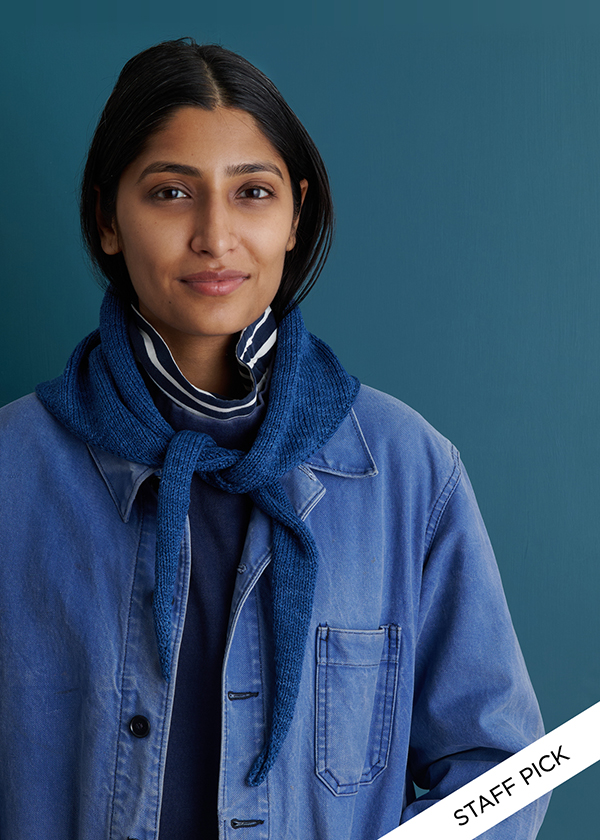
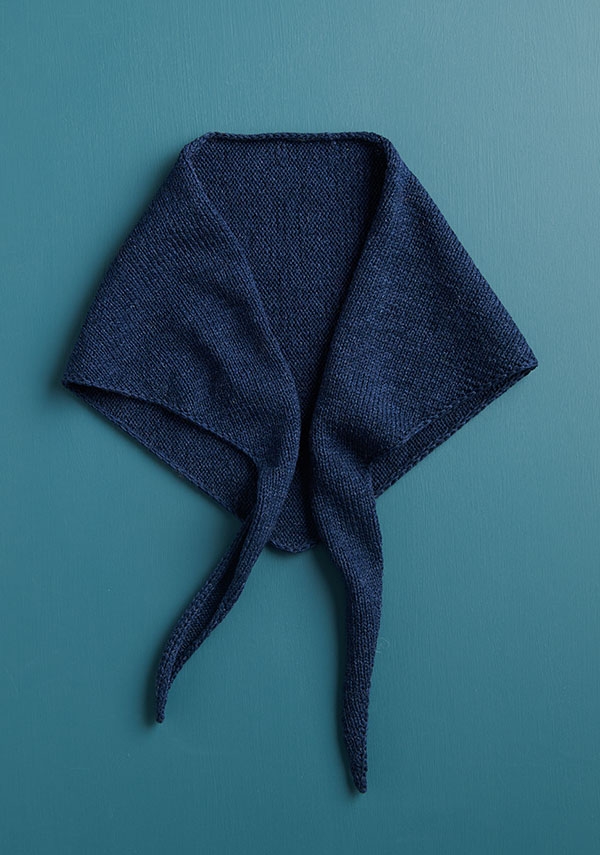
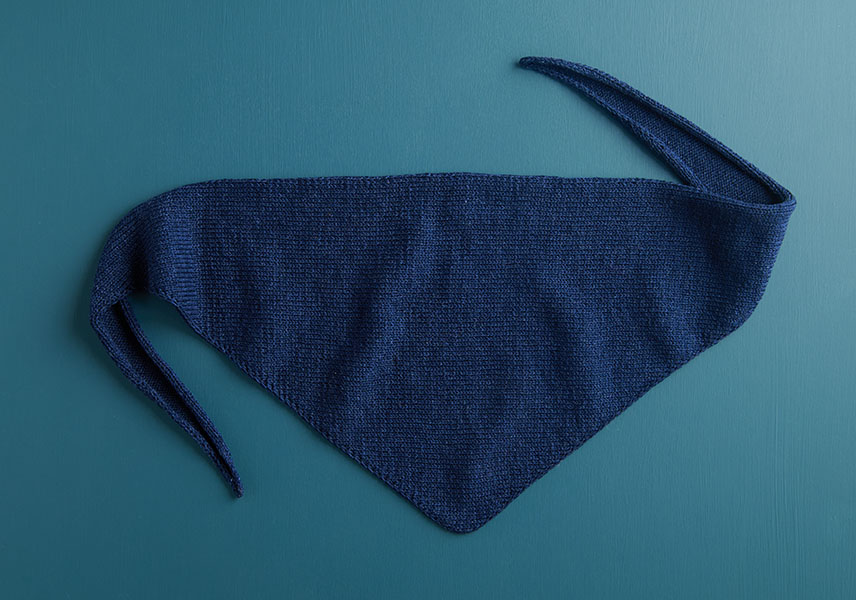
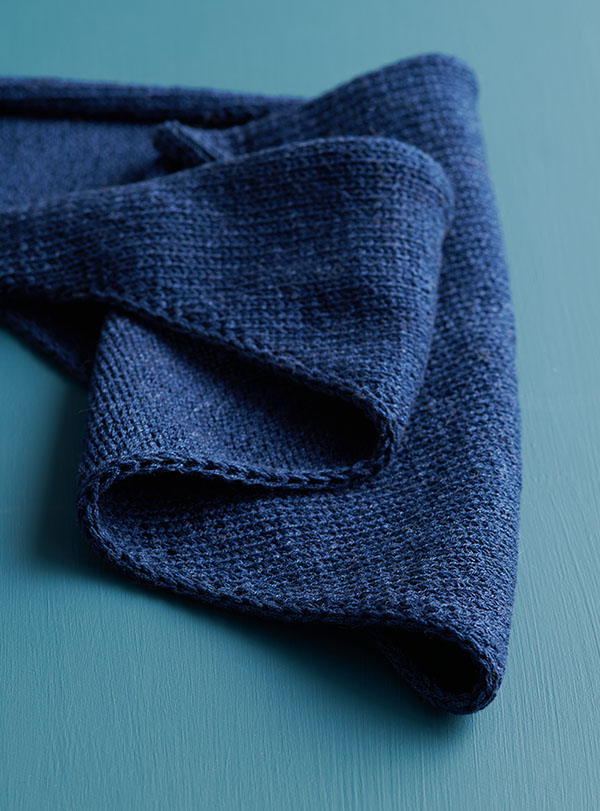
You knit this bandana from the starboard tip across to port, a long, slow taper at each end making the bandana easy to tie, with less bulk at the knot than a standard triangular bandana. All the shaping is accomplished with easy increases and decreases, and a couple of slip stitches at the selvages make neat edges with a natural curl for a relaxed, organic finish. Otherwise, it’s all smooth sailing in stockinette… Perfect for carefree summer knitting!
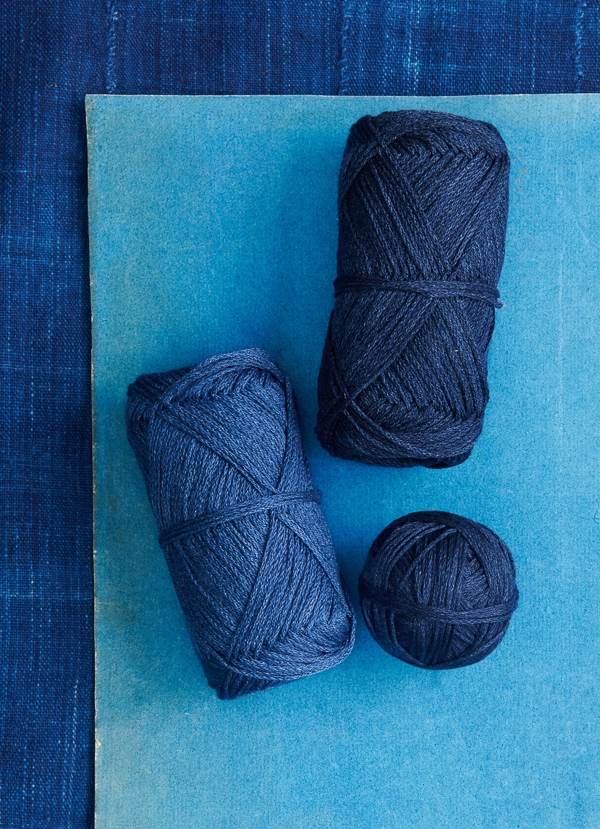
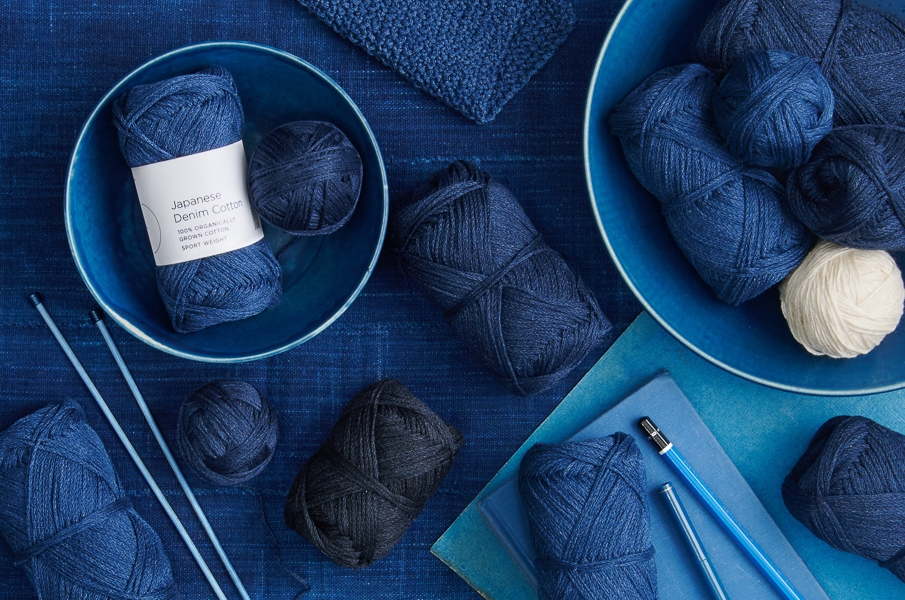
Japanese Denim Cotton comes in a palette of beautiful blues that take you from shallows to fathomless depths. A sport-weight yarn with a buoyant chainette structure, this yarn is made in Japan with 100% organically grown cotton. It’s dyed with a special technique that leaves the warm white core of the yarn undyed, emulating the timeless blue-over-white look of woven denim.
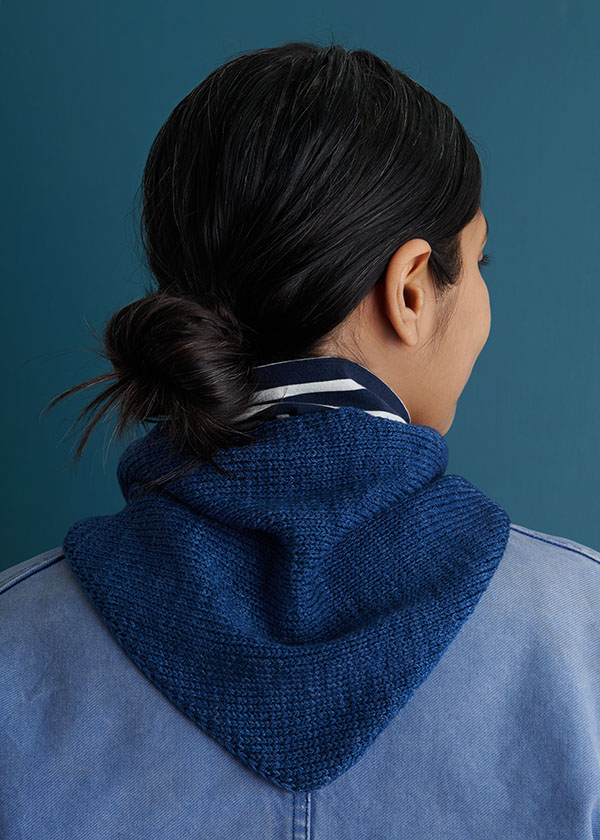
Cast on for your own Saltwater Bandana with just two balls of Japanese Denim Cotton, and settle into the easy sway of summer knitting and rich blues touched by balmy sea air!
Yarn lovers, if you adore the yarn used in this project, you’ll love exploring all of our other yarn collections! Discover over 55 thoughtfully designed yarns in nearly every natural fiber and in every spectacular color you can imagine. Only available here at Purl Soho’s online yarn store, where every skein is created with care and your creativity in mind!
Pattern designed and written by Purl Soho founder and co-owner, Joelle Hoverson, and Purl Soho designer, Hiromi Glover.
Story written by Andrea Lotz for Purl Soho.
Want to print this pattern? On desktop, find the “print” icon in the right margin, and on mobile, scroll to the end of the pattern for it. Use the on-screen instructions to remove anything you don’t want to print!
Materials
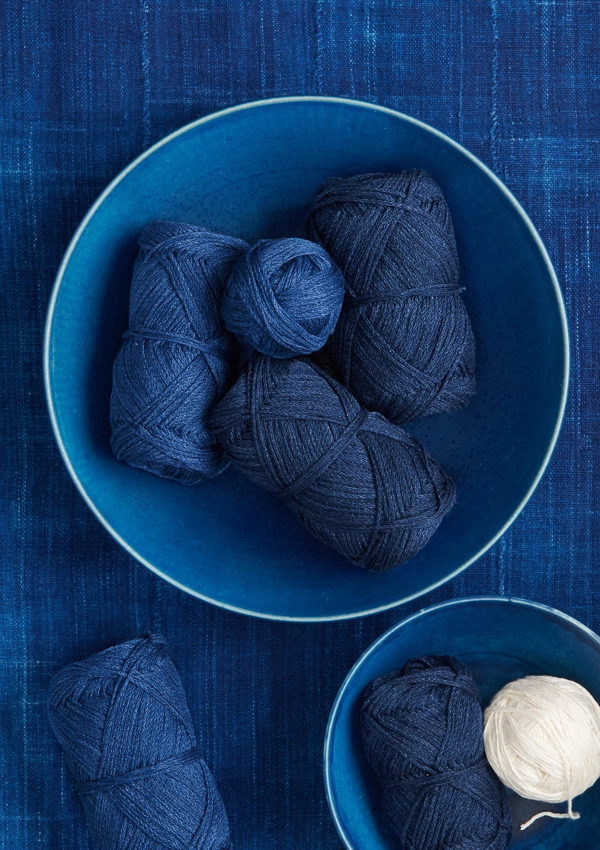
- 2 balls of Purl Soho’s Japanese Denim Cotton, 100% organically grown cotton. Each ball of this sport-weight yarn is 158 yards/ 50 grams; approximately 310 total yards required. We used the colors Deep Denim for one sample (modeled above) and Classic Denim for the other sample.
- US 4 (3.5 mm), 24-inch circular knitting needles
GAUGE
25 stitches and 37 rows = 4 inches in stockinette stitch
SIZE
- Finished Length of Wingspan: 44¾ inches
- Finished Depth from Bottom Point to Middle of Wingspan: 12¾ inches
NOTE
SLIP STITCHES
Slip stitches purlwise with yarn in front.
PATTERN
Cast on 5 stitches. We used a basic Long Tail Cast On.
Set-Up Row (wrong side): Slip 2 (see Note), p1, slip 2.
INCREASE
Row 1 (right side): Knit to last 2 stitches, make 1 left, k2. [1 stitch increased]
Row 2: Slip 2, purl to last 2 stitches, slip 2.
Row 3: Knit to end of row.
Row 4: Repeat Row 2.
Repeat Rows 1–4 until you have 20 stitches, ending with Rows 2-4.
Repeat Rows 3 and 4 until piece measures 9½ inches from cast-on edge, ending with Row 4.
Repeat Rows 1 and 2 until you have 80 stitches, ending with Row 2.
DECREASE
Row 1 (right side): Knit to last 3 stitches, knit 2 together, k1. [1 stitch decreased]
Row 2 (wrong side): Slip 2, purl to last 2 stitches, slip 2.
Repeat Rows 1 and 2 until 20 stitches remain, ending with Row 2.
Row 3 (right side): Knit to end of row.
Row 4: Repeat Row 2.
Repeat Rows 3 and 4 until piece measures 38¼ inches from cast-on edge, ending with Row 4.
Repeat Rows 1–4 until 5 stitches remain, ending with Rows 2-4.
With right side facing you, bind off knitwise.
FINISHING
Weave in all ends and gently wet block.
Share your progress and connect with the community by tagging your pics with #PurlSoho. We can’t wait to see what you make!
Learn About Japanese Denim Cotton + All Our Beautiful Yarns
Japanese Denim Cotton brings understated beauty and a hardworking sensibility to this project, not to mention its beautiful blue-jean colors! Far lighter and more elastic than a traditional cotton yarn, Japanese Denim Cotton has a chainette structure that gives it a hand-friendly springiness unusual in the world of plant-based yarns… You’ll love how this sport-weight yarn feels on your needles. The yarn is dyed with a special technique traditionally used for denim, which allows intense color to develop on the outside of the strand while leaving the core of the yarn undyed. That white core subtly comes through in the finished fabric, bringing the timeless blue-over-white look of woven denim to your knitting!
More Free Knitting Patterns
- Be sure to explore our growing collection of free Japanese Denim Cotton knitting patterns and cast on!
More Sport-Weight Yarns
- Shop our entire collection of sport-weight yarns (What is sport-weight yarn, really? Learn all about sport-weight yarn in our deep-dive article!)
- If you want to use a different yarn, be sure to take the time to get the correct gauge. Need help? Check our All About Gauge Tutorial, our Yarn Substitution article, and our Complete Guide To Yarn for lots of helpful information.
More Yarns With Similar Fiber
- Shop cotton yarn (What helps cotton keep its cool? Learn all about this soft, natural fiber in our guide to cotton yarn!)
- Shop plant-based yarn
- Shop machine-washable yarn
Looking for more inspiration? Explore all of our knitting patterns (including tons of free knitting patterns) and knitting tutorials, buy one of our many knitting kits and yarn bundles, and shop for beautiful yarn. We have over 55 gorgeous natural fiber yarns in 1,000s of magnificent colors, designed to bring integrity, beauty, and joy to your next knitting project and only available at Purl Soho!




Love all of your ideas, colors, and I would love to make a few bananas. I make lots and scarves for women in Recovery.
Hello!
This is such a thoughtful idea, Rosemary! Thank you so much for the work you’re doing and your kind words. I hope the recipients love their bandanas.
I also really hope you enjoy this project (and the yarn) as much as we do!
Kindly,
Hills
Could you suggest one of your other patterns that the BEAUTIFUL Japanese cotton can be applied?
Hi Christine,
I’m so glad to see you’re loving the Japanese Denim Cotton…thank you so much for your kindness!
We also just published a pattern for this yarn called the Blue Moon Potholder! Japanese Denim Cotton is a very breathable sport-weight cotton yarn with a little more elasticity than you may be used to seeing in cotton yarn. With that in mind, you might also consider the Knit T-Shirt or the Tulip Tank Top.
I hope you find the perfect project! Please feel free to reach back out with any other questions you might have as you consider!
Happy knitting,
Hills
Are the two color strands knit held together?
Hi Caroline,
Thanks so much for your question! I am so glad to see the Saltwater Bandana caught your attention. We’re absolutely loving Japanese Denim Cotton over here…
Each ball of yarn is held single, on a size US 4 needle. I’d always recommend knitting a gauge swatch to ensure you meet gauge and that you love the fabric! You may find you need to go up or down a needle size (or sometimes even two) to achieve gauge.
I hope this helps!
Hills
Hi Caroline,
I understand your question because I wondered the same thing — until I realized there were two photos of the scarf.
Each of those scarves is knit with only one color of yarn.
Hello,
Do you think this yarn would work for the Easy Scalloped Washcoth + Handtowels?
Hi Lora,
Thanks for writing in about this! This yarn could work for that pattern, though you’ll likely need to make some modifications. Japanese Denim Cotton is sport weight, so it’s a little bit thinner than Sketchbook Cotton, which is the DK-weight yarn we used for the Easy Scalloped Washcloth + Handtowels. You may need to go down a needle size to achieve the same stitch density with Japanese Denim Cotton, and you also may need to adjust the stitch count if you’re knitting the pattern at a different gauge.
We hope this helps!
Kindly,
Allison
In the directions, it says “deep denim, modeled above and classic denim”—-so the scarf being worn in the photos is deep denim?
Hi Melissa,
Thank you so much for reaching out. These colors do look a little similar in the post, so I totally understand your hesitation.
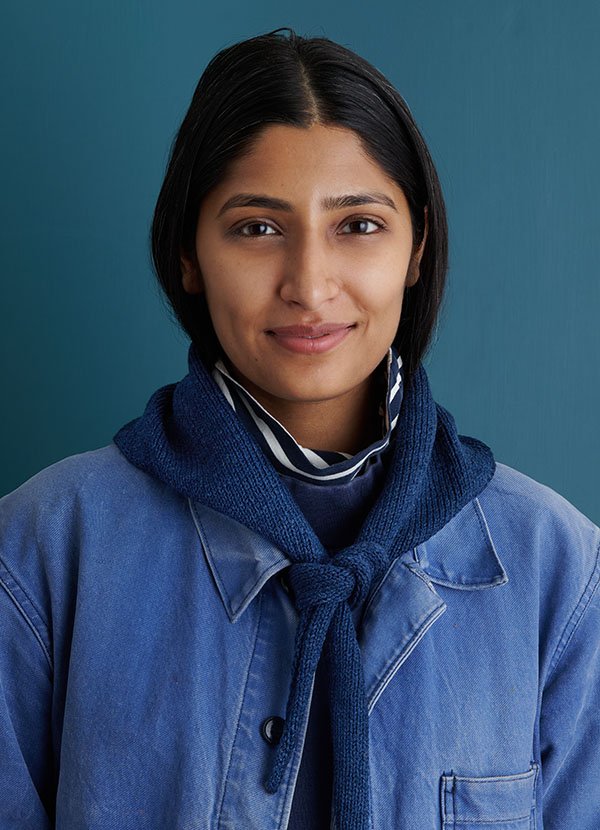
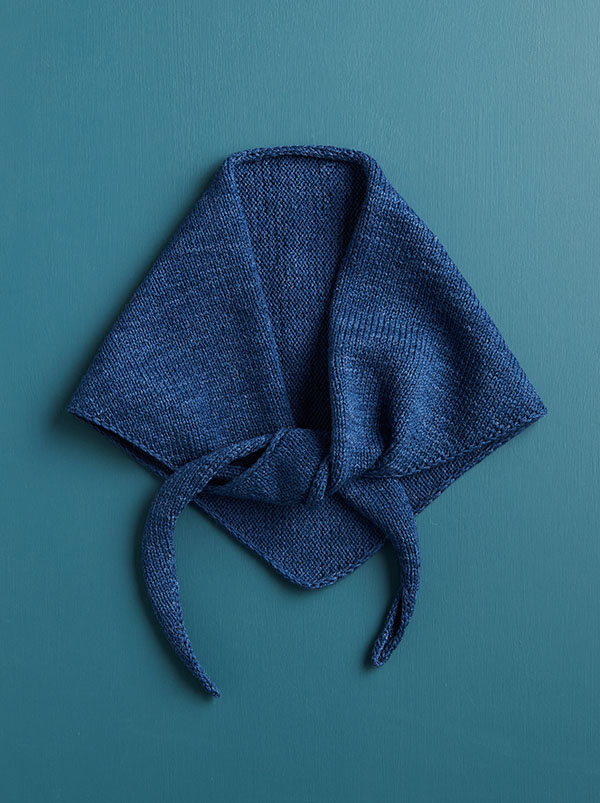
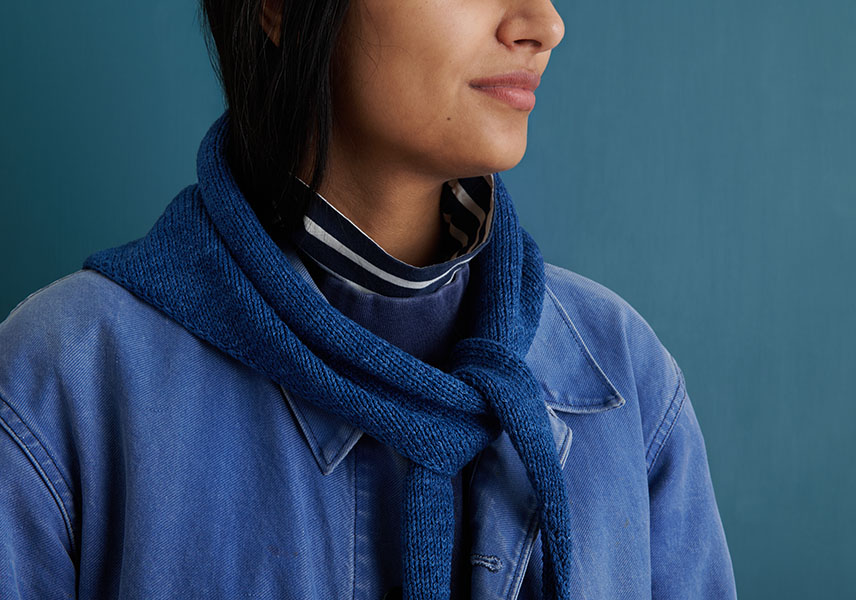
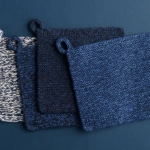
The scarf being modeled is in Deep Denim, yes! The Classic Denim sample is photographed in the header and in the post, without a model, folded over.
I hope this helps!
Happy knitting,
Hills
It’s still tricky, and the photos of the model do not all appear to be the same shade. One looks darker than the other. It seems as if they are photographed in different light.
Are the swatches shown in the buying the yarn part accurate.?
Hi Maralyn,
I’m so sorry you’re having trouble with the shades of Japanese Denim Cotton! I can totally see how this might be a bit tricky to see. The Classic Denim is photographed on the table, while Deep Denim is photographed on the model.
We did take some time to assess these photos (as well as the photos of the balls of Japanese Denim Cotton on their product page) and did decide they’re good representations of the yarn. I will definitely relay this message, though! We really do want to ensure our yarn is shown in the best light to accurately represent what you’ll receive. I wonder if you might find it a little easier to see with the brightness turned up on your monitor? Please feel free to reach out to us at [email protected] for further troubleshooting! We’re determined to get to the bottom of this for you.
All the best,
Hills
Hello, I love the different shades of blue. But are you using two different colors for the bandana or just 2 skeins of the same color? Thank you!
Hi Cindy,
I’m so sorry for the ambiguity. We’ve updated the materials section to clarify that the samples are knit with one strand.
I also totally understand how it could be tricky to see the difference in the samples. The Deep Denim sample is being worn by our wonderful model, while the Classic Denim sample is folded over within the post and photographed in the header as well.
I hope this helps, and that you love the Saltwater Bandana project!
Happy knitting,
Hills
Thanks very much! This will be a great project to bring on a long-haul flight next month. Regards, Cindy
Hello, I love the denim colors! Would this yarn work with a white fleck stitch in a garment? Will it bleed?
Hi Carol,
Thanks for writing in about this! These yarns are indeed colorfast! We always test for this in our yarn development process, and even with these beautifully rich colors, these yarns didn’t bleed or transfer at all, so you can knit them with confidence.
We hope this helps! Let us know if you have any other questions.
Kindly,
Allison
Thank you!
Que veut dire 1mp au 1er rang.?
J’ai 5 mailles je glisse 2 mailles ensuite 1.mp ensuite glisser 2 mailles. Comment faire 1mp
Hi Monique,
Thank you for reaching out with your question!
For the set-up row, you will slip your first two stitches, purl the next stitch, and slip the last two stitches.
In Row 1, you will knit to the last two stitches, increase by making one left-leaning stitch, then knit the last two stitches.
I hope this is helpful for you!
Bon tricot!
Hills
I love this bandana but would like to make it larger so I have 4 skeins of the Classic Denim. Instead of working until there are 80 stitches, would you just double it to 160 or is that too many?
Hi Jennyfer,
Thanks so much for writing in about making a larger version! With this pattern, you can keep working the increase section for as long as you’d like to make bigger and then switch to the decrease section. However, four balls of Japanese Denim Cotton will not be enough to get to 160 stitches. If you would like to make the largest bandana you can with the yarn you have, I would recommend working the increase section until you are just about finished with two balls of yarn and then switch to the decrease section. I always like to make the switch a few rows short of half the yarn just to make sure I don’t run out on the second side!
I hope this helps! Please let us know if you have any other questions!
Kindly,
Andrea
Thank you, that makes sense!
These blues are the perfect indigo hues and absolutely gorgeous against that blue chore jacket that the model is wearing. Would you be able to share where that jacket is from? I feel like I need that outfit with the bandana!
Hi Julie,
We’re so glad you’re loving Japanese Cotton Denim as much as we are!
This jacket is a vintage French Chore Jacket, and you can find others like it by searching those terms in your preferred search engine (I just tried!).
We cannot wait to see you rocking this outfit!
Happy knitting,
Hills
I would like to try this pattern with the Linen quill yarn i got a while back. You describe it as fingering weight. Can you suggest how I acn adjust the needle size to get the correct gauge– or should i go for figuring it out by measurements?
I hope you can help.
Thank you,
Hi Verna,
Thank you so much for reaching out with this great question. This sounds like a lovely project in Linen Quill.
There are a couple of things to consider here. You’re absolutely right to note that Linen Quill is a fingering-weight yarn and will knit up at a thinner gauge than the Japanese Denim Cotton we used for the sample. You can read more about substituting yarns in our article “Yarn Substitution Made Easy.” One thing to note in this pattern, the piece is worked from one tie-end to the other, rather than starting from the long edge or the point. Typically, row gauge isn’t as crucial as stitch gauge. For projects worked in this direction, it can be important to factor in the row gauge to ensure the project is long enough to tie around with some ease. The gauge and needles listed on the labels are often good suggestions. You may be able to make gauge, but you would only really know by swatching it out.
When substituting with a yarn that’s a thinner gauge, you’ll need more yarn to complete the same-sized project. We can divide the average gauge of Linen Quill by the original gauge listed for the pattern (7/6.25)= 1.12. You’ll need 112% of the yardage listed (or 310 yards x 1.12 = 348 yards). I would suggest knitting and blocking a gauge swatch to get your personal gauge for this math. This will also help ensure you like the look and feel of the fabric you’re knitting. You can also use your swatch to use the same math on your row gauge and make some more personalized modifications. With your own personalized stitch and row gauges, you can figure out how many stitches you need to reach the same measurement.
It does look like the pattern is written in a way where you can make this adjustment pretty easily. A lot of the main stretches indicate to knit until you reach a specific length, rather than a row count, which makes it a lot more accommodating to these kinds of adjustments!
I hope this helps, and please feel free to reach back out with any follow-up questions! You’re welcome to reach out here or via email at [email protected] if you run into any trouble!
Wishing you happy and easy knitting!
Hills
Thank you so much Hill- for being knowledgeable, kind and prompt!
I have a question. Instructions for Saltwater Bandana. Row 1 make1left. It’s an increase. How do I make left increase
Hi Sue,
Thank you so much for your great question! I’d suggest checking out our handy tutorial on M1R + M1L.
If you run into any trouble, please don’t hesitate to reach back out… We’re here and happy to help!
Happy knitting!
Hills
I’m having trouble with the directions. After you have 20 stitches, “end with rows 2-4.” Are you meant to skip row 1 here? Then you would be purling for 2 consecutive rows?? Later, in the next step, if you are only “repeating rows 3 and 4, how are you increasing? I’m really confused.
Hi Susan,
I’m so sorry to read you’re having trouble here. Are you working on the increase or the decrease section? I’m happy to help clarify!
In this section, your increases are on Row 1. You’ll repeat Row 1-4 until you have 20 stitches, but complete the full four-row repeat with your last increase to end on Row 4. After, you’ll work Row 3 (a right-side row) and Row 4 (a wrong-side row) until the bandana measures 9.5 inches from the cast-on edge, ending with Row 4. The pattern indicates to end with Rows 2-4 in opposition to ending with the increase row, but Row 4 should be your last row here. Now that you’re on the right side, you’re ready to work Rows 1 + 2 until you have 80 stitches. Row 1 is home to your increase and how you’ll get there!
In this section, when you reach 20 stitches, you’ll be ending on a wrong-side Row 2. You’ve just repeated Rows 1 and 2 to decrease down to those 20 stitches. From there, you’ll knit and purl your next two rows, respectively, repeating Rows 3 + 4 until the piece measures 38.25 inches from the cast-on edge. Here you will end with Row 4. Then, you’ll work Rows 1-4 (Row 1 contains your decrease) until 5 stitches remain. Finally, you can bind off.
I hope this helps clear things up for you, but if you’re still running into trouble, please feel free to schedule a 1-on-1 Help session with us. We would love to help get to the bottom of this with you. You’re also welcome to email us at [email protected] for further troubleshooting.
Happy knitting,
Hills
Thank you so much, Hills. After I have 20 stitches on the needle, I have knit about 6 inches from the cast-on edge. I was assuming that the increases would continue until you reach 9 1/2 inches, but I guess the 20 stitch-width remains until you reach 9 1/2” . Then the increases resume until you reach 80 stitches. I think I have it right now. Thank you so much for your patience!
Hi Susan,
I’m always so grateful when folks take the time to reach back out and identify what worked for them! It’s helpful for both our team and the knitting community…thank you for taking the time for this reply!
I’m very glad to hear that you’ve got this sorted, and it sounds like you do! That section that works for 9.5 inches ends up making the unique flat tie ends, which helps the knot lay fashionably when worn. It might be a bit tricky to visualize, but in the page header, the bandana is lying flat on a table with the ties in front. That picture shows the shape you’re creating here a little more clearly.
I really hope you enjoy the rest of your project, and we can’t wait to see what you make next!
Happy knitting,
Hills
The photo indicates a symmetrical shape. Then on the increase half if I have increased by 1 st @ 4 rows to 20 st, (rows 1-4), then straight for a bit (rows 3-4), then increase by 1 st @ knit row (rows 1-2) to the apex then in reverse to decrease I would first decrease @ knit row (rows 1-2) to 20 st, then knit straight across (rows 3-4) for several inches to match straight portion of increase half, then decrease by @ 4 st to 5 st for bind off (rows 1-4). This is not how the decrease section of your pattern is written {dec 3-4, dec1-4} I don’t see 1-2 and straight section. If you dec 3-4 for 38 inches you haven’t decreased at all!
Hi Lisa,
I’m so sorry to see you’ve run into some trouble here, and I’m happy to clear this up for you!
The decrease section, which matches the increases you’ve indicated, is found in Row 1 when Rows 1 and 2 are repeated, bringing your stitch count from 80 down to 20. I’ve pasted this part of the pattern below for you! I hope this helps.
This section continues:
Please feel free to reach back out with any other questions, and I hope you enjoy knitting your Saltwater Bandana!
Hills
I’m disappointed I missed the two blue colors at release, do you have an estimate of when they’ll be back in stock? I could use a good cotton project for summer!
Hi Nicole!
I’m so sorry you missed the launch of Japanese Denim Cotton! I know how frustrating that can be…
We’re very excited for the next Japanese Denim Cotton restock towards the end of July. We’re sorry for the delay, and anxious to see it back too!
If this isn’t too late for you, we’d recommend signing up to be notified when it returns by going to the Japanese Denim Cotton page, selecting your preferred colorway(s), and entering your email address. This way, you’ll be among the first to know when it’s available on the site again!
I hope this is helpful, and we can’t wait to see what you make with Japanese Denim Cotton!
Happy knitting,
Hills
Hi there, would it be possible to make a video of the set-up row through the increase section? I think I’m following the directions but it doesn’t look right – I’m new to doing something like this on circular needles. Thank you!
Hi Diana,
I’m so sorry to read that you might be running into trouble with your setup!
While we don’t currently have a tutorial for this specific part of the pattern, I love the idea and would be glad to pass it along to our team. Thank you so much for reaching out with the suggestion.
In the meantime, we would love to help you sort through this. You can reach us at [email protected] anytime. We also offer 1-on-1 Help sessions, and we would be so glad to work this out together!
Kindly,
Hills
Hello, I too love the yarn and the color, and the pattern seemed easy but I am struggling with “Slip 2 purlwise with yarn in front.”
When I slip 2 stitches, one at a time, the working yarn is 2 stitches behind and when I bring it up to work the next row the yarn forms a small band across the purl side.
If I bring the working yarn around the right needle before I slip each stitch, I end up with 2 extra stitches.
It’s confusing because the slipped stitches come at the beginning and end of the row.
Can you help?
Thanks.
Hi Mary,
I’m so glad you reached out with your question! I’m also thrilled to see you’re loving the Japanese Denim Cotton and its rich color!
It sounds like you may be slipping your stitches with the yarn in back. If you were to slip your stitches with the yarn in front, the working yarn would be in front of both your needle and, consequently, the two slipped stitches. You would then, essentially, be wrapping it in front of those slipped stitches and ready to purl your third stitch.
If you’re still running into trouble, please don’t hesitate to reach back out! We also offer 1-on-1 Help Sessions and would love to work together to get you back on track.
All the best,
Hills
Since the Japanese denim is sold out (rightfully so), what cottons can I use for the pattern.
Hi Ilene,
Thank you so much for reaching out! Japanese Denim Cotton outperformed all of our projections and expectations. We are so thrilled to see how it’s been embraced by the community, and I’m so sorry you missed it on the first go-around!
You might like to take a look at Cotton Pure as a great substitute! It’s 100% organic cotton sport-weight yarn and comes in a variety of beautiful shades! The Saltwater Bandana knits up to 6.25 stitches per inch. Cotton Pure is listed at 5.5-6 stitches per inch, but these are often suggestions, and you may be able to get the right gauge! It’s also less crucial to meet gauge on patterns that aren’t fitted, though bear in mind that when substituting yarns of a different gauge, you may end up with different finished dimensions. With Cotton Pure, you might expect to see a slightly larger project. With that in mind, you might also consider taking a look at some slightly thinner yarns than Japanese Denim Cotton, like Santolina and Oleander. I’d always recommend knitting and blocking a gauge swatch to check your gauge. This can help you make the best estimate on the size of your finished project.
It looks like we’ll be receiving another shipment towards the beginning of fall. If that’s not too late for you, I would also suggest adding your email to the waitlist for Japanese Denim Cotton (if you haven’t done so already), so that you can be among the first to know when it’s back in stock!
Please feel free to reach back out with any follow-up questions you might have! We’d be happy to help!
Kindly,
Hills
Where it says “Repeat Rows 3 and 4 until piece measures 9½ inches from cast-on edge, ending with Row 4.” – is there a MINIMUM number of repetitions of rows 3-4 to do? My gauge is a bit off and my piece already measures 9in at the start of this part.
Hi Anna,
I’m so sorry to read that you’ve run into some trouble here, and I’m very glad that you reached out today!
While there is no minimum here, it’s possible that you may encounter some other hiccups at a different gauge. The pattern writes to increase until there are 80 stitches (and later decrease until there are 20). While this will still work, you may end up with a garment with different dimensions than ours following this pattern at a different gauge. 80 stitches at the gauge we worked would be just under 13 inches. 20 stitches at the pattern’s gauge is about 3 inches. 80 (or 20) stitches will represent a different proportion of your total piece at a different weight. You might consider adapting this section of the pattern to your gauge, as well, to reach similar dimensions.
I hope this is helpful! Please feel free to reach out to us anytime. We can be reached at [email protected], where you can send in photos, as well!
All the best,
Hills
I don’t understand why the pattern calls for circular needles. It doesn’t seem to join the ends in a round. Could I use straight needles instead?
Hi Amy,
Thank you so much for reaching out with this great question. I’m happy to help!
The widest depth of this bandana is 12.75 inches. Most knitting needles are about 10-12 inches. If you have needles that are longer, then you should be able to work this on straight needles. Otherwise, you’ll find the stitches are cramped, and you may experience stitches falling off quite frequently, especially with the smooth nature of the Japanese Denim Cotton yarn.
You may find that a project like this is a great opportunity to give circular needles a try (if you haven’t yet)! They work just like straight needles in this case.
I hope this helps point you in the right direction. Please feel free to reach back out with any other questions you might have.
All the best,
Hills
What would you recommend as the cleanest way to join the yarn of the second skein? With the cording it seems like it would be difficult at join at the start of the row. Lovely project and lovely yarn!
Hi Zac,
Great question! We would recommend that you join in a new ball at the beginning of any Row 3 in the pattern since you will just be knitting straight across the row. If you have loose ends as you work the first few rows after, you can come back later and tighten those up as you weave in your ends once you finish your bandana.
Happy knitting!
Mia
Hi,
Could I substitute and use good wool, which I think is dk weight? Also, I’d like to make it larger, more of a shawl? Any suggestions how many stitches and yarn amount needed?
Hi Rose,
Substituting Good Wool for your bandana would be a great idea! Since the Saltwater Bandana is knit from tip to tip, making it larger would be fairly simple. You would simply want to continue the increases until you reach the desired depth and then begin the decrease section.
For example, if you would like to make a shawl that is 65” x 18.75” you would need approximately 677 yards if you are able to obtain stitch and row gauge. In Good Wool this would equate to 2 skeins. Since this conversion is fairly simple, you can also simply knit until you are just about finished with your first skein and then begin decreasing to fully use up those skeins.
I hope this helps, but please feel free to email us at [email protected] if you have any other questions.
Happy knitting!
Mia
I accidentally increased until I had 82 stitches. How will that impact how I knit the decrease section?
Hi Rachel,
I’m so sorry to read you’ve run into a hiccup with your Saltwater Bandana, and I’m happy to help. Luckily, this is a small error and you have a few great options for how you might like to tackle the fix.
You could un-knit or “tink” back a row to remove the extra increase before moving ahead. If you would prefer not to, you can add extra decreases to 2 rows of the decrease section. On Row 1, you can replace k2tog with k3tog. On Row 2, you can replace p2tog with p3tog.
It’s possible you might have enough yarn to add an extra decrease row (and avoid the triple decrease in one row for a more perfect slope). Given there were only about 6 yards remaining when working the project with 2 balls, it might also end in a game of yarn chicken…If you preferred, you could wait until the last row to work the triple increase, thereby hiding it a bit and allowing you the opportunity to see if you can work just one extra row at the end! The rows should be shorter by the tip, so it may work!
I hope this helps point you in the right direction. Please feel free to reach back out anytime!
All the best,
Hills
Hi, Can I substitute the yarn with Cattail Silk and Tussock held together? Do you think that would look/feel good?
Hi Florence,
Thank you so much for reaching out about the Saltwater Bandana. I think this sounds like a really lovely idea!
It might have a little more structure to the fabric than Japanese Denim Cotton. I would suggest knitting and blocking a gauge swatch to ensure you love the look and feel of the finished fabric. Working a gauge swatch is also the perfect time to adjust your needles to meet gauge. Our gauges are listed for blocked swatches as well.
I hope this helps you get started with confidence. Please feel free to reach out with any other questions you might have.
All the best,
Hills