Your basket is empty.
Continue Shopping

Intermezzo Scarf
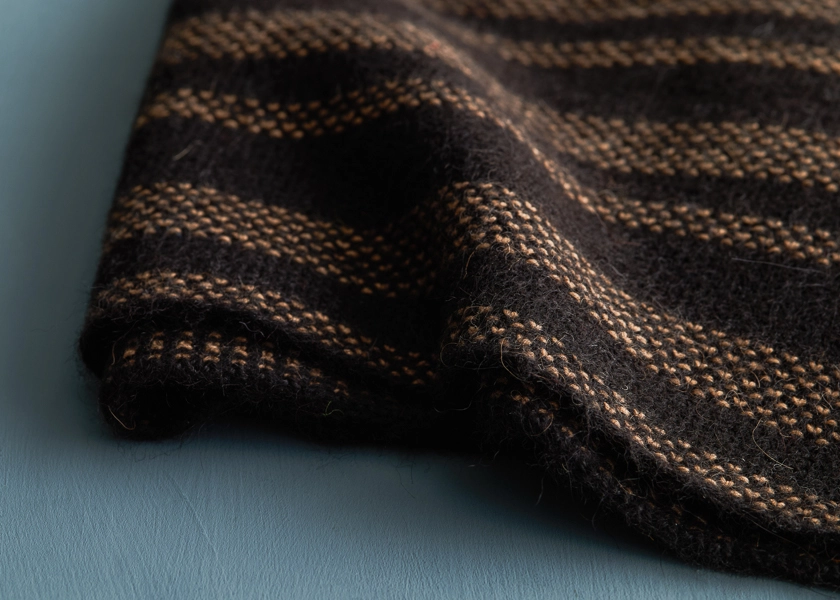
A handknit duet between two exceptional camelid-fiber yarns, our Intermezzo Scarf pairs our new Simply Alpaca, playing solo, with our beloved Simply Camel, in harmony. Contrasting yet deeply compatible, both are radiant in their natural, undyed splendor.
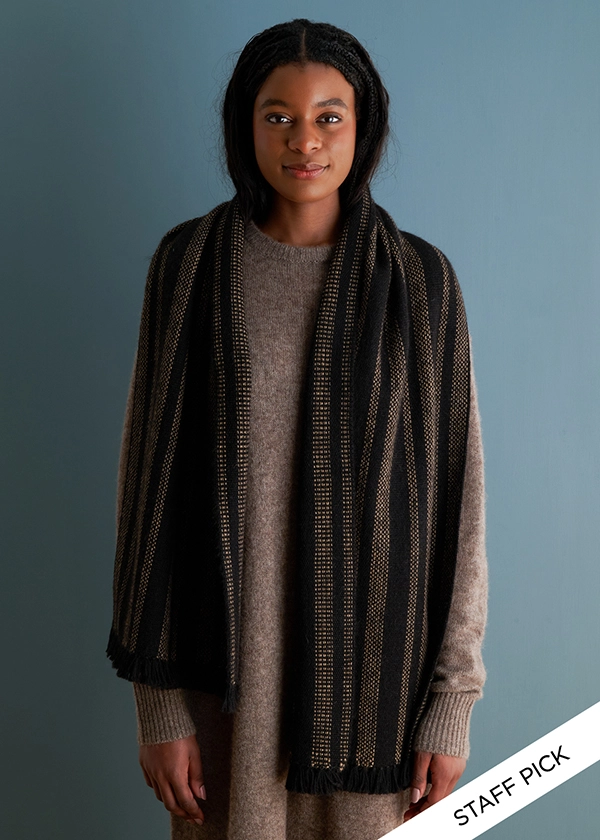
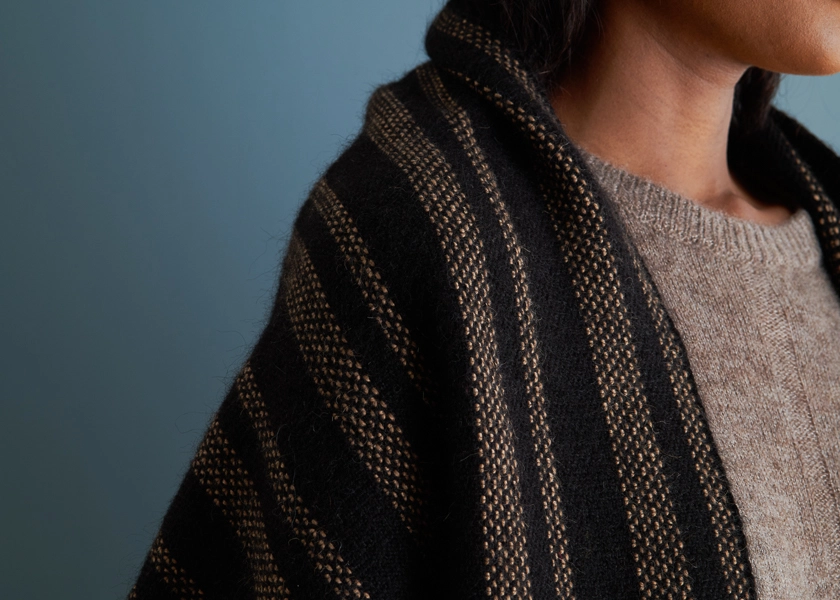
These two fibers, Peruvian black alpaca and Mongolian baby camel, share certain characteristics unique to camelids: a soft, relaxed hand, a glorious natural luster, and a lush halo that blooms above the surface of the fabric. Linen stitch is a natural showcase for these qualities, a meditative stitch pattern that creates a dense, woven-looking fabric with a beautiful, flowing drape.
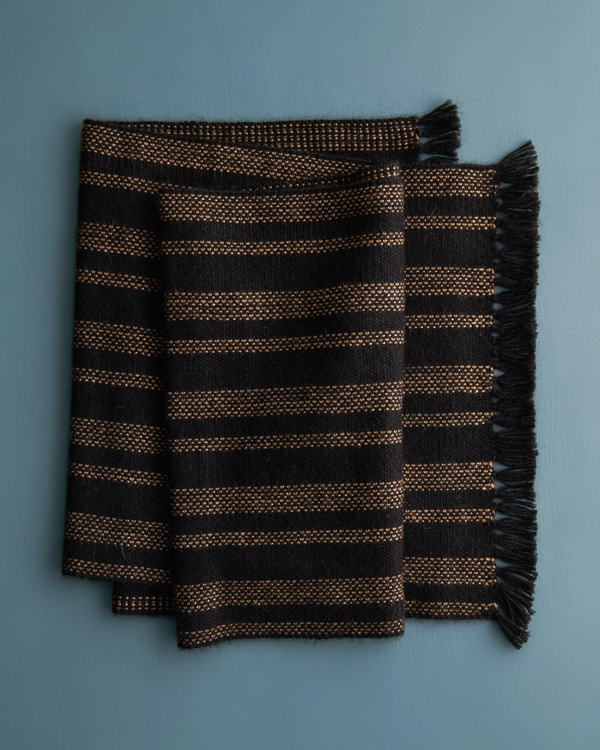
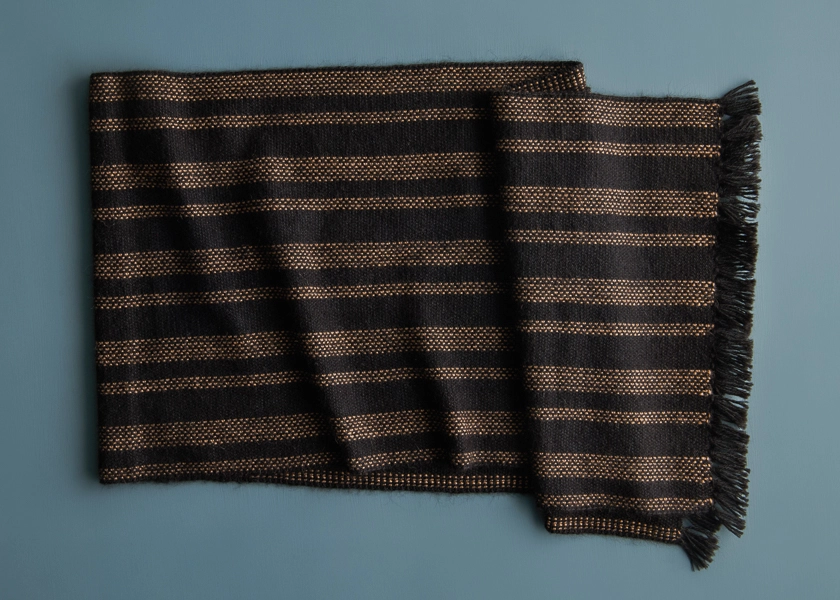
You knit this scarf lengthwise, alternating sections of linen stitch worked in both yarns with interludes that allow Simply Alpaca to shine on its own. A tidy, short fringe in Simply Alpaca is the composition’s perfect coda, continuing the nod to elegant woven scarves.
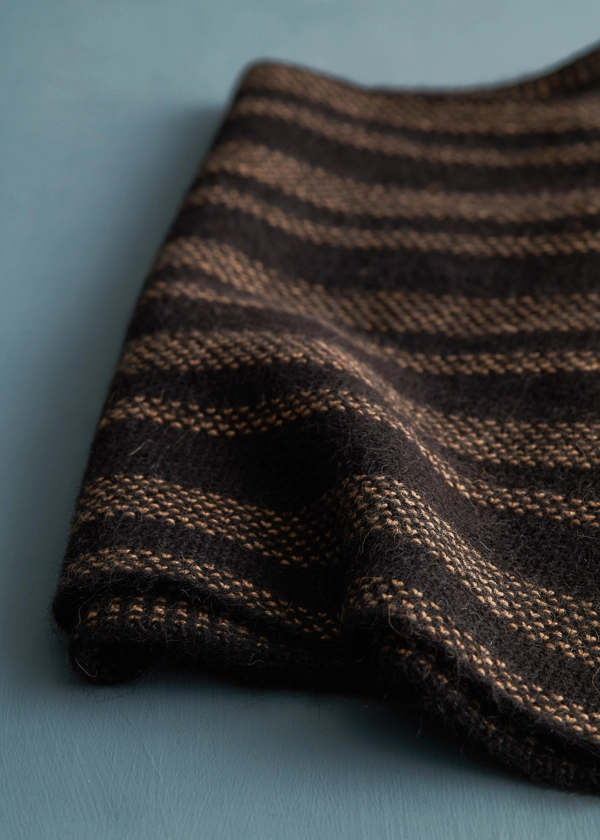
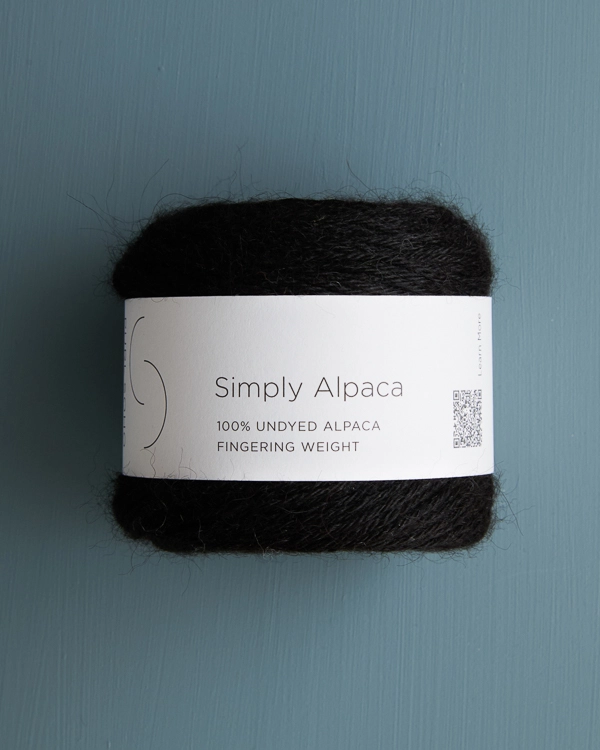
Rich and resonant, Simply Alpaca is a warm, black-key ebony, so dark that it drinks in the light almost completely. This amazing color comes directly from the rare black alpacas that grow this singularly beautiful fiber, making up less than 1% of the total alpaca population. Though spun into a light, fingering-weight yarn, this superfine alpaca holds surprising warmth—a natural property of heat-trapping camelid fibers—and is also exceptionally soft.
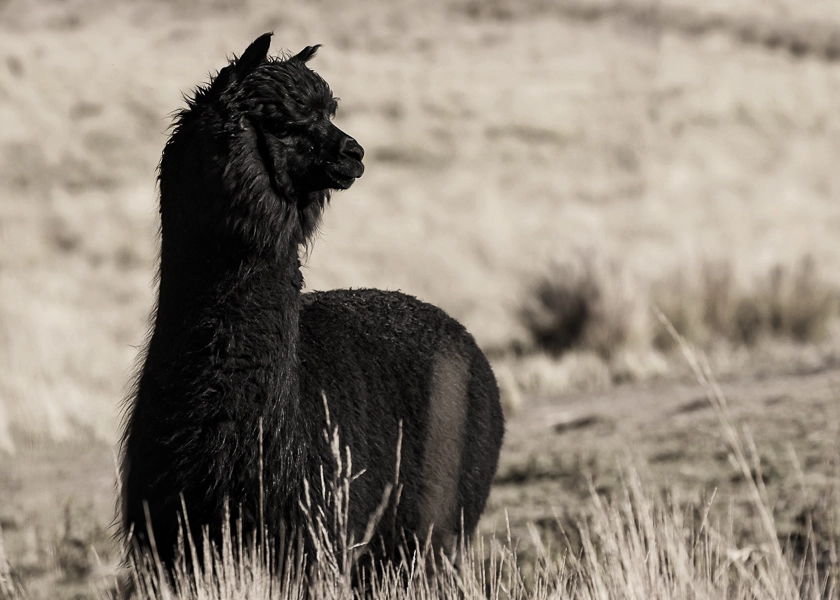
Beautiful black alpacas, who grow the fiber for our new Simply Alpaca yarn | Photo courtesy of our mill in Peru
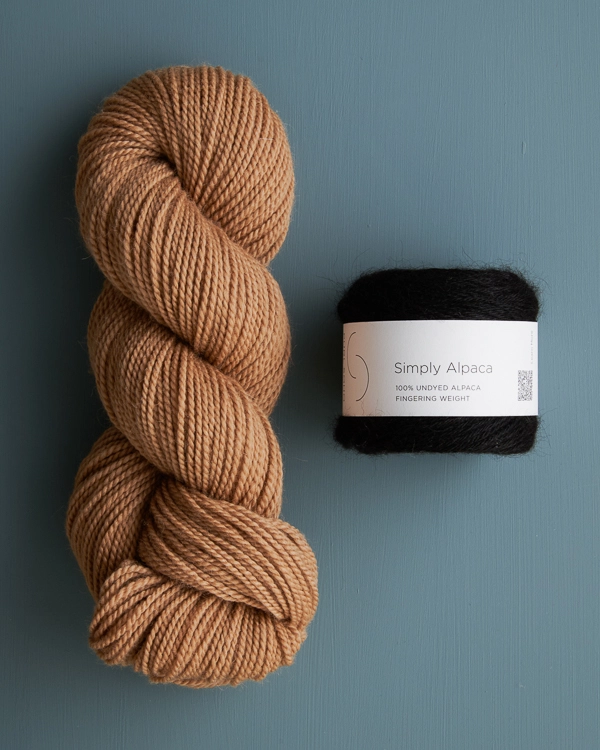
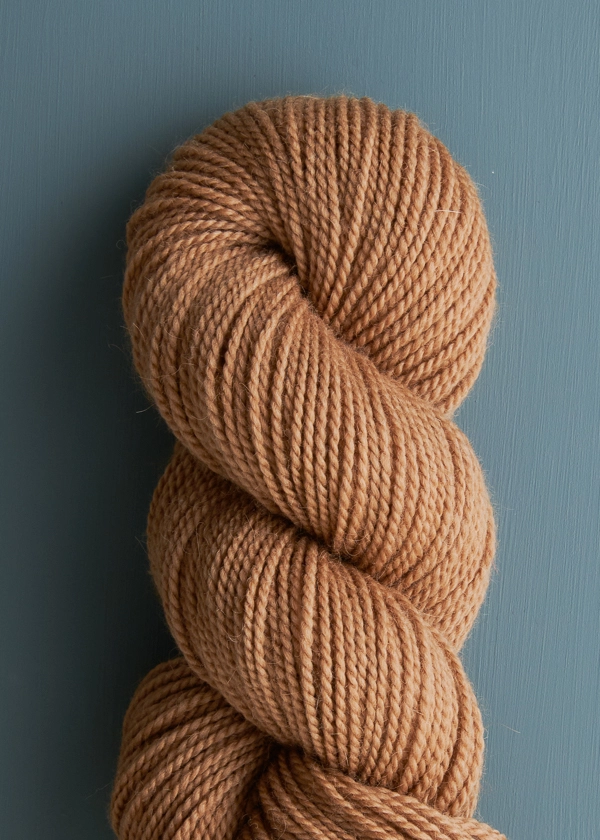
Simply Camel is the perfect accompaniment, offering a desert glow to Simply Alpaca’s midnight luster. It’s made from some of the softest, purest camel fiber there is, humanely gathered from the downy undercoat of baby camels living in Mongolia’s Gobi Desert and spun into a lofty, fingering-weight yarn.
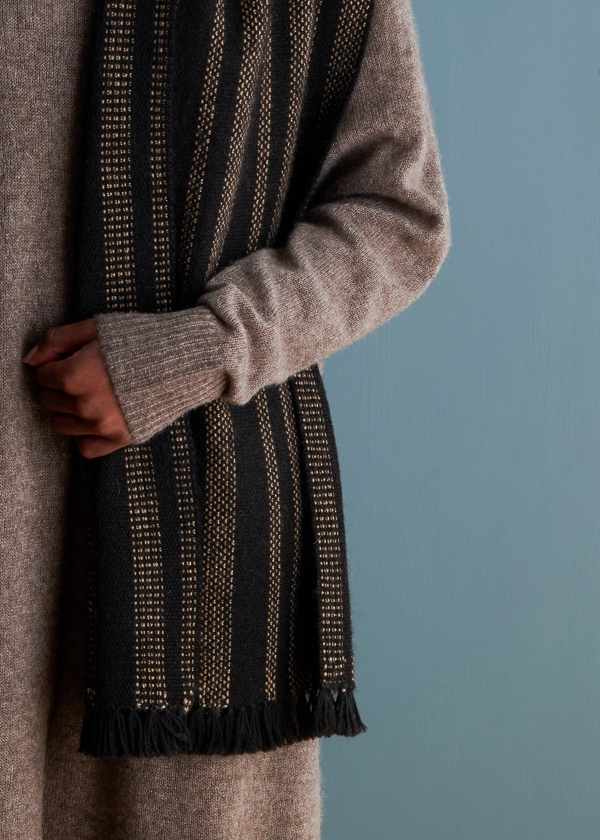
Both of these undyed yarns will give you true tactile pleasure, along with the satisfaction of knitting with fibers so deeply connected to their origins. Pick up eight 50-gram balls of Simply Alpaca and just one 50-gram skein of Simply Camel to knit this harmonious expression of nature’s beauty.
Yarn lovers, if you adore the yarn used in this project, you’ll love exploring all of our other yarn collections! Discover over 55 thoughtfully designed yarns in nearly every natural fiber and in every spectacular color you can imagine. Only available here at Purl Soho’s online yarn store, where every skein is created with care and your creativity in mind!

Pattern designed and written by Purl Soho designer, Gianna Mueller. See even more of Gianna’s work on her Instagram!
Story written by Andrea Lotz for Purl Soho.
Want to print this pattern? On desktop, find the “print” icon in the right margin, and on mobile, scroll to the end of the pattern for it. Use the on-screen instructions to remove anything you don’t want to print!
Materials
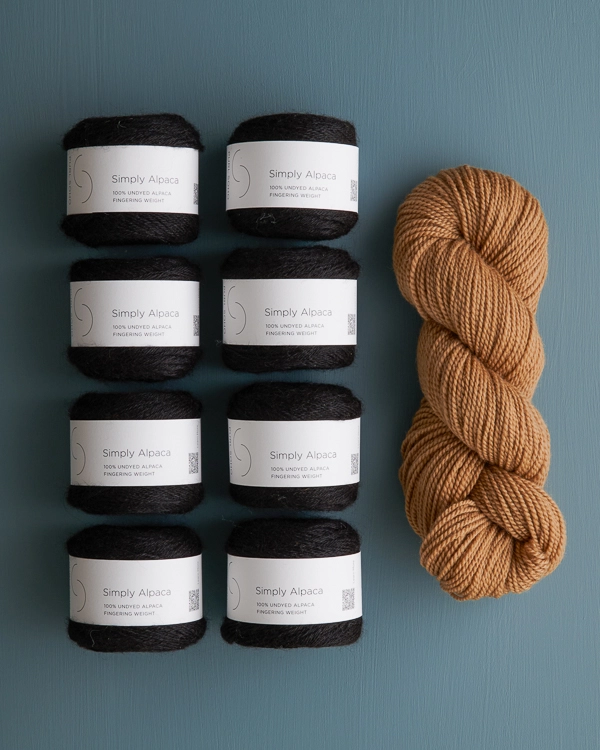
- Yarn A: 8 balls of Purl Soho’s Simply Alpaca, 100% undyed alpaca yarn. Each ball of this fingering-weight yarn is 164 yards/ 50 grams; approximately 1,275 yards required.
- Yarn B: 1 skein of Purl Soho’s Simply Camel, 100% baby camel yarn. Each skein of this fingering-weight yarn is 164 yards/ 50 grams; approximately 164 yards required.
- US 3 (3.25 mm), 60-inch circular knitting needles
- A spare US 4 (3.5 mm) or larger needle, for binding off
- A small crochet hook (for fringe)
GAUGE
36 stitches and 64 rows = 4 inches in One-Color Linen Stitch (see Notes)
SIZE
Finished Dimensions: 15½ inches wide x 63 inches long, excluding fringe
NOTE: You work this wrap lengthwise, so the width listed above corresponds to the number of rows, and the length corresponds with the cast-on edge.
NOTES
STITCH MULTIPLE
This pattern works over an odd number of stitches.
SLIP STITCHES
Slip all slipped stitches purlwise.
TURN + SLIDE
When you work the Two-Color Spaced-Out Linen Stitch Pattern, you either “slide” or “turn” the work at the end of each row.
“Turn work” means to do what you would normally do when knitting rows with circular needles: Transfer the needle from your left hand into your right hand and the needle from your right hand into your left, flipping the work around so the opposite side is facing you.
“Slide work” means to keep the same side of the work facing you and to push all the stitches to the right end of the circular needles. Without turning the work, start the new row as you normally would.
You will know that you’re doing this right if the yarn you need to complete the next row is right there waiting for you! To see this technique in action, visit our Turn + Slide Tutorial.
STITCH PATTERNS
NOTE: Because you’ll be referencing these stitches throughout the pattern instructions, we highly recommend printing this pattern out so you don’t have to scroll back and forth. You’ll find some helpful tips for printing above the Materials section!
ONE-COLOR LINEN STITCH
Row 1: (wrong side): Slip 1 with yarn in front (wyif), *p1, slip 1 with yarn in back (wyib), repeat from * to last 2 stitches, p1, slip 1 wyif.
Row 2 (right side): *K1, slip 1 wyif, repeat from * to last stitch, k1.
TWO-COLOR SPACED-OUT LINEN STITCH
Row 1 (wrong side): With Yarn A, slip 1 wyif, *p1, slip 1 wyib, repeat from * to last 2 stitches, p1, slip 1 wyif. Turn work.
Row 2 (right side): Crossing Yarn B below Yarn A (A is in front of B), use Yarn B to *k1, slip 1 wyif, repeat from * to last stitch, k1. Slide work.
Row 3 (right side): With Yarn A, slip 1 wyib, *k1, slip 1 wyif, repeat from * to last 2 stitches, k1, slip 1 wyib. Turn work.
Row 4 (wrong side): Crossing Yarn A below Yarn B (B is in front of A), use Yarn A to *p1, slip 1 wyib, repeat from * to last stitch p1. Turn work.
Row 5 (right side): With Yarn A, repeat Row 3. Turn work.
Row 6 (wrong side): Crossing Yarn B below Yarn A (A is in front of B), use Yarn B to *p1, slip 1 wyib, repeat from * to last stitch, p1. Slide work.
Row 7 (wrong side): With Yarn A, slip 1 wyif, *p1, slip 1 wyib, repeat from * to last 2 stitches, p1, slip 1 wyif. Turn work.
Row 8 (right side): Crossing Yarn A below Yarn B (B is in front of A), use Yarn A to *k1, slip 1wyif, repeat from * to last stitch, k1. Turn work.
PATTERN
With Yarn A, cast on 567 stitches onto main needles. We used a basic Long Tail Cast On.
A little tip: When you’re casting on so many stitches, it helps to place a marker or piece of scrap yarn every 50 stitches, so if/when you lose your place, you don’t have to start counting from the very beginning!
**Joining Yarn B, work Rows 1–8 of Two-Color Spaced-Out Linen Stitch (see Stitch Patterns) 1 time, ending with Row 8. Cut Yarn B.
With Yarn A, work Rows 1 and 2 of One-Color Linen Stitch 5 times, ending with Row 2.
Joining Yarn B, work Rows 1–8 of Two-Color Spaced-Out Linen Stitch 2 times, ending with Row 8. Cut Yarn B.
With Yarn A, work Rows 1 and 2 of One-Color Linen Stitch 10 times, ending with Row 2.
Repeat from ** 4 more times.
Joining Yarn B, work Rows 1–8 of Two-Color Spaced-Out Linen Stitch 1 time, ending with Row 8. Cut Yarn B.
With Yarn A, work Rows 1 and 2 of One-Color Linen Stitch 5 times, ending with Row 2.
Joining Yarn B, work Rows 1–8 of Two-Color Spaced-Out Linen Stitch 2 times, then repeat Row 1 one more time. Cut Yarn B.
With right side facing you, use larger spare needle to bind off in pattern to end of row, knitting the knit stitches and slipping the slip stitches.
FINISHING
Weave in ends and gently wet block.
FRINGE
Cut four 4-inch strands of Yarn A. With wrong side facing you, insert crochet hook into selvage slip stitch at bottom corner of cast-on edge. Holding strands together, fold them in half, and use crochet hook to grab folded midpoint through to wrong side of work, forming a loop. Pass strand’s tails through loop and pull gently to tighten.
Repeat these steps 32 more times, placing fringe every 5th slip stitch along the same selvage.
Repeat along other selvage.
Trim all fringe to 1½ inches, and you’re done!
Share your progress and connect with the community by tagging your pics with #PurlSoho. We can’t wait to see what you make!
Learn About Simply Alpaca, Simply Camel + All Our Beautiful Yarns
To knit your Intermezzo Scarf, you’ll need eight 50-gram balls of Simply Alpaca and one 50-gram ball of Simply Camel. Together these two camelid-fiber fingering-weight yarns make an incredibly soft, radiant fabric with a glorious halo and beautiful, flowing drape. Each of these undyed yarns comes in just one magnificent, straight-from-nature color: Simply Alpaca is 100% black alpaca, inky as an endless night sky; while Simply Camel is 100% baby camel and is, of course, a beautiful rich camel color. Cast on for this free knitting pattern and experience the natural beauty of these two very special yarns together!
More Knitting Patterns
- Be sure to explore our collections of (mostly free!) Simply Alpaca knitting patterns and Simply Camel knitting patterns and cast on!
More Fingering-Weight Yarns
- Shop our entire collection of fingering-weight yarns (What does fingering-weight yarn mean, really? Our guide to fingering-weight yarn will answer your questions and more!)
- If you want to use a different yarn, be sure to take the time to get the correct gauge. Need help? Check our All About Gauge Tutorial, our Yarn Substitution article, and our Complete Guide To Yarn for lots of helpful information.
More Yarns With Similar Fibers
- Shop alpaca yarn
- Shop camel yarn
- Shop undyed yarn
Looking for more inspiration? Explore all of our knitting patterns (including tons of free knitting patterns) and knitting tutorials, buy one of our many knitting kits and yarn bundles, and shop for beautiful yarn. We have over 55 gorgeous natural fiber yarns in 1,000s of magnificent colors, designed to bring integrity, beauty, and joy to your next knitting project and only available at Purl Soho!




Could you please confirm that only 1 skein of the Simply Camel is needed. I understand that the Simply Alpaca is used at least 3 times as much as the Simply Camel, but I would think that the ratio of alpaca to camel would be 3:1 and therefore require at least 2 skeins of imply Camel.
Thank you.
Frances
Hi Frances,
We’re so glad you reached out about this! We know it may be hard to believe, but we did use just one skein of Simply Camel for this scarf! It looks like more because of the high contrast between the two colors, which creates such a big visual impact. The way Simply Camel is used in the stitch pattern also conserves yarn because on the rows when Simply Camel is used, you’ll only use it to work half the stitches and then will slip the other half.
We hope this helps! Let us know if you have any other questions.
Kindly,
Allison
Love this, you did a really good job. Congratulations!
This pattern is a keeper.
Hi Brenda!
Thank you so much — that truly means a lot to us! We’re thrilled to hear you’re enjoy the pattern and that it’s a keeper for you. Happy knitting!
Warmly,
Megan
Still waiting for the black Simply Alpaca, how long does it take? Can’t wait to make this scarf.
Hi Jill,
Thanks for reaching out about this! Simply Alpaca sold out much more quickly than we anticipated, but we have more on the way! It does take time for the mill to make it…we expect it to be available again toward the end of March. I recommend signing up for “Back in Stock” notifications to receive an email when it’s back on our website.
In the meantime, I can recommend a couple other fingering-weight yarns for this scarf. Linen Quill in Kettle Black and Echo Cashmere in Shadow Gray would both work well!
We hope this helps! Let us know if you have any questions.
Kindly,
Allison
What yarn would you substitute for the simply alpaca since it is out of stock?
Hi Allison!
Thank you for your question! Simply Alpaca should be back in stock toward the end of March. If you’re hoping to start your project sooner, great substitute options would be Echo Cashmere, Nigh Fine, or Line Weight, all of which are similar in weight and would work beautifully for this pattern. I hope this helps!
Warmly,
Megan
Beautiful!
If I wanted to make this smaller—a neck scarf for my husband—how might I scale it down?
Hi Suzanne!
Thanks so much for writing in. This can definitely be worked in a smaller size and we would love to see how it turns out as a neck scarf for your husband!
The pattern is written length-wise, so I would recommend casting on about half as many stitches (just make sure you cast on an odd number to stay in the stitch pattern). From there, you can repeat the row repeats as many times as you think feels right for the width you’re looking for… just try to complete a section of repeats as the pattern suggests to maintain the beautiful linen pattern you see!
I hope this helps and please don’t hesitate to reach out with any other questions you might have.
Happy knitting!
Hills
Do you carry the camel yarn? I am trying to understand how to get the clean edge you are showing here. I am a late stage beginning/early intermediate knitter – is this a hard pattern? It’s so beautiful I want to try it but a little concerned.
Hi Kim!
Thanks so much for reaching out! I’m so glad you’re excited by the Intermezzo Scarf! It looks like we do have Simply Camel in stock right now.
This pattern features selvage stitches, a one color and two color linen stitch, and a skill called turn + slide for which we feature a tutorial. This is a beautiful pattern, featuring amazing yarn, and I would encourage you to try out the skills if they’re unfamiliar to you. They should be pretty accessible skills, especially with the tutorial!
If you do run into any concerns, we’re always here to help, and offer 1-on-1 Help sessions!
I hope this is helpful, and please feel free to reach out with any other questions you might have!
Happy knitting!
Hills
Hi – my question is how the camel yarn is carried forward in the pattern? It is used pretty sparingly so I am assuming it is not carried with the main color?
Thanks!
Hi Kim,
Thanks so much for your reply! Sorry for misunderstanding your question… happy to help with this concern!
In the sections with the Two-Color Spaced-Out Linen Stitch (8 rows), the Simply Camel (Yarn B) is carried up the sides but then it is cut after this section. It is not carried for the section with the One-Color Linen Stitch (10 rows).
I hope this helps, please feel free to reach back out for any further clarification!
Happy knitting!
Hills
I’m allergic to alpaca so really appreciate your substitution recommendations… beautiful pattern!
Hi Shelley!
Thanks so much for writing in! I’m so happy to hear you love the Intermezzo Scarf as much as we do! It’s such a lovely stitch pattern.
I totally understand fiber allergies and would love to help you choose an alternative. I would definitely recommend swatching with any alternative yarn you choose to see if you meet the gauge given in the pattern. This will help make sure you meet the tension given in the pattern and that you like the look and feel of the finished fabric.
The closest recommendation to match Simply Alpaca is likely Nigh Fine (a 100% cashmere fingering-weight yarn, which would maintain some extra drape like the original fiber). I might also recommend Santolina, a plant based fingering-weight yarn.
I hope this helps, please feel free to reach out with any other questions you might have!
Happy knitting!
Hills
Is there any way to achieve the same look by working lengthwise? The notion of keeping track of 500plus stitches per row is daunting.
Thanks.
Hi Madeline!
Thanks so much for writing in with your question! I’m so glad you’re interested in the Intermezzo Scarf, and I totally understand your reluctance!
It would be closer to a traditional colorwork project to work in the opposite direction. I would suggest bobbins of yarn across the project that get worked at each point, rather than catching your floats across wider gaps (which would impact the reversible nature of the garment). But, I wouldn’t be able to recommend how much yarn you would need for each section. The stitch pattern might not translate exactly with the direction change (as a heads-up) so, I would recommend knitting a swatch first to see if you can achieve a fabric that you like the look and feel of working in the opposite direction. Unfortunately, I don’t have the resources available to rewrite the pattern working in the other direction. However, we would love to see the finished scarf if you do rework the project!
If you decide you’d like to knit the scarf as written, I’d suggest placing stitch markers every 20 stitches and moving them as you work to help keep track of your stitches. You can also place removable stitch markers to help keep track while you cast-on.
I hope this helps! Please feel free to reach out with any other questions you might have!
Happy knitting!
Hills
If I wanted to knit a wrap of this size solely using the alpaca how many balls would you recommend I purchase? Thank you.
Hi Helen!
Thanks so much for writing in with your question! I’m so glad you’re excited about the Intermezzo Scarf!
Since the Simply Camel and Simply Alpaca are a similar weight, they should be interchangeable. I would suggest picking up an extra skein to substitute the 164 yards of Simply Camel.
I hope this helps! Please feel free to reach out with any other questions you might have!
Happy knitting!
Hills
Could you please provide a graphic or close up picture that shows how the two color linen stitch should LOOK.
Hi Andrea,
Thanks so much for writing in with your question. I can understand how this might be tricky and appreciate your interest in this graphic. I will definitely pass your ask along to our team. Please feel free to email us at [email protected] and we would love to help you further!
Thanks again, and happy knitting!
Hills
Does this need to be blocked?
Hi Shannon,
Thanks so much for reaching out! I’m so glad you’re looking into the Intermezzo Scarf, and I’m happy to help.
It looks like we recommend finishing your scarf by weaving in your ends and gently wet blocking.
I hope this helps, and happy knitting!
Hills
The camel does not seem to be fingering weight – do I have this correct? Thank you for your help confirming!
Hi Nina,
I’m so sorry to read that you’ve run into a bit of trouble here, and I’m happy to help.
In our testing, we determined Simply Camel is a fingering weight. We used US 2-3 and reached a gauge of 6.5 to 7.5 stitches per inch, which falls into the fingering-weight range. It is possible you could reach sport-weight, so it isn’t a light fingering- weight.
If you’re having trouble reaching gauge, please feel free to email us a photo of your gauge swatch (with a ruler in the image, please!) to customer [email protected]. We’d be happy to take a look!
All the best,
Hills
Can a larger size needle, say size 6, be used with a heavier weight yarn, say DK, Light Worsted, with less cast on stitches?
Casting on over 500 stitches and keeping to pattern seems daunting to say the least.
Thank you,
Ann Blodgett
Hi Ann,
Thanks so much for reaching out. I hear how daunting the cast on sounds, and I’m happy to help.
This could work. You would need to knit a gauge swatch to see what gauge you’re working with. Then, multiply your stitches per inch by the length of the scarf (63 inches). If you were, hypothetically, knitting at 4 stitches per inch, you would need to cast on 252 stitches to reach the length. The pattern works over an odd number of stitches, so you could cast on 253 stitches. Unfortunately, I don’t have yardage estimates for other gauges, but you could use your gauge swatch for that, as well.
To estimate your yardage, you would need to knit and block a gauge swatch. You would also need the information from the label for the weight of the skein and yardage. This will give you grams/yard for this yarn. Once you’ve knit and blocked your swatch, you’d want to weigh it with a kitchen scale. From there, you can imagine how many swatches you might need to make a scarf the same size as the sample. You can divide the scarf’s total area by the square’s area to find this ratio. Then multiply this ratio by the swatch’s weight. This will give you the total grams needed. Now, you can divide by the weight of the skein. This should give you the yardage you need. Divide that by the yards per skein, and you should have the number of skeins you need!
I hope this helps point you in the right direction! Please feel free to reach back out anytime.
All the best,
Hills
Can this be modified to make a blanket?
Hi Amethyst,
Thank you so much for reaching out with this great question! I think the Intermezzo Scarf would make a lovely blanket!
It’s worked lengthwise, so I would recommend keeping the cast-on the same… it’ll work out to 63 inches long. I would suggest doubling the amount of yarn you pick up and working the pattern twice. This would bring you to a lap blanket around 31 inches wide and 63 inches long.
I hope this helps point you in the right direction. We would love to see your finished project! Please feel free to upload a photo at the bottom of our homepage, or add it to the Ravelry project page. Please feel free to reach back out with any other questions you might have.
All the best,
Hills
Hello, I am truly enjoying knitting this beautiful scarf. It is a meditative pattern and the yarns are a true joy to have in my hands. I am wondering if you have any tricks or suggestions to how to correct a small mistake, such an incorrect stitch or slip. I am a very experienced knitter and find it is hard to “forensically” repair as the pattern is very small and hard to “read” with the black yarn looking down the stitch row. Thanks !
Hi Anne,
Thanks so much for writing in. I understand how tricky it can be to identify incorrect stitches in a dark colored yarn, I’ve definitely been there myself! While we don’t have an article on fixing mistakes in Linen Stitch at this time, I will pass your ask along to our team.
When working with dark yarn, I have found it helpful and recommend using a neck lamp to help view your stitches more clearly. Please feel free to email us at [email protected] and we would love to help you further!
All the best,
Mia
I’ve made a mistake on an entire row and can’t figure out what I’ve done wrong. Is there any way to post a picture of my error to get some input?
I won’t…can’t…rip out an entire row but I’d like to know what I did wrong so I don’t make the same mistake again,
Thanks
Hi Madeline,
I’m so sorry that you’ve run into some trouble with your Intermezzo Scarf!
You can absolutely send a photo of your work (plus a little note, please!) to [email protected]. We would be glad to take a look and get to the bottom of this with you!
We’ll keep an eye out for your email!
All the best,
Hills