Your basket is empty.
Continue Shopping
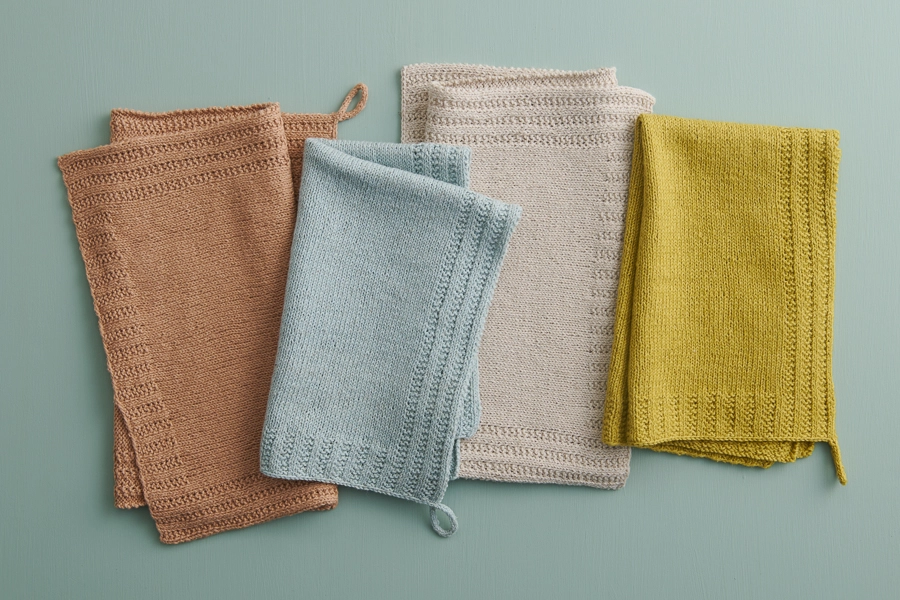
Fresh Bread Dishtowel
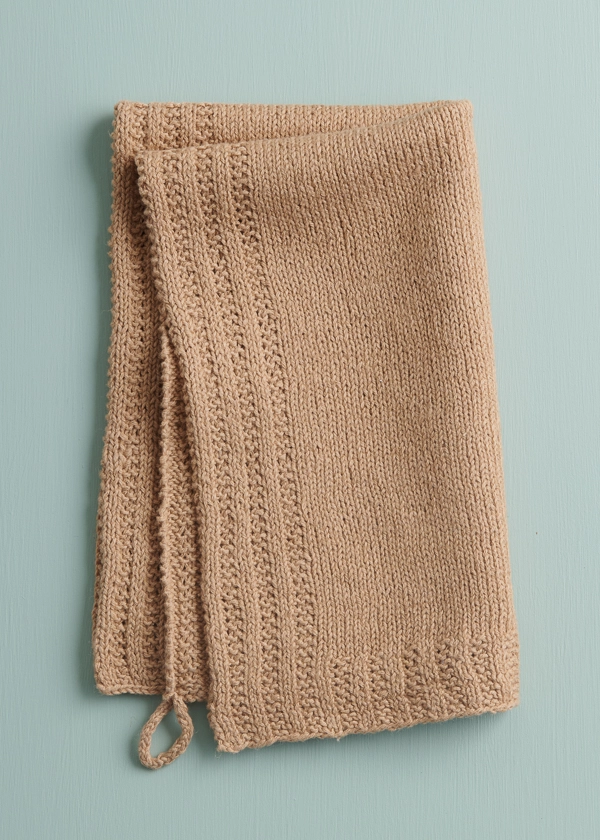
Like its namesake, our irresistible Fresh Bread Dishtowel pattern is made by hand with basic techniques and simple ingredients… In this case, knits, purls, and our soft, summery cotton-linen Oleander yarn.
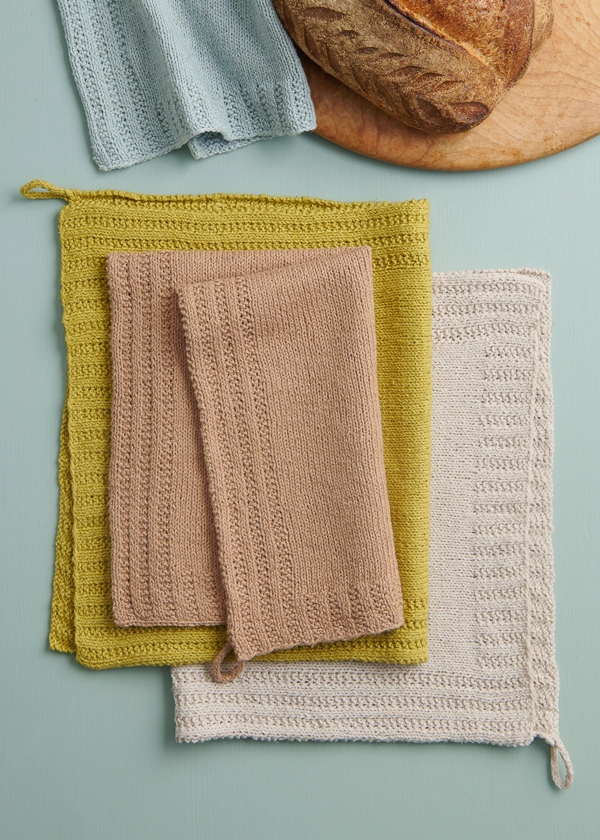
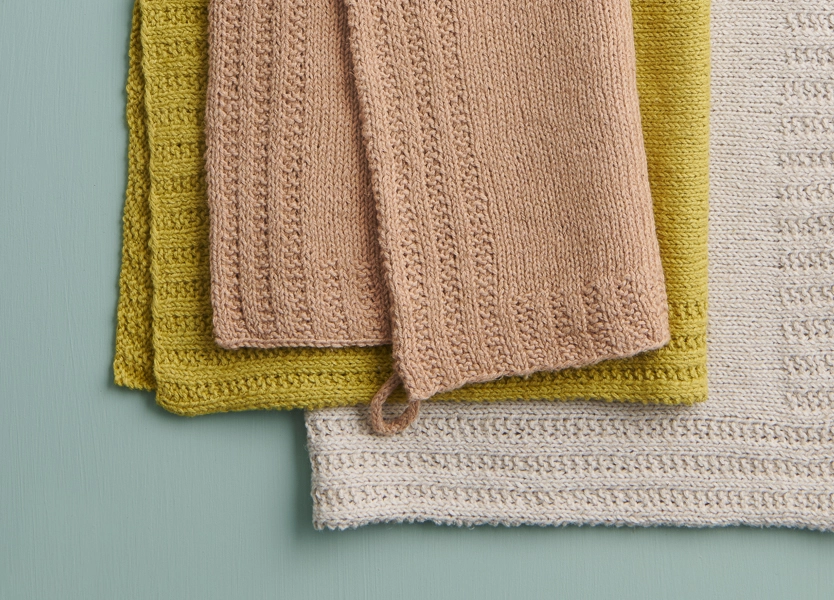
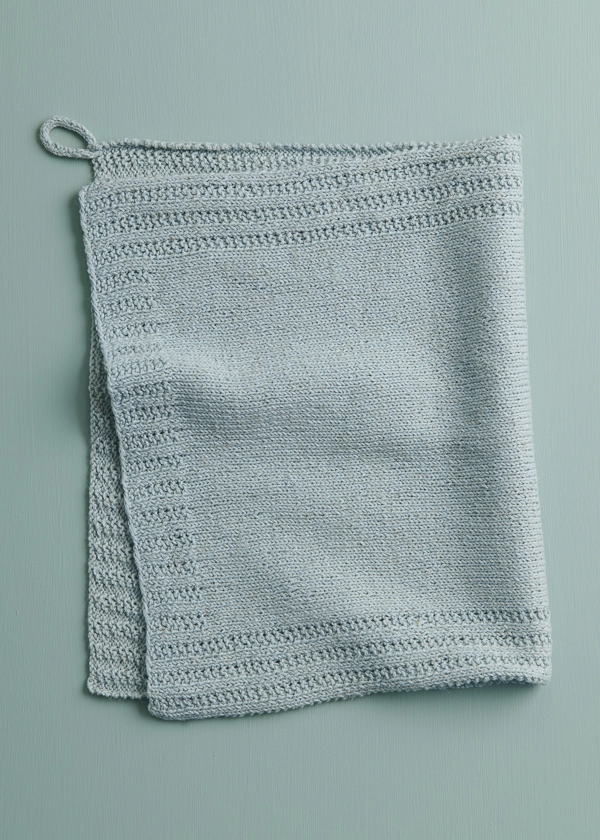
These towels are easy, peaceful knitting to nourish your spirit, all stockinette stitch with a simple garter rib border tracing all four sides, a little nod to the scoring on a loaf of bread. An I-cord hanging loop is the final satisfying step.
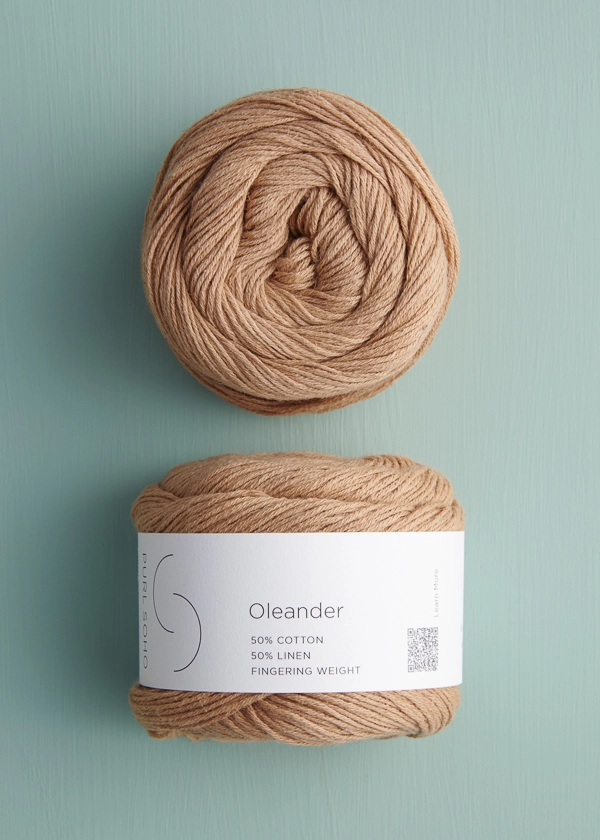
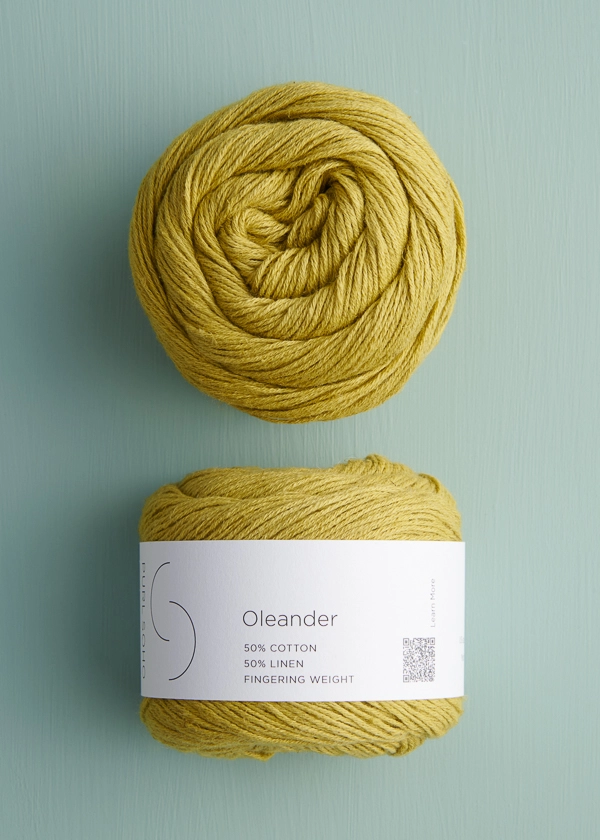
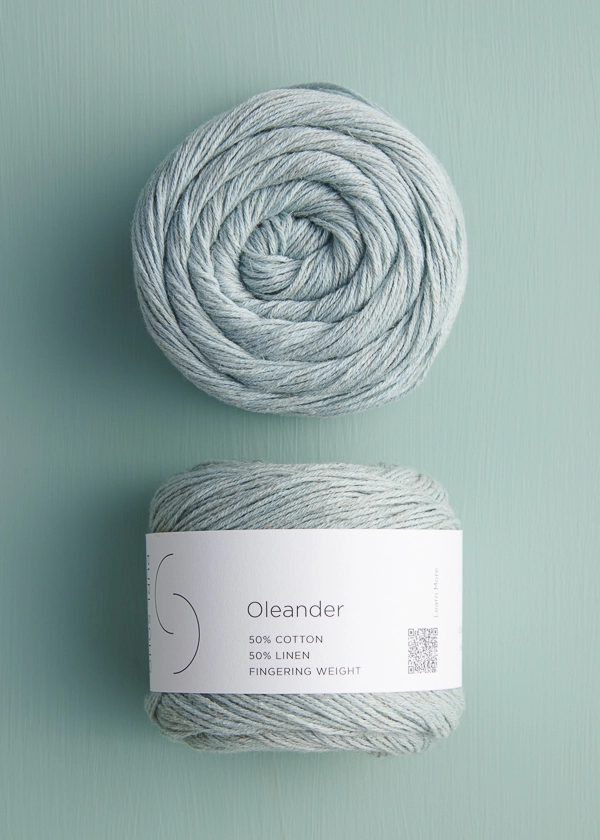
Light and lovely Oleander is made in Italy from equal parts Turkish cotton and Belgian linen, a perfect mix of plant-based fibers for a dishtowel. The naturally humectant linen absorbs water, while the cotton brings super touchable softness. Your towels will be machine wash- and dry-able, too, and will just get softer with every fresh loaf!
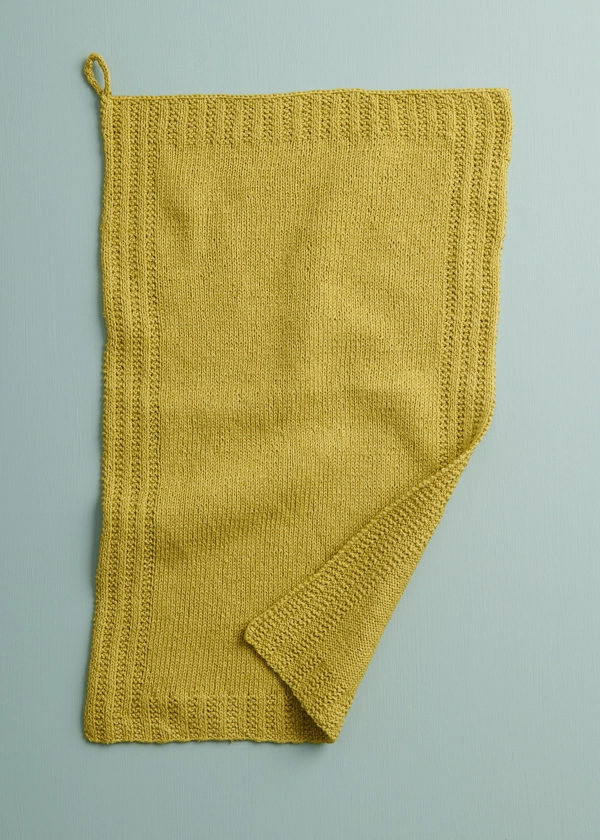
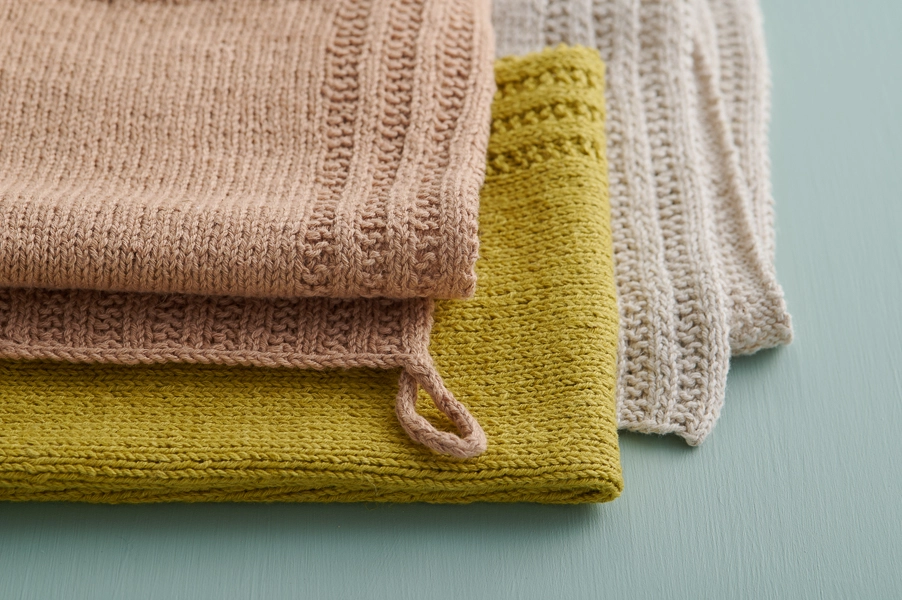
You knit the Fresh Bread Dishtowels at the denser end of Oleander’s gauge for a substantial yet light and drapey fabric, elegant yet effortless. Pick from a palette of soft, matte colors, including the straight-from-the-kitchen colors we chose: Pignoli Nut, Toasted Sesame, Dijon Yellow, and Blue Sage. Two balls of Oleander make one towel, or pick up a third and you’ll have enough yarn to make a set of two.
Just as the scent of a fresh-baked loaf signals warm, handmade comfort, your Fresh Bread Dishtowels will do the same wherever your family is gathering… Around the oven as everyone sneaks a peek, around the bread basket as everyone grabs a bite, or around the kitchen sink as everyone lends a hand with dishes!
Yarn lovers, if you adore the yarn used in this project, you’ll love exploring all of our other yarn collections! Discover over 55 thoughtfully designed yarns in nearly every natural fiber and in every spectacular color you can imagine. Only available here at Purl Soho’s online yarn store, where every skein is created with care and your creativity in mind!
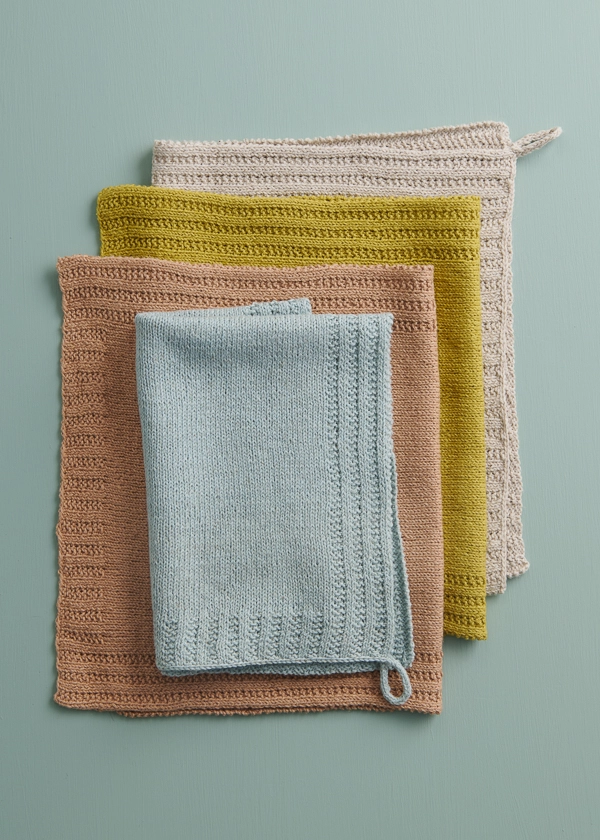
Pattern designed and written by Purl Soho designer, Gaby Bush.
Story written by Andrea Lotz for Purl Soho.
Want to print this pattern? On desktop, find the “print” icon in the right margin, and on mobile, scroll to the end of the pattern for it. Use the on-screen instructions to remove anything you don’t want to print!
Materials
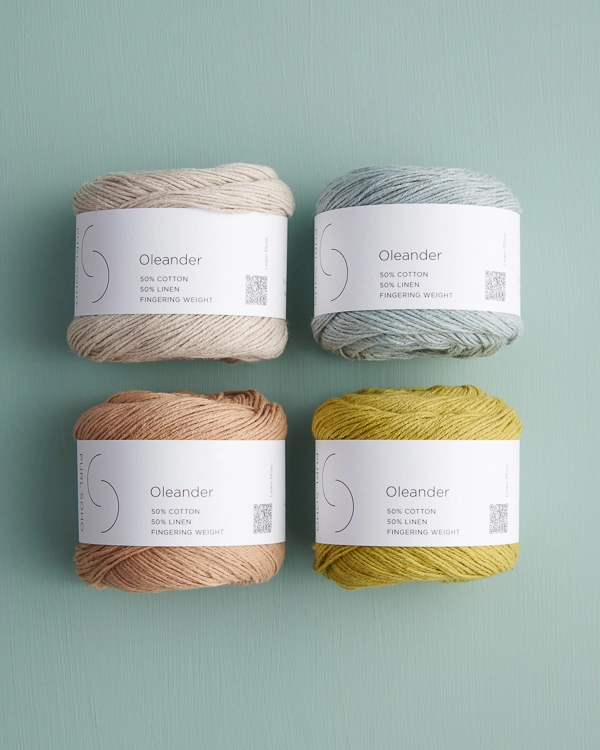
- 2 balls of Purl Soho’s Oleander, 50% cotton and 50% linen. Each ball of this fingering-weight yarn is 205 yards/ 50 grams; approximately 275 yards required. We used the colors Blue Sage, Dijon Yellow, Pignoli Nut, and Toasted Sesame.
- US 2 (3 mm), straight or 24-inch circular knitting needles
- If using straight needles: Two US 2 double pointed needles for I-cord
- Stitch markers
NOTE: Want to make a couple of dishtowels? 3 balls of Oleander is enough yarn for 2 towels!
GAUGE
30 stitches and 42 rows = 4 inches in stockinette stitch
SIZE
Finished Dimensions: 11¾ inches wide x 19 inches long
NOTES
STITCH MULTIPLE
This pattern works over a multiple of 4 plus 28 stitches.
PATTERN
Cast on 88 stitches. We used a basic Long Tail Cast On.
BOTTOM BORDER
Row 1 (wrong side): K1, *p2, k2, repeat from * to last 3 stitches, p2, k1.
Row 2 (right side): Knit 1 through back loop (k1 tbl), knit to end of row.
Repeat Rows 1 and 2 seven more times.
CENTER
Set-Up Row (wrong side): K1, [p2, k2] 3 times, place marker (pm), purl to last 13 stitches, pm, [k2, p2] 3 times, k1.
Row 1 (right side): K1 tbl, knit to end of row, slipping markers as you come to them.
Row 2 (wrong side): K1, [p2, k2] 3 times, slip marker (sm), purl to marker, sm, [k2, p2] 3 times, k1.
Repeat Rows 1 and 2 until piece measures 17½ inches from cast-on edge, ending with Row 1 (and removing markers as you come to them on final row).
TOP BORDER
Work Rows 1 and 2 of Bottom Border 7 times, then repeat Row 1 one more time.
With right side facing you, bind off knitwise to last 2 stitches, k2. [3 stitches remain]
MAKE I-CORD
With remaining 3 stitches, work an I-cord for 3 inches.
Bind-Off Row: K1, knit 2 together, pass first stitch over second stitch and off right needle.
Cut yarn, leaving an 8-inch tail. Pull it through remaining stitch.
Thread tail onto a tapestry needle. Make a loop with I-cord and weave tail into fabric at base of I-cord, then weave it through looped I-cord and back into fabric.
FINISHING
Weave in ends and block as desired.
Share your progress and connect with the community by tagging your pics with #PurlSoho. We can’t wait to see what you make!
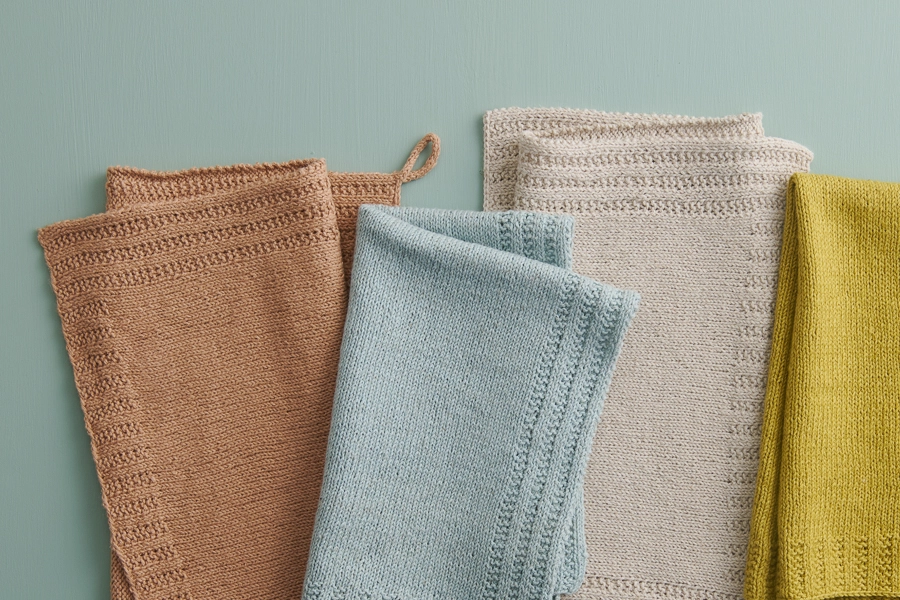
LEARN ABOUT OLEANDER + ALL OUR BEAUTIFUL YARNS
We used Oleander for this project because of its alluring earthiness and fine, soft touch. A fingering-weight yarn, Oleander is made in Italy from 50% Turkish cotton and 50% Belgian linen. It is the ultimate warm-weather knitting yarn, as light as a summer breeze and as lovely as an Italian hillside in bloom!
More Free Knitting Patterns
- Be sure to explore our growing collection of (mostly free!) Oleander knitting patterns and cast on!
More Fingering-Weight Yarns
- Shop our entire collection of fingering-weight yarns (What does fingering-weight yarn mean, really? Our guide to fingering-weight yarn will answer your questions and more!)
- If you want to use a different yarn, be sure to take the time to get the correct gauge. Need help? Check our All About Gauge Tutorial, our Yarn Substitution article, and our Complete Guide To Yarn for lots of helpful information.
More Yarns With Similar Fibers
- Shop cotton yarn (What helps cotton keep its cool? Learn all about this soft, natural fiber in our guide to cotton yarn!)
- Shop linen yarn
- Shop plant-based yarn
- Shop machine washable yarn
Looking for more inspiration? Explore all of our knitting patterns (including tons of free knitting patterns) and knitting tutorials, buy one of our many knitting kits and yarn bundles, and shop for beautiful yarn. We have over 55 gorgeous natural fiber yarns in 1,000s of magnificent colors, designed to bring integrity, beauty, and joy to your next knitting project and only available at Purl Soho!



Hello, I would love to make the fresh bread dishtowel for a 17”x65”wrap in a sport wt. yarn such as cotton pure. How many yards would I need and how many cast on stitches with a #4or #5 needle. I love all the help you give to your followers. Kathleen
Hi Kathleen,
This sounds like a really fun project, and I’m happy to help.
To make a project at the same gauge to reach 17″ by 65″, you would need 1,362 yards. You’ll need to swatch and do a bit of math to be able to estimate your yardage with a new yarn weight. Knitting and blocking a swatch will also allow you to adjust your needle size accordingly and to see if you like the finished fabric.
To find the most accurate estimate of how much yarn is required in a sport weight, you’ll need the area of your swatch, the area of the project, and the weight of your swatch.
The original towel was 11.75″ wide by 19″ long, for an area of 223.25 square inches. Your projected area is 1,105 square inches. Let’s hypothetically say that you’re knitting your sport-weight yarn at 6 stitches per inch. You would need around 102 stitches to reach the desired width. This pattern works over a multiple of 4 plus 28 stitches. You could cast on 128 stitches to most closely reach your goal.
You can find the total weight of the skein and total yards on the skein’s label. This will give you a yard/gram measurement if you divide the numbers. Then, consider how many swatches you would need to make the project. You can divide the area of the blanket by the area of the swatch to find a ratio. As an example, if your output is 1/10, you would need 10 swatches to make the blanket.
With this ratio (the area of the project divided by the area of the swatch), you can multiply it by the weight of your swatch to get the total grams needed. Finally, divide that by the grams per skein….voila! You now have the yards required.
I hope this helps!
Happy knitting,
Hills
Thank you Hills, for taking the time to help. Kathleen
Always happy to help, and really glad this was helpful for you! Please reach back out anytime 🙂
Kindly,
Hills
I wonder if I could use this yarn to make a summer vest, and if so what pattern you may know of?
Hi Shanna,
Thanks so much for reaching out. I think Oleander would make a lovely summer vest!
You might consider the Sayer Top or the Rigby vest.
I’d suggest knitting and blocking a gauge swatch whenever you substitute yarns. It’s a great opportunity to check your gauge against the pattern’s and ensure you like the finished fabric.
I hope this is helpful!
Happy knitting,
Hills
Hi there! This pattern wont curl on the edges? …been a problem from my tight knitting?
Hi Michele,
Thanks so much for reaching out with your question!
You shouldn’t expect to see too much curling here with the thick border edges. You’re also less likely to see curling from plant fibers.
If you do experience curling, we’d recommend blocking the project with the wrong side facing up and pinning down the edges.
I hope this helps!
Happy knitting,
Hills
I would like to seam the left and right sides to make this more of a pocket for the bread. Do you have any advice as to how to accomplish this?
Hi Vanessa!
Absolutely, this sounds like a great idea! Thanks so much for reaching out with this question.
I’d suggest the mattress stitch for seaming the sides on worked edges (not live stitches). If you’d like to close the bottom, you could also work this seam, or use a provisional cast-on so you have live stitches to seam later using the kitchener stitch.
I hope this is helpful! Please reach back out anytime!
Happy knitting,
Hills
My daughter has requested a dish towel in red. Do you have any suggestions for a suitable yarn? Thanks so much!
Hi Kelly,
This sounds like a very thoughtful gift for your daughter! Oleander in Burnt Sienna would be a great option. It’s a bright red-orange, and you can see it in action in our Simple Tee sample.
Please feel free to follow up with any other questions you might have!
Happy knitting,
Hills
Bottom Border row 2…is it k1 tbl all across the row or just the first stitch? Thank you.
Hello Mary,
Thanks so much for reaching out. I’m really glad to see you’re working on the Fresh Bread Dishtowels as your next project, and I’m happy to help.
It looks like you should only need to knit through the back loop on your first stitch of Row 1.
I hope this works well for you, and please don’t hesitate to reach back out anytime with any other questions you might have.
Happy knitting,
Hills
I’m just starting this project, and had the same question as Mary. This was helpful to check out all the questions and comments. Thanks so much.
Sharon
Hiya Sharon,
I’m thrilled you found what you were looking for! I hope you really enjoy the Fresh Bread Dishtowel. Please feel free to reach back out with any questions you might have as you’re working. We’re always here and really glad to be able to help.
All the best,
Hills
Hi, I am knitting my first towel and it looks thin. Is it suppose to be knitted with the yarn hold double?
Hi Laura,
Thanks so much for reaching out. I understand your concern with the lightness of this project, but you’re working correctly by holding the yarn single!
Since this pattern is made with Oleander (a fingering weight yarn), it may not be as lofty as other towels. However, it’s knit at the denser end of Oleander’s gauge, which results in a substantial yet light and drapey fabric. If you haven’t already, I recommend laundering your swatch to see if you like the density/finish of the fabric on that needle size! Cotton tends to compress and size down when it’s washed, so it will likely have a different feel than when you’re working pre-blocking.
I hope this helps put your mind at ease but if you’d like to send a picture of your project to [email protected], we’re happy to take a closer look!
Kindly,
Sam
Hi, This is beautiful yarn! Any idea how it would weave? Is it strong enough to use as warp? Making hand towels 🙂 Thanks!
Hi Sarah,
We’re so glad you’re interested in our Oleander yarn! We haven’t tried weaving with it (yet!), but I think it would make a great warp yarn. It’s made of a smooth blend of linen and cotton, which are both strong fibers that give this yarn structure. The yarn is constructed of four 2-ply strands so it’s quite durable…I can’t break this yarn with my hands, so I think it will stand up to being warped very well. I recommend giving it a try, and we’d love to know what you think!
We hope this helps! Let us know if you have any other questions.
Kindly,
Allison
On row 2 of the bottom border do you k1tbl to end of row or do you k1tbl once and then do k stitches to end of row
Hi Virginia,
Thanks for reaching out! This is a great question, and I’m happy to clarify!
You’ll work the K1tbl once and then knit to the end of the row.
Above, we provide both the expanded instruction and the abbreviation for the instruction in parentheses for clarity. That way, we can refer to just the abbreviation later in the pattern. The abbreviation in parentheses is a bit different than when a stitch pattern is written to be repeated, and I can absolutely see how that could cause some confusion. If the pattern were written (k1tbl, k)*, then you would want to repeat that pattern to the end of the row (as an example).
I hope this helps point you in the right direction! Please feel free to reach out with any other questions you might have!
All the best,
Hills
Please clarify on the bottom border repeat rows 1 and 2 seven more times.
Does this mean row 1 seven time and row 2 seven times for a total of 14 rows? Or is it rows 1 and 2 for a total of 7 rows?
Thank you!
Hi Carol,
Thanks so much for reaching out. I’m happy to clarify the bottom border for you.
You’ll want to work both Row 1 and Row 2 seven more times. You should have 16 rows including the first set of Row 1 +2 .
I hope this helps point you in the right direction. Please feel free to reach back out with any other questions you might have.
All the best,
Hills