Your basket is empty.
Continue Shopping
True Knit Shawl in June Worsted
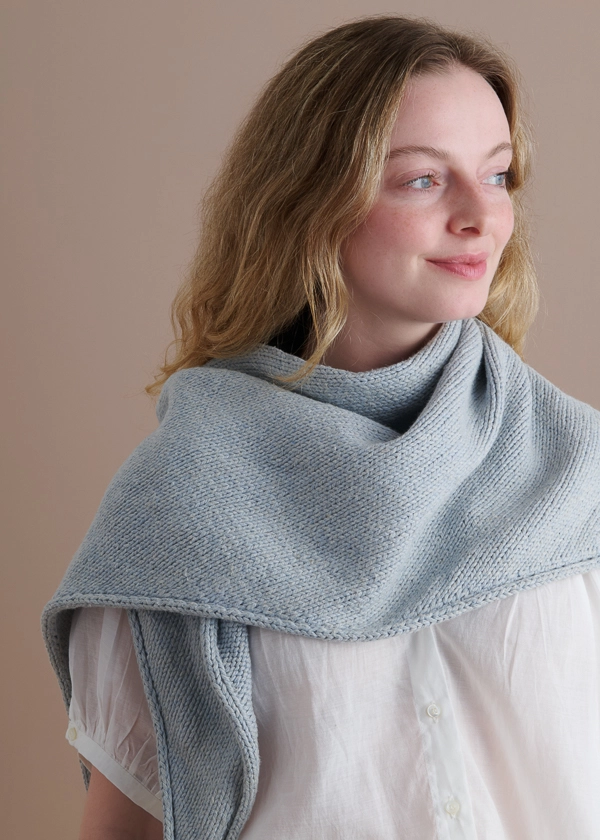
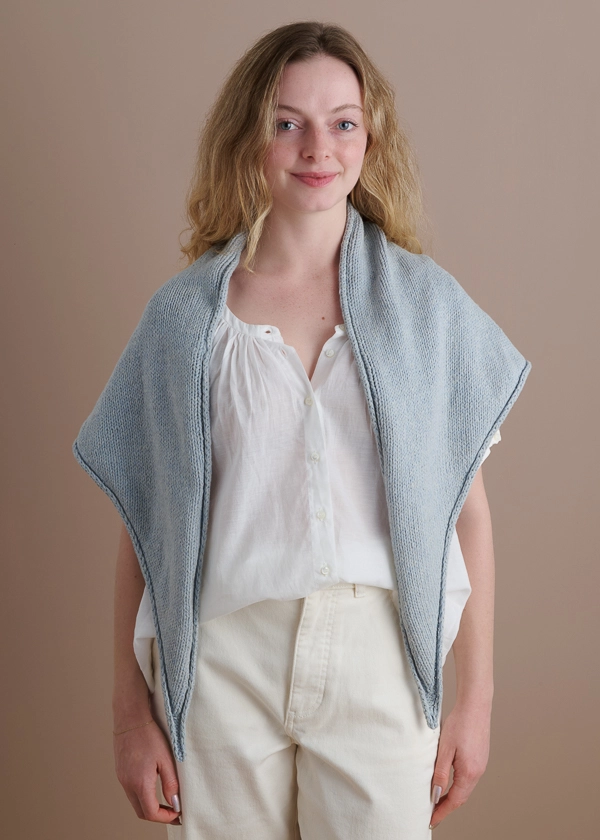
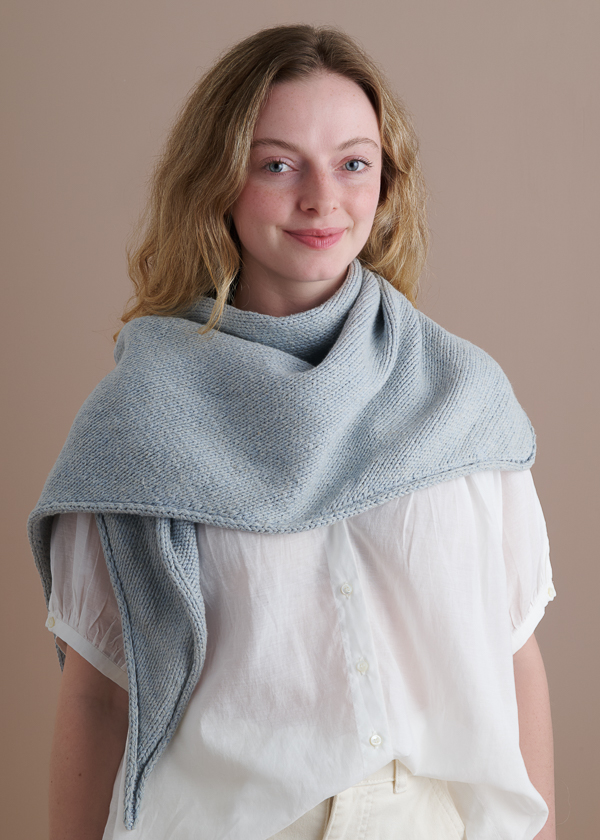
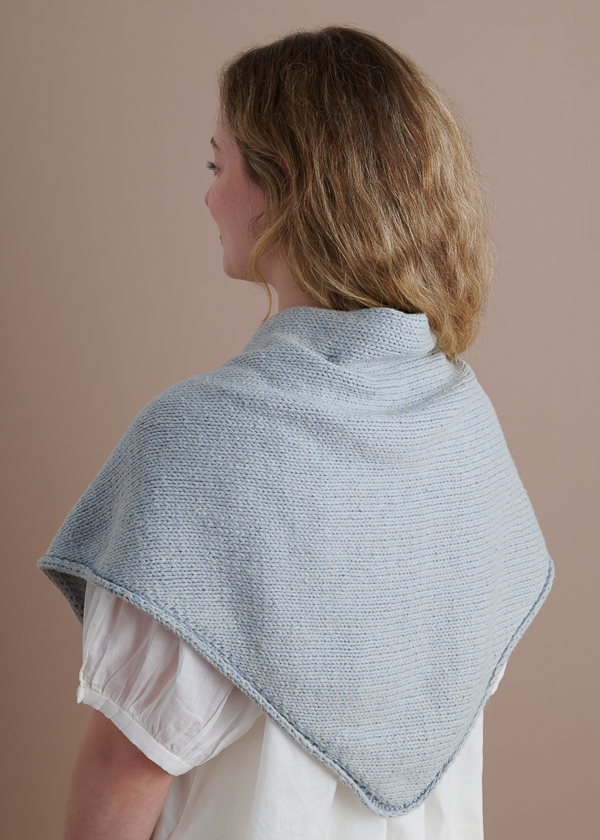
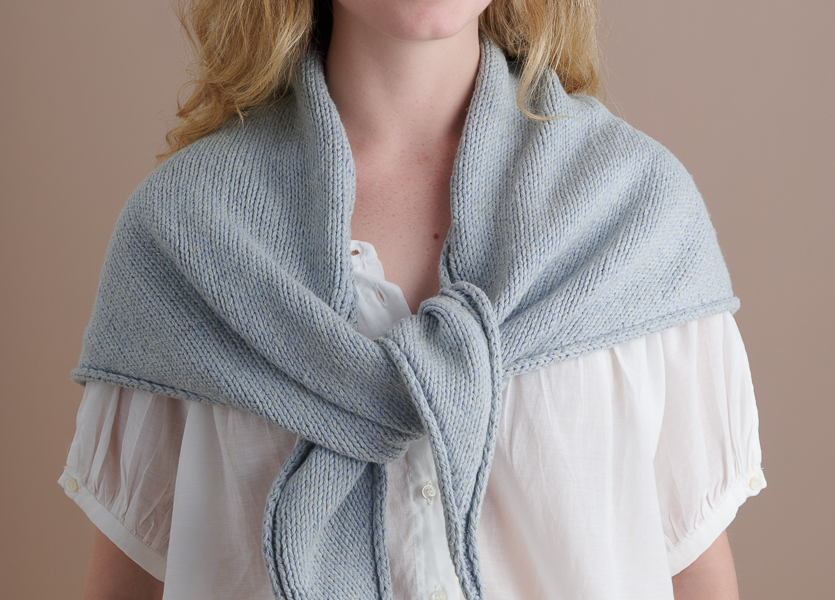
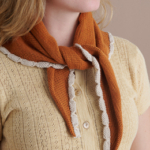
Simple and understated yet thoughtful in every detail, our beloved True Knit Shawl pattern is a celebration of pure knitting joy. Where the original in Nigh Aran glows with sumptuous cashmere warmth, this new June Worsted version is cool, fresh, and laid back, a perfect layer for summer nights and overzealous air conditioning.
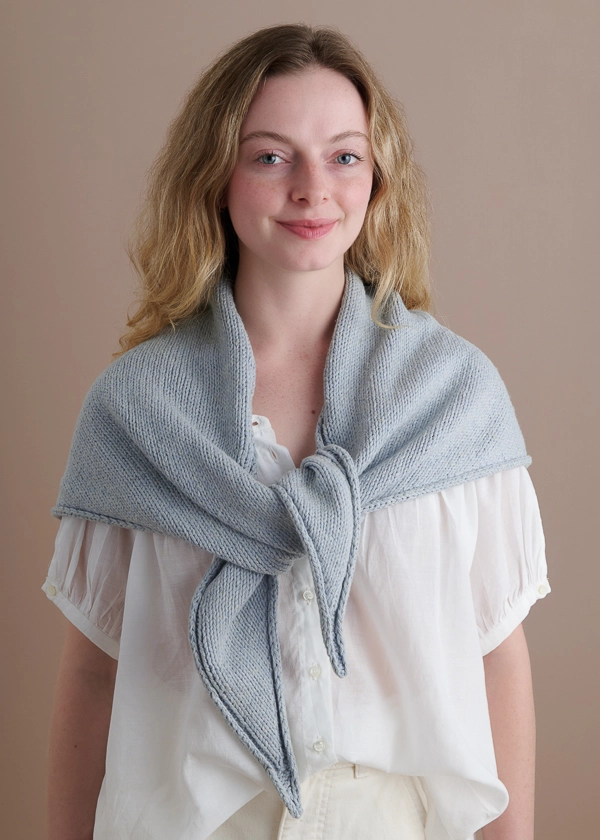
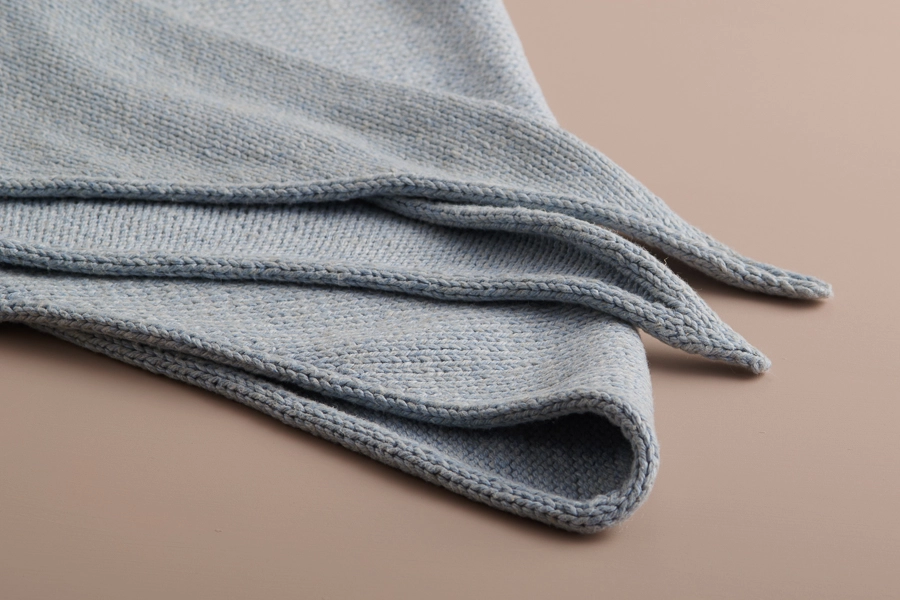
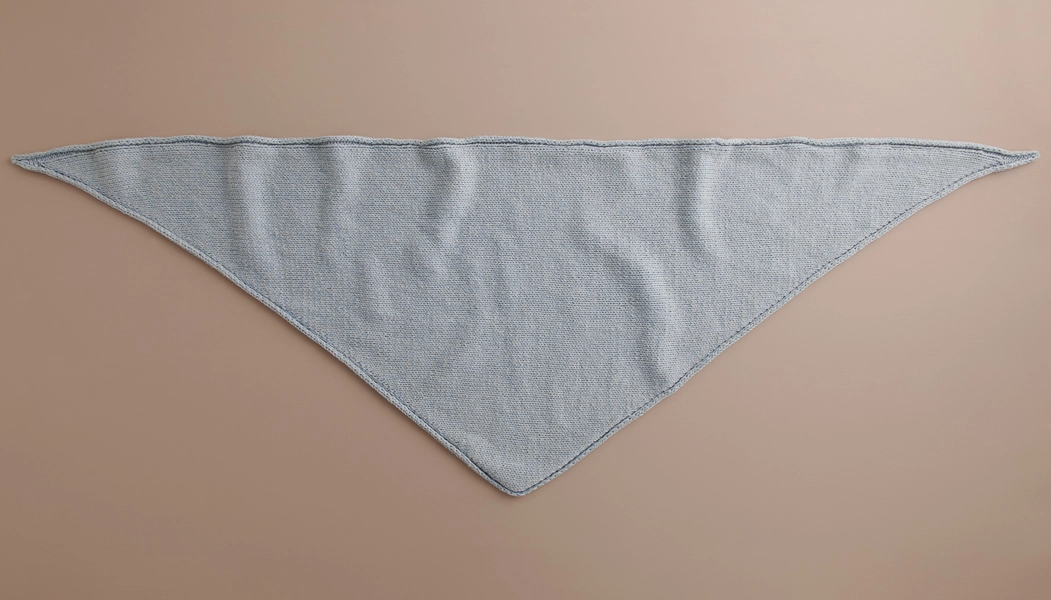
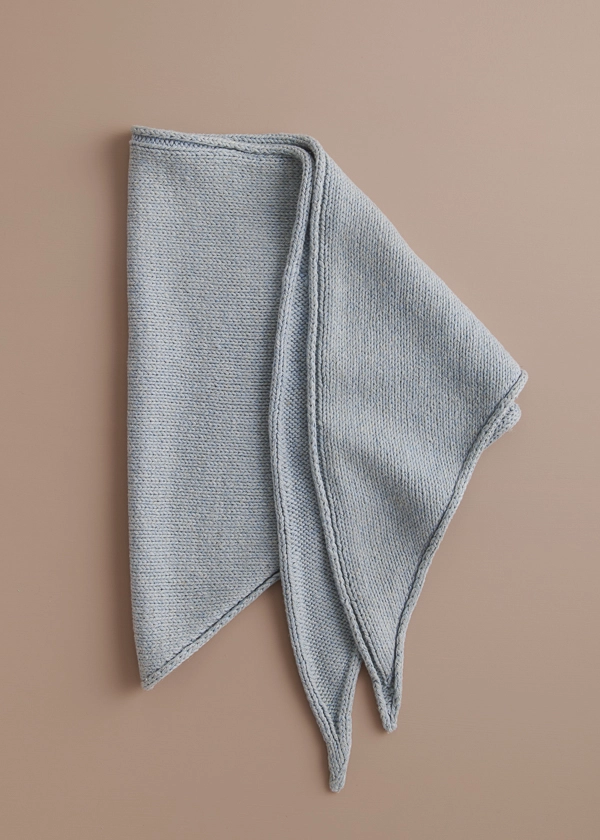
You begin this triangular shawl at one tip and work your way across, increasing along one edge then decreasing back down to the other tip. A few reverse stockinette stitches at the borders naturally curl forward to create a soft rolled edge with plenty of give. Easy knitting for easy summer days!
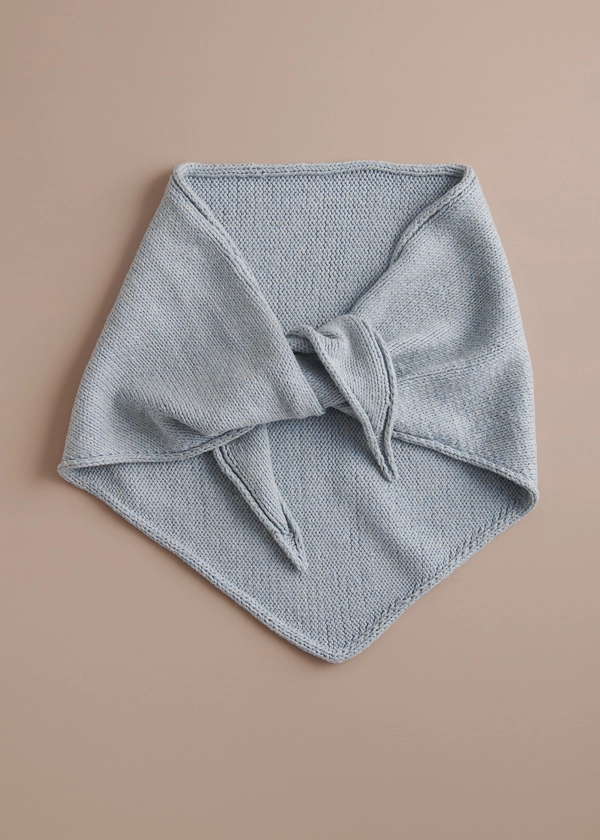
So fun to knit and a delight to wear, June Worsted is a plush worsted-weight yarn made with 70% organically grown cotton and 30% Belgian linen. It knits up into smooth, squishy stockinette with a slightly earthy character, and with machine washing, the already soft fabric gets even softer, for a lived-in look that just gets better and better with time.
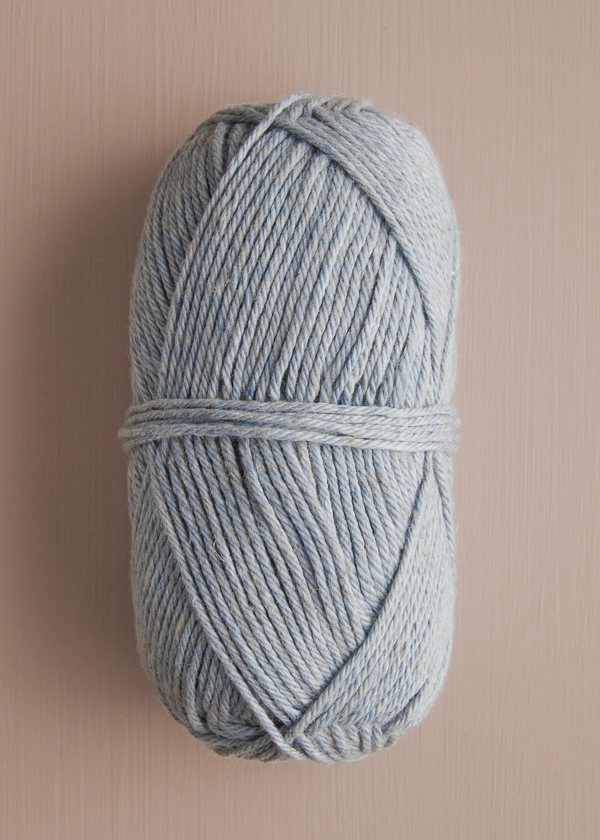
June Worsted comes in generous, ready-to-knit 100-gram balls and a lovely, sun-kissed summer palette, including this soft, nuanced Pale Denim. You have 20 stunning colors to choose from, each touched by a golden flaxen warmth.
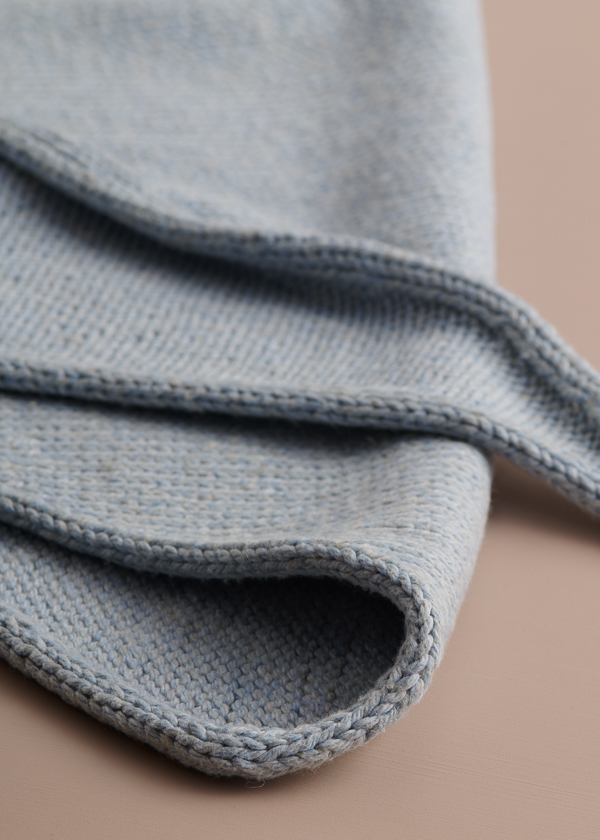
Pick up three balls of June Worsted for this larger size or two for a smaller version and cast on for your summer-ready True Knit Shawl, an everyday knit that embodies effortless beauty!
Yarn lovers, if you adore the yarn used in this project, you’ll love exploring all of our other yarn collections! Discover over 55 thoughtfully designed yarns in nearly every natural fiber and in every spectacular color you can imagine. Only available here at Purl Soho’s online yarn store, where every skein is created with care and your creativity in mind!
Pattern designed and written by Purl Soho designer, Hiromi Glover. See even more of Hiromi’s work on her Instagram!
Story written by Andrea Lotz for Purl Soho.
Want to print this pattern? On desktop, find the “print” icon in the right margin, and on mobile, scroll to the end of the pattern for it. Use the on-screen instructions to remove anything you don’t want to print!
Materials
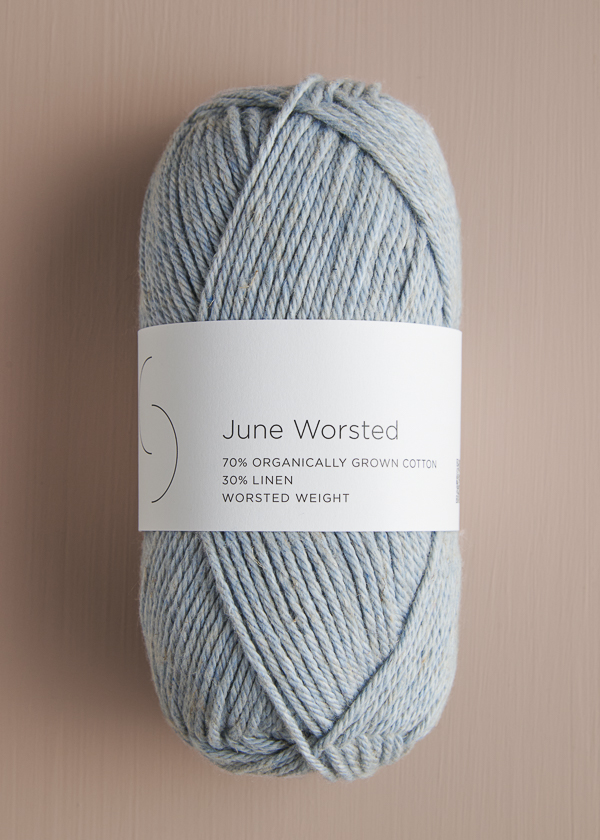
- 2 (3) balls of Purl Soho’s June Worsted, 70% organically grown cotton and 30% linen. Each ball of this worsted/aran-weight yarn is 164 yards/ 100 grams; approximately 225 (450) total yards required. We used the color Pale Denim.
- US 7 (4.5 mm), 24-inch circular knitting needles
GAUGE
16 stitches and 23 rows = 4 inches in stockinette stitch
SIZES
Small (Large)
Finished Dimensions: 16¼ inches at widest point x 44 inches long (22¾ inches at widest point x 62 inches long)
SAMPLE: We knit the Large size.
NOTES
SLIP STITCHES
Right Side: Slip stitches purlwise through back leg with yarn in front.
Wrong Side: Slip stitches knitwise with yarn in back.
SPECIAL INSTRUCTIONS
M1L PURLWISE (MAKE 1 LEFT PURLWISE)
NOTE: For more help with this increase, please visit our Make 1 Purlwise Tutorial.
M1L purlwise: Use left needle to pick up strand between last stitch and next stitch, from front to back. Purl into back leg of strand. [1 stitch increased]
PATTERN
FIRST HALF
Cast on 3 stitches. We used a basic Long Tail Cast On.
Row 1 (right side): Slip 1 (see Notes), p2.
Row 2 (wrong side): Slip 1 (see Notes), make 1 right (m1R), k2. [4 stitches]
Row 3: Slip 1, purl to end of row.
Row 4: Slip 1, knit to last 2 stitches, m1R, k2. [1 stitch increased]
Repeat Rows 3 and 4 three more times. [8 stitches]
Row 5 (right side): Slip 1, purl to end of row.
Row 6 (wrong side): Slip 1, k3, m1L purlwise (see Special Instructions), k4. [9 stitches]
Row 7: Slip 1, p3, knit to last 4 stitches, p4.
Row 8: Slip 1, k3, purl to last 4 stitches, m1L purlwise, k4. [1 stitch increased]
Repeat Rows 7 and 8 fifty-six (82) more times. [66 (92) stitches]
SECOND HALF
Row 1 (right side): Slip 1, p3, knit to last 4 stitches, p4.
Row 2 (wrong side): Slip 1, k3, purl to last 5 stitches, knit 2 together (k2tog), k3. [1 stitch decreased]
Repeat Rows 1 and 2 fifty-six (82) more times. [9 stitches remain]
Row 3 (right side): Slip 1, p3, k1, p4.
Row 4 (wrong side): Slip 1, k3, k2tog, k3. [8 stitches remain]
Row 5 (right side): Slip 1, purl to end of row.
Row 6 (wrong side): Slip 1, knit to last 3 stitches, k2tog, k1. [1 stitch decreased]
Repeat Rows 5 and 6 three more times, then repeat Row 5 one more time. [4 stitches remain]
Next Row (wrong side): Slip 1, k2tog, k1. [3 stitches remain]
Next Row (right side): Slip 1, purl to end of row.
Cut yarn and thread tail onto a tapestry needle. Sew tail through remaining stitches and pull taut.
FINISHING
Weave in the ends and gently wet block.
Share your progress and connect with the community by tagging your pics with #PurlSoho. We can’t wait to see what you make!
Learn About June Worsted + All Our Beautiful Yarns
This project is the perfect mix of cool, cozy, and soft, thanks to our June Worsted yarn! Made with a mix of organically-grown cotton and Belgian linen, this worsted-weight yarn has the wonderfully soft and knit-able feeling of an animal-fiber yarn, but rest assured, it also has the cooling, vegan, and anti-allergen properties of a plant-based yarn. It’s also super beautiful, incredibly endearing, and machine washable, too… You will love it for everything from towels to garments to blankets!
More Knitting Patterns
- Be sure to explore our collection of (mostly free!) June Worsted knitting patterns and cast on!
More Worsted/Aran-Weight Yarns
- Shop our entire collection of worsted/aran-weight yarn (What does worsted-weight yarn mean, really? Our guide to worsted-weight yarn will answer your questions and more!)
- If you want to use a different yarn, be sure to take the time to get the correct gauge. Need help? Check our All About Gauge Tutorial, our Yarn Substitution article, and our Complete Guide To Yarn for lots of helpful information.
More Yarns With Similar Fiber
- Shop cotton yarn (What helps cotton keep its cool? Learn all about this soft, natural fiber in our guide to cotton yarn!)
- Shop linen yarn
- Shop plant-based yarn
- Shop machine washable yarn
Looking for more inspiration? Explore all of our knitting patterns (including tons of free knitting patterns) and knitting tutorials, buy one of our many knitting kits and yarn bundles, and shop for beautiful yarn. We have over 55 gorgeous natural fiber yarns in 1,000s of magnificent colors, designed to bring integrity, beauty, and joy to your next knitting project and only available at Purl Soho!


I am interesting to make this shawl for me. However, I have a question: how do I know if I need 2 or 3 balls. Thank you for your reply.
With gratitude,
Gabriela
Hi Gabriela,
Thank you so much for reaching out today! I am thrilled to see you’re considering the True Knit Shawl. It’s such a lovely piece for summer nights, and we’re really excited about it.
Under our materials, we list “2(3) balls of June Worsted.” Later, under “SIZES” we list “Small(Large),” which aligns with the finished dimensions just below it. Our sample was the larger size and used 3 balls.
Any instructions you see that include parentheses (like decreases or increases) will also line up to these sizes. You might enjoy reading more about it in our handy article, “How to Read a Knitting Pattern.”
I hope this is helpful, but please feel free to reach back out anytime!
Happy knitting,
Hills
this pattern was very confusing in the beginning right side to wrong side would have been better to do some explaning on why the right and wrong sides are not the norm
Hi Kristy,
We’re so sorry the True Knit Shawl start gave you some trouble. I’ll be sure to pass your suggestion along to our team…thank you so much for letting us know! This points to a really great question, and I would love to explore this with you further.
Here’s the direction we’re looking at:
Row 1 (right side): Slip 1 (see Notes), p2.
It’s fairly common to start with the right side as the first row, although I’ve noticed that some designs tend to begin with the wrong side a bit more often, at least anecdotally. Here, it’s mostly a design choice so that the I-cord edges match the ends with some cute, intentional curling. The edge is, essentially, reverse stockinette and also works as a barrier before the stockinette fabric to stop the project from curling beyond that point. It also works to create a clean end/corner, which is otherwise a little tricky with I-cord edges (for this kind of shape).
Other projects that start on the right side often do so either to reduce curling or to ensure you start a textured stitch pattern on the correct side.
I so hope this helps, and please feel free to reach out anytime!
All the best,
Hills
Am not able to print the frree pattern for the summer shawl
Hi Sis!
Thanks so much for reaching out. I’m so glad to see you’ll be working on the True Knit Shawl! I just sent you an email with a couple of copies of this PDF, one printer-friendly version and one including the original images.
I also included some helpful troubleshooting for printing from your phone or desktop. I’m wondering if you have already used these steps and are still running into an error. I would love to get ahead of any systemic printing issues!
Thank you again for reaching out, and I’ll keep an eye out for a reply from you.
Happy knitting,
Hills
Would this pattern work with linen quill or cotton chirp?
Hi Margaret,
Thank you so much for reaching out! I’m really glad to see you’re considering the True Knit Shawl as your next project, and I’m happy to help you consider some alternative yarns.
This project is knit in June Worsted, a worsted-weight/aran-weight, is a cotton/linen blend yarn that we knit up to 4 stitches per inch on a size US 7 needle. Cotton Chirp is a 100% Peruvian cotton Dk-weight/light worsted weight yarn that knits up to 5.25 stitches per inch on a US 6 needle. Linen Quill is a fingering-weight yarn that is made of 50% fine highland wool, 35% alpaca, and 15% linen, and knits up to 6.5 stitches per inch on a US 5 needle. You would likely need 3 strands of Linen Quill to make gauge, and it might be a bit challenging with Cotton Chirp.
I would always recommend knitting and blocking a gauge swatch when substituting yarns. This will help you check your gauge and adjust your needles accordingly. If you don’t reach gauge, unfortunately, the garment won’t turn out the right size. This is also a great opportunity to see if you like the look and feel of the finished fabric, and whether the yarn relaxes, grows, blooms, or shrinks when blocked. You can read more about specific fiber properties in our article, “Complete Guide To Yarn: Fiber, Spin, Weight + More.”
Once you have your gauge swatch, you will want to make a note of the stitch and row gauge. You’ll also need the area of your swatch and the area of the finished project. The shawl is designed in two sizes: Small (Large), with Finished Dimensions: 16¼ inches at the widest point x 44 inches long (22¾ inches at the widest point x 62 inches long), respectively. You can divide the area of the project by the area of the swatch to find a ratio. For instance, if your result is 1/10, you would need 10 swatches’ worth of yarn to knit the pattern. Once you have that ratio (the area of the original shawl divided by your swatch’s area), multiply it by the weight of your swatch to get the Total Grams of the new yarn that you’ll need. For the very last step, divide the amounts that you got from the formula by the grams per skein of whichever yarn you like, and voila! You now have your yardage estimate.
You can determine how many stitches you would need to cast on by multiplying your gauge (in stitches/inch) by the desired width of the cast-on edge. You may find that you choose to adjust the decreases to suit the size of your project.
I hope this is helpful! Please reach back out if you have any follow-up questions!
Kindly,
Hills
Thank you for your guidance about the amount of yarn I need for this shawl.
I haven’t been able to print just the pattern. When I try to print it, it includes all the pictures and all the information you have published. I loved reading all the information, but I don’t need to print it.
Thank you for your guidance and leadership.
With sincere gratitude,
Gabriela
Hi Gabriela,
I’m always so glad to help, and I’m really so sorry to read that you’re having printing issues with this pattern! I just emailed you a printer-friendly pattern as well as one with photos.
I’m wondering if you might be able to send a screenshot of what you’re seeing back to [email protected]? We are very eager to get to the bottom of this!
Thank you so much in advance!
Kindly,
Hills
Does this have to be knit on circulars?
Hi Monique,
Thanks for reaching out, that’s a great question!
We recommend 24-inch circular needles for this project since the widest point of the shawl will be 16¼ (22¾), and we typically find that size of fabric easier to handle on circulars. However, you are more than welcome to use straight needles that are long enough to accommodate the width, or even double-pointed needles when working the smaller points at the beginning and end of the pattern.
At the end of the day, it’s about your preference and what feels most comfortable to knit with. I hope this helps!
Kindly,
Sam
Thank you- I will get a set of circulars. I’ve never used them before and I think this is a great pattern to start using them on! Last question- how many inches to make my long tail cast on? I know the cast on is only 3 inches. So how long should the tail be? Thanks!
Hi Monique,
Thank you so much for your reply!
I’d recommend keeping your tails between 6″ and 8″. This should give you enough room to weave them in without having too much distracting slack!
Best wishes on your first project on circular needles, you’ve got this! Let us know if you have any other questions as you work!
Kindly,
Hills
I want to make this shawl larger, and I’m considering ordering four balls of yarn instead of three. If I do that, at what point should I stop increasing and begin decreasing so that I have a point in the center back?
Thanks. Your help is always great.
Hi Jane,
Thanks for writing in! I think having even more of this squishy stockinette shawl to wrap up in sounds lovely.
The point at which you’ll stop your increases and switch to decreases is completely up to you, depending on how big you want your shawl! If you’d like to go with four balls instead of three, a simple way to tackle this would be to increase until you’ve used nearly two balls on the First Half, counting how many repeats you make of Rows 7 & 8. Then you’ll begin your decreases on the Second Half, repeating Rows 1 & 2 as many times as you did Rows 7 & 8.
This method should ensure you have enough yarn, since each half of the shawl is a mirror of the other. I hope this helps, but don’t hesitate to reach out if you have any other questions!
Happy knitting,
Samantha
You can always weigh the yarn and start the decrease at half the weight.
Hi Frankie,
This is also a great way to use up all of your yarn, although I always recommend using a tad bit less than half to avoid running out of yarn (45% is a good rule of thumb)! Some folk’s gauge will vary between the increase and decrease side of shawls that are knit in this manner.
Happy knitting!
Mia
Hi,
I just purchased June Worsted for the True Knit Shawl. I bought an extra ball (so 4) just in case I’d decide to make it bigger than the Large. Can I make it bigger by just adding half a ball to each side of the triangle?
Also, could you also provide me with a printer-friendly version without the pictures?
Thank you!
Hi Margaret,
This project is a great choice for increasing the size a bit to fit your preference, and you’re spot on with how to do so!
If you’d like to go with four balls instead of three, a simple way to tackle this would be to increase until you’ve used nearly two balls on the First Half, counting how many repeats you make of Rows 7 & 8. Then you’ll begin your decreases on the Second Half, repeating Rows 1 & 2 as many times as you did Rows 7 & 8.
I’ve also sent a copy of this pattern without images to the email address you used here! If you need anything else, don’t hesitate to reach back out.
Kindly,
Sam
Is there another way to increase and decrease beside M1P/M1K ?
Thank you!
Hi Paula,
Thanks so much for reaching out. This is a great question!
Make 1 increases can be substituted with lifted increases in most patterns, as both increase methods are worked between stitches and your stitch counts will turn out the same. These increases are often less visible than their counterpart.
I’d suggest using your preferred search engine to look for a tutorial for “LLPI (left lifted purl increase),” to mirror the increases listed as M1L purlwise while maintaining a similar decrease to the lifted increases.
An alternative to K2tog would be ssk…they essentially point in opposite directions.
I hope this helps! Please reach back out anytime.
Kindly,
Hills
Thank you. I have another question. I figured out the m1r and the m1 l . On row 6 ,it is a wrong side row but I’m confused about the M1l purlwise as it’s not a purl row. It doesn’t look right to me. Can I just use the M1 l?
Hi Paula,
Thanks so much for your reply! Congratulations on working the M1L and M1R…What an accomplishment!
This M1L purlwise on the knit side is actually creating that beautiful edge you see on the sample. You can see that just next to the actual edge, there is a sort of “ditch.” This is your M1L purlwise! It creates a stunning effect and also performs some functional work to prevent curling in stockinette stitch.
With that in mind, I would recommend working the M1L purlwise rather than an M1L. If you run into any trouble with the M1L purlwise, please feel free to email us some photos at [email protected]. We would be glad to take a look and help get you back on track.
Kindly,
Hills
Hello,
For row 6, this is a knit row, however, the increase is a m1L purlwise. This seems incorrect to me, am I doing something wrong? Are we supposed to purl in the middle of a knit row?
Your instructions:
Row 6 (wrong side): Slip 1, k3, m1L purlwise (see Special Instructions), k4. [9 stitches]
Hi Monique,
Thanks so much for reaching out! I can see how this could be surprising, and fear not, this was an intentional design choice!
This M1L purlwise on the knit side is actually creating that beautiful edge you see on the sample. You can see that just next to the actual edge, there is a sort of “ditch.” This is your M1L purlwise! It creates a stunning effect and also performs some functional work to prevent curling in stockinette stitch.
With that in mind, I would recommend working the M1L purlwise rather than an M1L. If you run into any trouble with the M1L purlwise, please feel free to email us some photos at [email protected]. We would be glad to take a look and help get you back on track.
Kindly,
Hills
Hi! I’m stuck on Row 1, already! I’ve casted on 3 using the long tail cast on. The stitches are on the right needle and when I flip them around to begin Row 1, it’s setup for purlwise stitches; however, the instructions for Row 1 say it’s the right side, row 2 is wrong side, etc. just want to make sure I’m starting correctly. Thanks for your help!
Hi Emily,
I’m really sorry to read that you find yourself a bit stuck at the beginning of the True Knit Shawl. I totally understand your hesitancy, and I’m happy to help clarify.
This pattern first establishes the wrong side as a knit side and then transitions to the right side being knits and the wrong side being purls around Rows 7+ 8. If you look very closely at the image in the header that has the shawl lying flat, you can see a tiny tab of purl stitches peeking out at the corner. It creates a lovely framing effect for the shawl overall. This frame is continued throughout the shawl, creating a valley similar to a moat around a castle. It’s a really cute, clean, and sophisticated-looking edge with minimal effort!
That being said, you haven’t made an error and should be good to go! If you’re still running into trouble, though, please don’t hesitate to reach back out to us. You’re welcome to send a photo of your work and any questions you might have to [email protected]. We’re always eager to take a look and get you on the right track.
Kindly,
Hills
I’ve made this as is and I love it. I am considering making another one in a different color way and would like it slightly larger. I would like to use up all 3 skeins if possible. How many stitches would l need to increase to instead of 92? Thank you!
Hi Monique,
Thank you so much for reaching out with your question! I am happy to help you maximize your yarn usage for the True Knit Shawl in June Worsted.
You should have around 42 yards of surplus from the pattern to work with. The point at which you’ll stop your increases and switch to decreases is completely up to you. A simple way to tackle this would be to increase until you’ve used as close to exactly half of the second ball as possible on the First Half… be sure to note how many repeats you make of Rows 7 & 8! Then you’ll begin your decreases on the Second Half, repeating Rows 1 & 2 as many times as you did Rows 7 & 8. You will need a kitchen scale to weigh your ball before starting, and keep weighing it as you approach the midpoint to split the ball as evenly as possible.
I hope this helps point you in the right direction! Feel free to reach back out anytime.
Happy knitting,
Hills
Thank you!
Hi I just finished the True Knit shawl in the larger size and it cane out great! I would like to knit the smaller version and want to know the finished dimensions and when I start decreasing halfway through. Thanks! Reyna
Hi Reyna,
Thank you so much for reaching out! I am so glad to see you loved making the larger True Knit Shawl and are ready to cast on for the smaller size! I’m very happy to help.
The smaller size reaches finished dimensions of 16¼ inches at the widest point x 44 inches long. Since the pattern is knit from tip to tip, halfway through would be at 22″. The smaller size is worked with 2 balls of June Worsted. If you weigh your yarn ahead of time and they’re the same weight, you could work one full skein and then begin decreasing with the next skein.
I hope this helps point you in the right direction! Please feel free to reach back out with any other questions.
Happy knitting,
Hills
Yes it does. Thanks so much for your response. Reyna 🌺
Good morning, I have watched the tutorial on m1l purl wise for the shawl pattern using June. The video shows it using the purl side of your work but the pattern calls for knitted side of your work, is the pattern correct? I have started and restarted this pattern many times as mine does not look as smooth as your video is.
Thank you
Hi Cheryl,
Great question! You’re completely correct that while normally you would work the M1L purlwise on the purl side of the fabric, in this pattern it’s worked on the knit side of the fabric.
This M1L purlwise on the knit side is actually creating that beautiful edge you see on the sample. You can see that just next to the actual edge, there is a sort of “ditch.” This is your M1L purlwise! It creates a stunning effect and also performs some functional work to prevent curling in stockinette stitch.
I hope this helps, and happy knitting!
All the best,
Mia
I would love to knit this shawl using a cashmere yarn. Is this something you’d recommend? If so, is there a cashmere yarn you suggest along with amounts I’d need? I was inspired by a similar Eileen Fisher shawl currently in stores (https://www.eileenfisher.com/italian-cashmere-triangle-scarf/F6HSA-A2390.html?dwvar_F6HSA-A2390_color=667).
Many thanks!
Hi Terri,
Thank you so much for reaching out! I’m happy to help you consider this cashmere shawl project.
I would suggest using the original version of the True Knit Shawl pattern, worked in Nigh Aran…a worsted/aran-weight cashmere.
You might also consider taking a look at the Cloudberry Bandana in Nigh DK, a DK-weight cashmere. The Slice of Goodness Wrap could be worked in Cashmere Merino Bloom and would give a similar vibe to the (beautiful) linked shawl from Eileen Fisher.
I hope you find the perfect yarn and project combination. Please feel free to reach out with any other questions you might have.
Happy knittting,
Hills