Your basket is empty.
Continue Shopping
Yarn Substitution Made Easy: How To Find Substitute Yarn For Any Pattern
We choose the yarns for our knitting patterns with care… They’re meant to bring out the best in the design and help you get great results! But knitters (including us!) substitute yarn all the time for all kinds of good reasons, and knowing how to substitute yarn opens up a world of creative freedom. This guide will walk you through what you need to consider to make smart, satisfying yarn substitutions that keep your knitting on track.
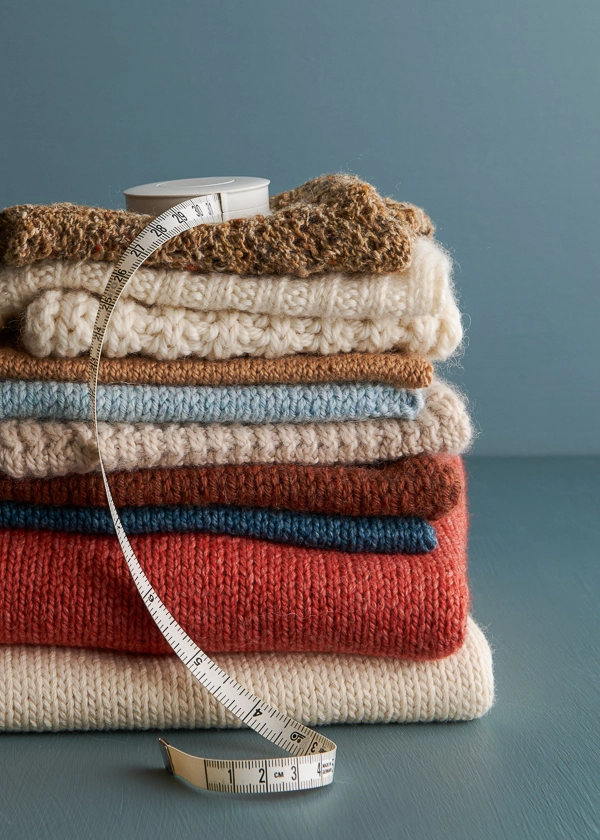
Why Knitters Substitute Yarn
There are as many reasons to substitute yarn as there are knitters, and all of them are valid! The yarn called for in a pattern might be discontinued or out of your price range, or maybe you want to use something already in your stash. A vegan lifestyle, a sensitivity to wool, or a disability might also shape your choices. You may want to adapt a pattern for seasonal wear, like using cotton yarn instead of wool yarn for a summer tee, or alpaca yarn instead of linen yarn for snow season. Maybe you want your project to be machine washable, or maybe another yarn is just calling your name. That specific spin, that specific fiber, that specific color… Don’t resist the call of a yarn you love!
Whatever your reason, we’re here to help you substitute yarn with confidence. The tips ahead will set you up for success, so your finished project turns out just the way you want it to, and for a deeper dive into fiber, spin, weight, and more, be sure to read our Complete Guide To Yarn!
Gauge, Gauge, Gauge
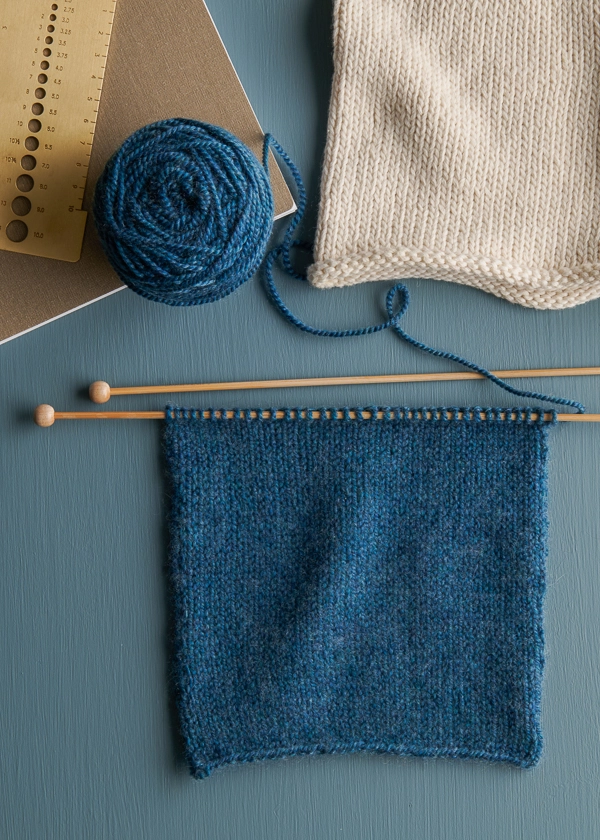
Swatch of our Cashmere Merino Bloom yarn, a 75% extra fine merino wool + 25% cashmere DK-weight yarn
Gauge is the most important factor in a successful yarn substitution. As always when we talk about gauge, there are no short cuts, but you can begin with some informed guesses!
Yarn Weight
Using a yarn that’s approximately the same weight as the one listed in the pattern is a good place to start. But not all worsted-weight yarns, for example, are the same (even from the same brand!), and small differences in gauge (yes, even less than one stitch per inch!) can really add up. So, finding a yarn that is a DK-weight when your pattern also uses a DK-weight yarn is a great first step, but finding the right yarn substitution doesn’t end there.
Yardage
Once you know what yarn weight you’re looking for, you can begin to home in on a good substitute by comparing the yardage, but keep in mind that fiber content and yarn structure can impact yardage a lot. For example, there’s a decent chance that two 100% wool yarns that have 135 yards per 100 grams will knit up at a similar gauge, but it’s much less likely if you’re considering 135 yards of 100% cotton. Considering yardage is a good data point, but really, nothing compares knitting an actual gauge swatch… Read on!
A NOTE ON CALCULATING YARDAGE
On the subject of yardage, always be sure to calculate how much total yardage you’ll need for your project, not just how many skeins! For example, if your pattern says you’ll need three 200-yard skeins (600 total yards) and you’ve decided to use yarn that comes in 100-yard skeins, you will need 6 skeins.
Always Swatch
If you’re substituting yarn (and even if you aren’t!) always knit a gauge swatch. Be sure to wash your swatch the same way you’ll wash the finished piece, and be sure to focus on matching the pattern’s gauge, not the gauge listed on the suggested yarn label. Our All About Gauge Tutorial has tons of helpful information to help you swatch with confidence!
Multiple Strands

In our free Tapestry Wrap pattern, you knit two strands of fingering-weight Linen Quill together throughout.
Holding yarns double or even triple can be a great way to create a heavier yarn, especially if you’re trying to use yarn from your stash or want to create a beautiful marl. Here are a few very general guidelines to get you started:
- 2 strands of lace weight = fingering weight
- 2 strands of fingering weight = DK weight
- 2 strands of sport weight = light worsted to worsted weight
- 2 strands of DK weight = worsted weight to aran weight
- 2 strands of worsted/aran weight = bulky/chunky weight
- 2 strands of bulky/chunky weight = super bulky or jumbo weight
These are guidelines only, and since holding together multiple strands will change the character of the fabric, it’s extra important to swatch to make sure you’re getting gauge and loving your fabric!
Changing The Pattern’s Gauge
And the most radical solution of all… You can rewrite a pattern so you can use a completely different weight yarn at a totally different gauge! This means recalculating stitch counts and sizing, which sometimes puts you in expert territory, but simple rectangular projects that don’t have to fit, like blankets, scarves, or towels, just require a gauge swatch and some simple math (we can help!). If you’re going this route, don’t forget to make sure you have enough yarn for the adjusted gauge!
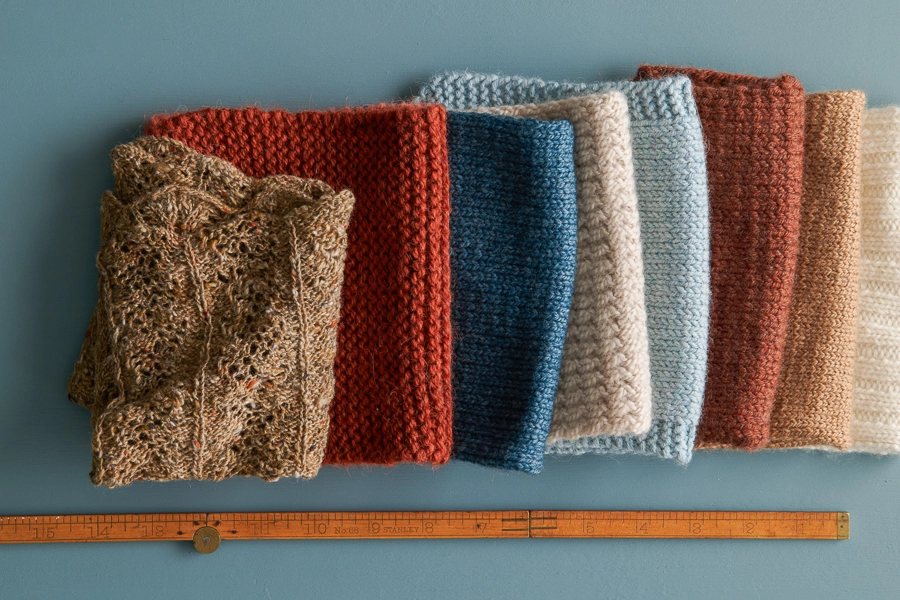
How Fiber + Spin Impact Yarn Substitution
Getting gauge is critical, but it’s only part of the equation when it comes to yarn substitution. What the yarn is made of and how it’s constructed are also hugely important when it comes to choosing yarn for a pattern. You’ll find an overview of these factors below, and you can learn even more in our Complete Guide To Yarn!
Why Fiber Content Matters
Changing the fiber of the yarn used for a pattern makes a huge difference to the feel, drape, and look of the finished piece. The difference is most pronounced when you substitute a plant fiber for an animal fiber, or vice versa, but even substituting alpaca for wool or swapping linen for cotton will have an impact!
Animal Fibers
Wool yarns are the most elastic and resilient of the animal fibers, meaning fabric knit with wool will spring back to its original shape after being stretched. Alpaca and cashmere yarns, on the other hand, tend to relax, giving the fabric a fluid drape and less structure.
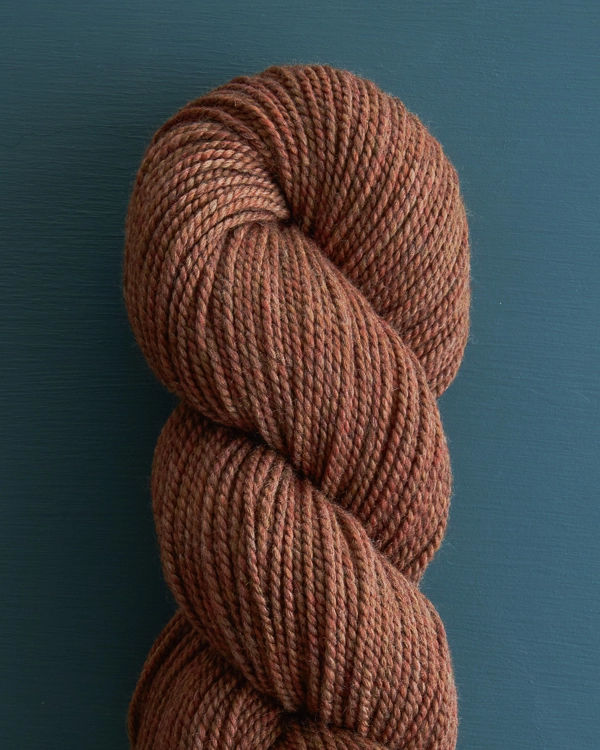
Cashmere Merino Bloom, our DK-weight yarn made with 75% extra fine merino wool and 25% cashmere, has both the bounce of wool and the relaxed drape of cashmere!
Most animal fiber yarns are not machine washable (with the exception of superwash wool!), so be sure to consider care instructions when choosing one. These yarns will also usually bloom when you hand wash them, meaning the fibers expand to fill the spaces between stitches, allowing for a looser stitch density.
Plant Fibers
Cotton, linen, and hemp fibers all have very little stretch and a heavier drape than wool. Cotton has a soft, supple hand, while linen and hemp both have a cool, crisp feel that softens beautifully with wear. Garments knit with plant fibers won’t bounce back the way wool does and in fact tend to stretch, so they often work best for looser-fitting or less structured pieces. The exception is chainette cotton yarns like our Japanese Denim Cotton—that knit I-cord structure adds lots of elasticity and loft.
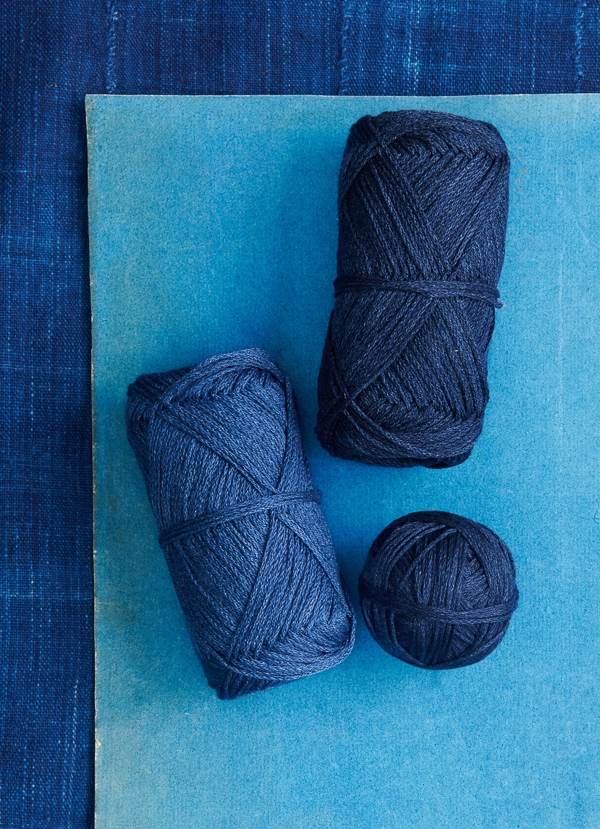
Japanese Denim Cotton, our sport-weight yarn made with 100% organically grown cotton, is lighter and springier than most cotton yarns thanks to its chainette structure!
Plant-based yarns are frequently machine washable, and unlike animal fibers, they don’t bloom, though they can shrink a bit when washed, tightening the stitch density. Let’s mention silk here, too. Although from an animal, silk yarn generally behaves much more like a plant fiber with the same lack of elasticity and bloom.
Yarn Construction
Yarn construction also influences how a yarn behaves, though it usually matters less than fiber content.
Plies

Cotton Pure, our sport-weight yarn made with 100% organically grown cotton, is soft, supple, and light… A classic cotton yarn!
Plies are the individual strands that get spun together into a yarn. The more plies a yarn has, the rounder and stronger it will be and the more clearly it will show individual stitches. Multi-ply yarns are ideal for hard-wearing projects like socks, while single-ply yarns are soft and plush but may pill over time. Two-ply yarns fall in between, offering softness and beautiful bloom, perfect for lace and colorwork.
Worsted or Woolen Spun
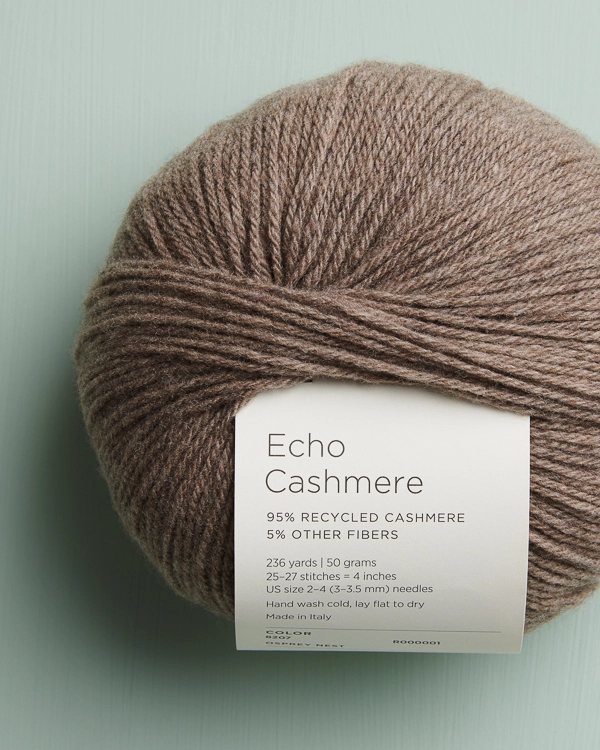
Our recycled cashmere Echo Cashmere yarn is woolen-spun, which makes it lighter, loftier, and bloom-ier than worsted-spun yarns.
You’ll also want to consider whether your yarn is worsted-spun (not to be confused with worsted-weight!) or woolen-spun. Worsted-spun yarns (spun tightly from very smoothly combed fiber) are smoother and denser with great stitch definition, ideal for cables and texture. Woolen-spun yarns (spun from more loosely carded fiber) are loftier and airier, and their bloom makes them especially well-suited for colorwork.
Finding Yarn Substitutions On Our Site
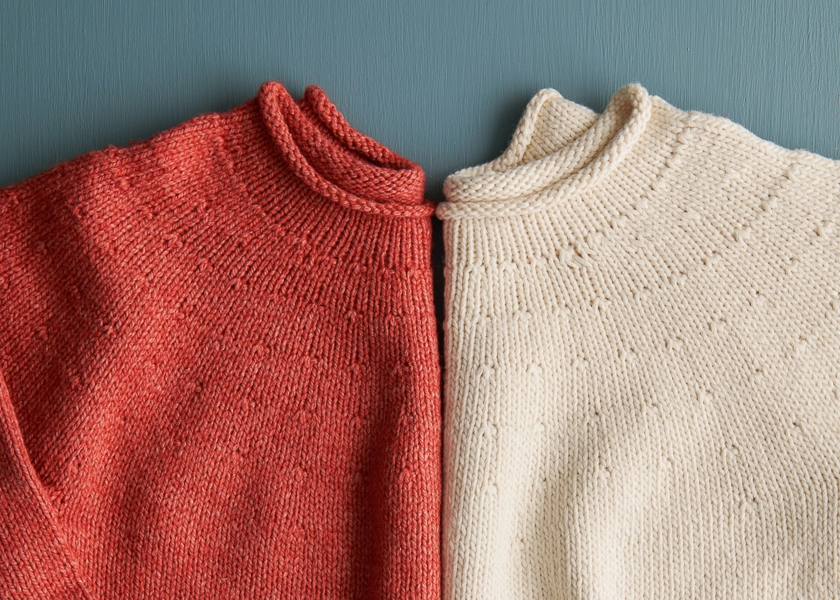
You can knit our Top Down Circular Yoke Pullover pattern in three different Purl Soho yarns! Above you can see how different it looks in Plein Air (left) and Morning (right).
Need Help?
We’re always happy to help you explore a yarn substitution for the project you’re planning. You can ask us in the comments section of every knitting pattern on our site, or reach out to us directly at customerservice@purlsoho.com. You can even hop onto a 1-on-1 Help Zoom call to talk things out if you need!
Explore On Your Own
You don’t need to go it alone, but if you want to experiment on your own, we’ve made that easy, too. We list recommended yarn substitutions on all of our yarn product pages, so that you can do some solo exploring. With those recommended substitutions, of course still take the time to knit a gauge swatch (are you sensing a theme?). You can also shop by yarn weight by going to our Yarn page and selecting the filters for weight.
Tried + True
For some of our knitting patterns, we have already tested them out in multiple yarns! For example, our Top-Down Circular Yoke Pullover can be knit with Cashmere Merino Bloom, Plein Air, or Morning… Very different sweaters, all equally beautiful! You’ll find information right in the pattern about what you can expect with each yarn.
Recommended Substitutions For Our Most Popular Yarns
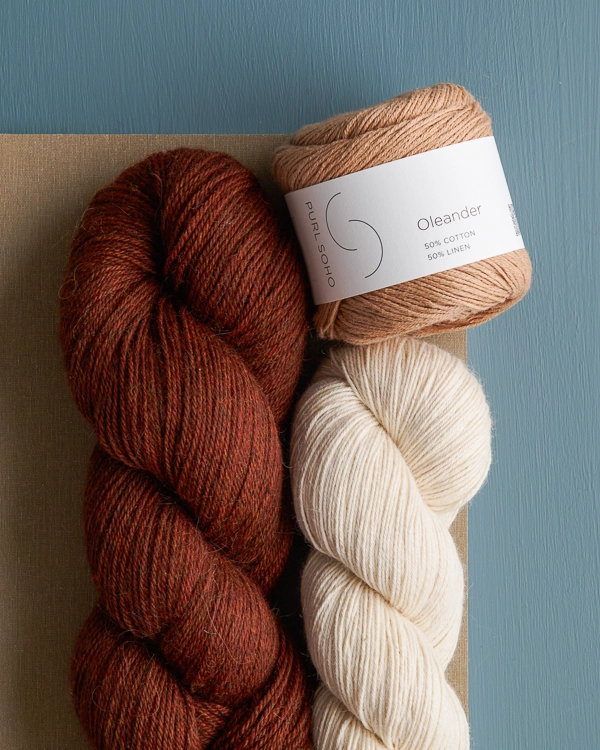
Clockwise from left: Quartz, Oleander, and Sweetgrass, three fingering-weight yarns that can be easily substituted for each other
Here are a few groups of yarns that we have had great success substituting for one another!
- Fingering-Weight Yarn: Quartz, Oleander, and Sweetgrass
- Fingering- to Sport-Weight Yarn: Linen Quill, Estuary, and Cattail Silk
- Sport-Weight Yarn: Good Wool, Season Alpaca, and Cotton Pure
- DK-Weight Yarn: Cashmere Merino Bloom, Plein Air, and Morning
- Worsted-Weight Yarn: Daily Wool, Sunshower Cotton, and June Worsted
You’ve Got This!
At the end of the day, the best yarn for your project is the one you love. Does it suit the project you have in mind? Does it feel good in your hands? Does it have the drape, structure, and durability your project needs? Not every yarn will be the right fit for every pattern… But there’s a yarn for every project and a project for every yarn! Swatch, experiment, trust your hands, and let your curiosity lead the way!
Article written by Andrea Lotz for Purl Soho.
Looking for more inspiration? Explore all of our knitting patterns (including tons of free knitting patterns) and knitting tutorials, buy one of our many knitting kits and yarn bundles, and shop for beautiful yarn. We have over 55 gorgeous natural fiber yarns in 1,000s of magnificent colors, designed to bring integrity, beauty, and joy to your next knitting project and only available at Purl Soho!




That is a really helpful article, thank you; I’ve got whole books on yarn substitution, but having this complicated topic set out more simply and clearly makes life much, much easier. I love Purl Soho!!
I really learned a lot from this article. I love reading these helpful articles. Thank you.
Thank you for this article. I almost never use the yarn that is called for since I live in Florida. It’s just too warm (hot) most of the year to use the gorgeous wools you northern states use. All of the considerations you listed have never occurred to me. Very helpful in my cotton world. Cotton pure is my go to yarn.
Such great information. I am a yarn subsituter extraordinaire. I go in my stash and do as I do. What one must realize is, no one sees the pattern when you wear it. Be free, make it your own.
THANK YOU so much for this information. I am getting ready to start a cat silk cardigan for fall and spring wear. I have decided to use a linen stitch for the body. I-cord for the sleeve and hem of the garment. I am still on the fence about the neckline and the button band. I think I might go rogue and do a collar that goes into a nice hidden button band.
Hi Mary Ann!
We are so thrilled you found this information helpful! Please let us know if you have any questions along the way!
Happy knitting!
Gavriella
I am in Australia and I have learned so much from Purl Soho! I took knitting up again after my kids grew up – it was like starting over. Thank-you for your tutorials and easy to follow patterns. At the present I am knitting your tote bags – my girls love them.
You’re so very welcome, Susan! We’re so glad your children love the tote bags you’ve made them!
All the best,
Lili
I’ve bought your pattern Olson with an idea of making it from a much thicker yarn Do you have more advice about how to make the needed calculations.
Hi Sari,
I’m so glad you’re interested in Olson! I’m afraid this pattern is not an easy one to modify though. In fact, to change the gauge you would need to change every stitch count in the pattern to make sure your cardigan comes out to the right size, which is something we only recommend attempting if you’re quite an advanced knitter. One other possibility is knitting a smaller size using the thicker yarn, which may offset the gauge difference. If you’re feeling confident and up for a challenge, I think the cardigan would look absolutely beautiful in a thicker yarn!
All the best,
Lili
Yeah, I saw that I have to calculate everything anew. I’m experienced knitter, been knitting for over 40 years now, so I’m actually excited about the challenge. The horizontal ones are not that difficult as the measure is usually specifically given or more easy to figure out, but the vertical ones are more tricky since it is not always that easy to find the measure from the pattern. I think I will try this as I think it will be gourgeous from the yearns I’m planning to use.
My pattern calls for 50 gram weight DK cotton. The yarn I like on your site is 100 grams. Would I use larger needles and would my finished product still look goo? Haven’t done a swatch because I don’t want to order before I get your suggestions. Thank you.
Hi Sue,
Great question! As long as you use the same weight (DK in this case) as the pattern suggests, you are good to go. 100g just means that the skein has more yardage than a skein that only weighs 50g. For example, if a 50g skein of DK weight yarn has 100 yards, then a 100g skein would have 200 yards. As always though, you will want to be sure to knit a gauge swatch to be sure you can match the tension of the pattern. I hope this helps!
Happy making!
Gavriella
I would like to knit your “Big Cuddly Bunny” pattern. The pattern calls for Blue Sky Bulky yarn. I would like to know if your Gentle Giant yarn would work as a substitute for the Blue Sky Bulky yarn? If so, do you have any recommendations as to any adjustments that may be necessary? Or alternatively, is there another Purl Soho yarn you would suggest that would work better?
Thank you for your help.
Hi Connie,
Thanks for asking! Gentle Giant would work perfectly for the Big Cuddly Bunny Pattern and you would need to make any changes at all since you will be working at the same gauge.
Happy knitting,
Gavriella
Your article on yarn substitution was very informative. I will use it as a guideline for future projects
and share it with my knitting friends. I love all your articles.
Thanks for this article. Since I often have to substitite due to allergies, I found this very straightforward & easy to understand.
Thanks for your kind words, Kathleen! I’m glad we could help!
Kindly,
Andrea
I discovered your site today and would like a little help in yarn selection. I downloaded a hat pattern that calls for Lana Grossa Linea Pura which is discontinued. Can you suggest a substitute that will give a gauge of 4.5 sts. per inch?
Thank you, Valerie
Hi Valerie,
Thanks for asking! We’re always happy to help choose the right yarn for your project. Could you let me know if this yarn was a worsted weight? If so, I would recommend June Worsted as a great cotton yarn for your project but any of our Worsted to Aran weight yarns could work wonderfully!
Happy knitting!
Gavriella
Purl Soho is quickly becoming my go-to source for all things knitting. Your yarn is fabulous & your tutorials are first rate – clear, conscience & easy to see & understand. The fiber world is radically changing & I’m very thankful for you in it! Hang in there, please!
Hi Sharon!
Thank you so much for your kind words! It truly means a lot to us. We’re so glad you’re enjoying our yarns and tutorials, and we really appreciate your support.
Happy knitting!
Megan
I have started knitting your Big Brioche pullover using Till. I live in a warm environment and will probably give away my current creation. Is there a cooler cotton yarn that I can use instead of Till?
Hi Patti!
I’m so glad you’re enjoying the Big Brioche Turtleneck pattern so far! The recipient will be a very lucky person.
While we don’t have an aran-bulky weight option in plant based fibers, you may achieve gauge by holding two strands of a light worsted weight at the same time. It looks like Sketchbook Cotton or Cotton Chirp might work well. I would always recommend knitting (and blocking) a gauge swatch to see if you made gauge and to ensure you like the look and feel of the finished fabric.
You might also be interested in the Centre Point Popover as it features a beautiful texture (similar in appearance to brioche) but is knit in worsted weight cotton. June Worsted would be great for this pattern.
I hope this helps, and happy knitting!
Hills
I am planning to make the Double Knit Blanket. Assuming my gauge is what is recommended, would you please help be calculate how many stitches I need to cast on for 30″ instead of the 28″ listed for the crib size blanket?
Hi Karen Michele,
Thanks so much for asking about resizing a project. There are two important pieces of information when resizing a project- the gauge and the stitch multiple.
For the Double Knit Blanket the gauge is 21 stitches per four inches, so to add two inches, you will want to add about 10 stitches. Then, the stitch multiple is 10 + 7 stitches. This means you can add or subtract any multiple of ten and still have the stitch pattern work out. With the Double Knit Blanket, there is one more step. Since it is double knit, you’ll need to double the cast on number to add ten stitches to both sides of the fabric. Therefore, I would recommend adding 20 stitches for 314 stitches (157 for each side of the fabric).
I hope that helps make sense of resizing a project! Please let us know if you have any other questions, and you can always send questions to [email protected]!
Kindly,
Andrea
Hi,
I’m looking for a substitute yarn for the discontinued Brooklyn Tweed’s DK “Arbor”. I’m knitting the Cider Sweater by TinCanKnits for an adult male. The recommended needle size is #4. I’m not sure if all DKs work up the same, I often buy the recommended yarn to be on the safe side.
Washable would be nice but not a deal breaker.
Any suggestions would be very much appreciated!
Thank you!
Hi Laurie,
Thank you so much for reaching out! I’m happy to help you consider yarn substitutes.
It looks like the main body fabric is worked on a size 6, while the ribbing is worked on a size 4 needle. With that in mind, I would suggest taking a look at Note, a blend of superfine merino and baby alpaca that is plied into a super bouncy yarn. You might also consider Knitting Yarn DK, which is 100% fine merino. Pepper is a superwash that should work up nicely on that those needles, but is a single ply hand dyed, so it’s a little different.
I would always recommend knitting and blocking a gauge swatch to ensure you can match the gauge (particularly important for fitted garments and yarn substitutions. It’s the best chance to adjust your needles to reach the gauge and to ensure you love the fabric you’re working.
I hope this helps! If you’d like to see any color cards, please feel free to email us at [email protected].
Happy knitting,
Hills