Your basket is empty.
Continue Shopping
Ainur Berkimbay for Purl Soho: Pinwheel Baby Romper in Stormy Superwash Sock
Ainur Berkimbay has a gift for turning clever construction into something completely irresistible, and her Pinwheel Baby Romper is no exception. This beloved pattern has charmed us from the start, and now, in our wonderfully soft Stormy Superwash Sock yarn, it’s ready for a whole new round of cuddles, prettier than ever.
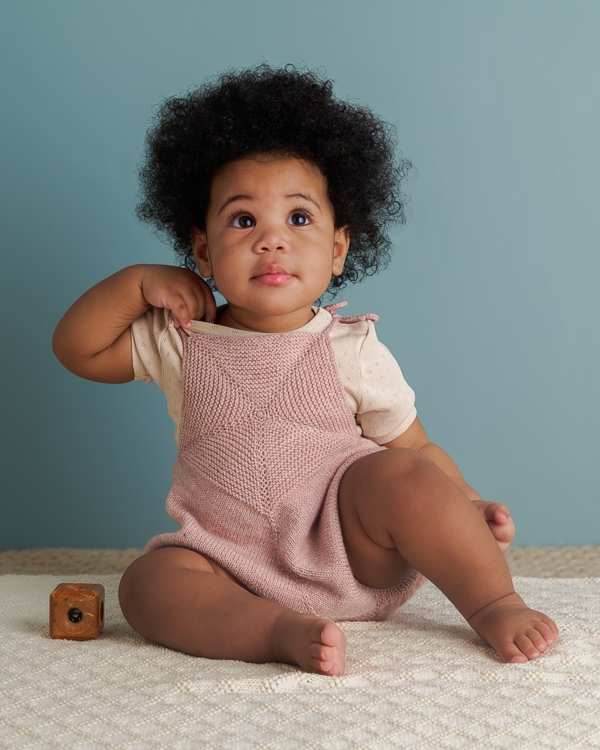
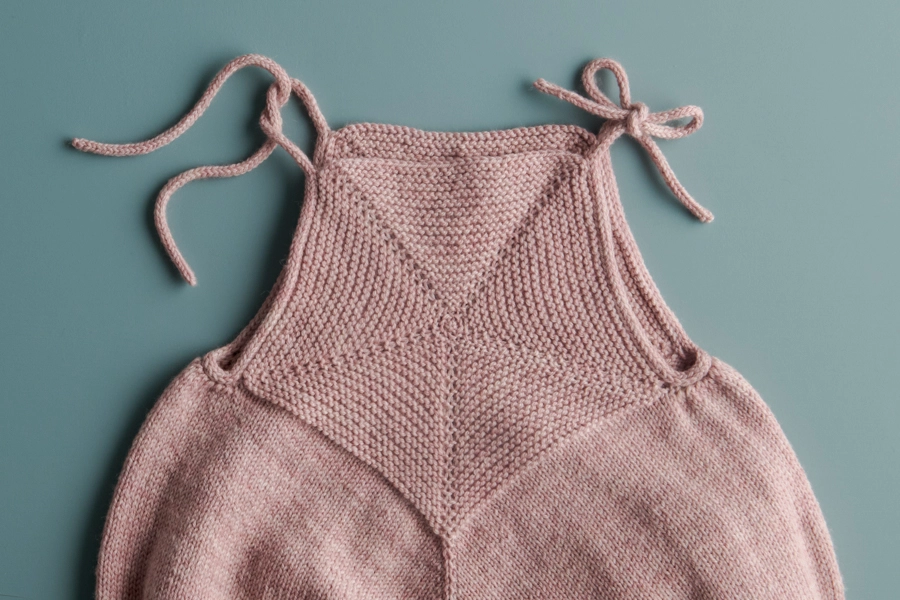
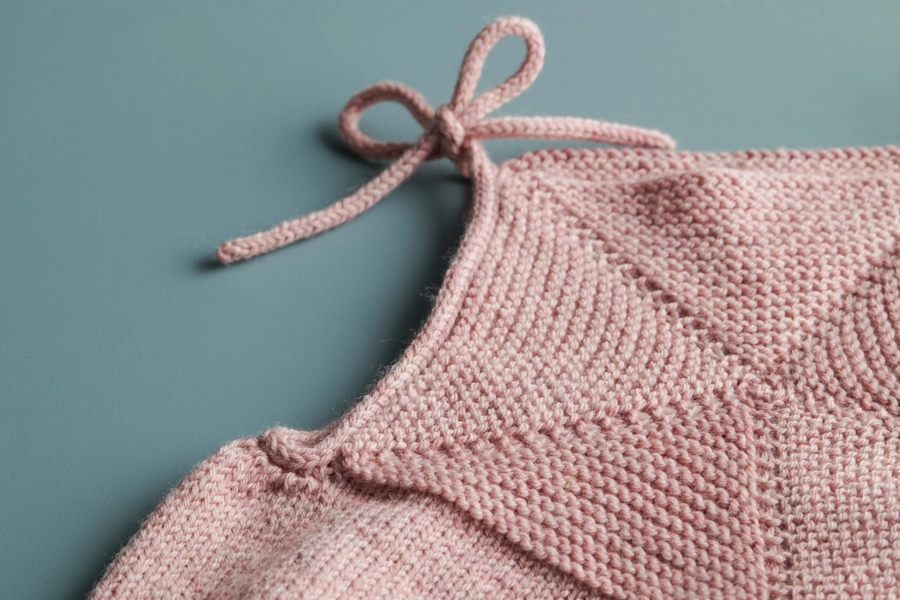
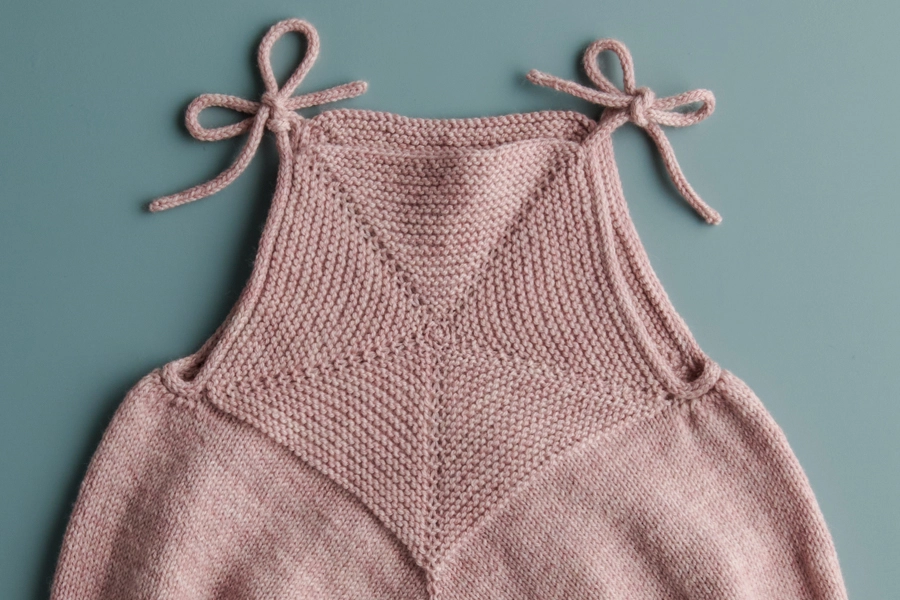
Aside from the adorable baby wearing it, the highlight here is the pinwheel, a whimsical bib that evokes a whirligig in the breeze, a sand dollar on the beach, or a sweet William blossom in the garden. You begin right at its center, casting on just a few stitches and knitting outward in the round, increasing at five points to create that distinctive shape. Then you get to do it all again to make an identical pinwheel for the back!
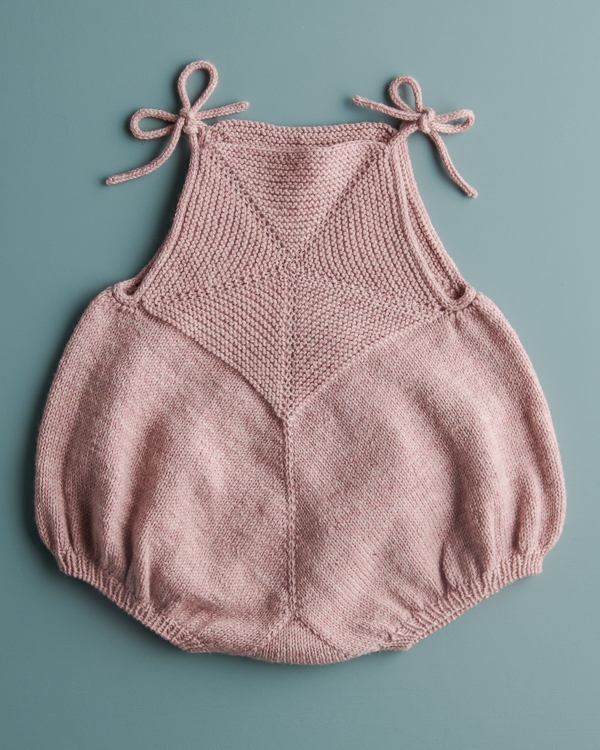
Once the two pinwheels are complete, you join them across the underarms and continue downward in the round, shaping the hips and gusset into an irresistibly voluminous puffball. Attached I-cords at the armholes become delicate straps that tie at the shoulders, allowing for an adjustable fit as the baby grows. In short, this romper is ready for all the real-life moments that come with dressing a very cute baby!
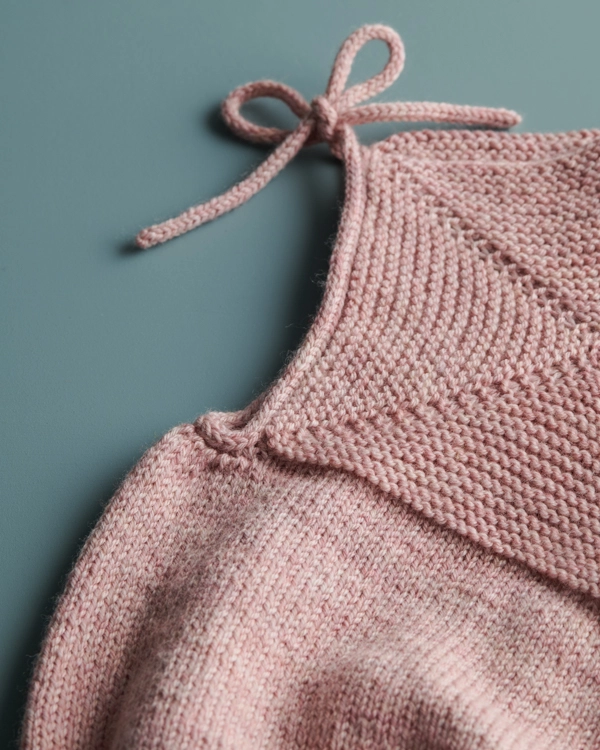
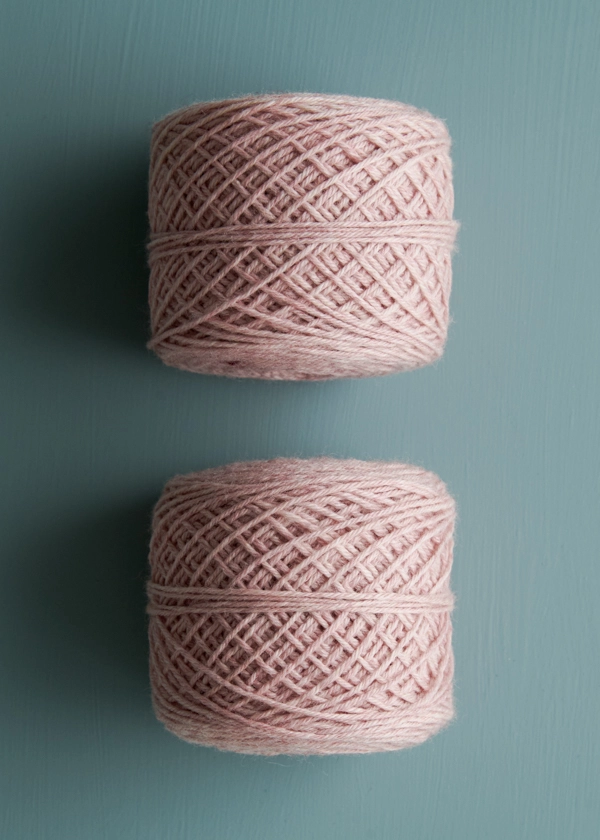
Incredibly soft and easy to care for, Stormy Superwash Sock is perfectly suited for a baby garment that’s sure to be worn and loved again and again. This fingering-weight yarn is made from 85% fine superwash merino wool and 15% recycled nylon, with a smooth surface and gentle bounce that make it a joy to knit. It’s plenty soft and comfortable enough for babies—and since it’s machine wash- and dry-able, it’s as practical as it is beautiful.
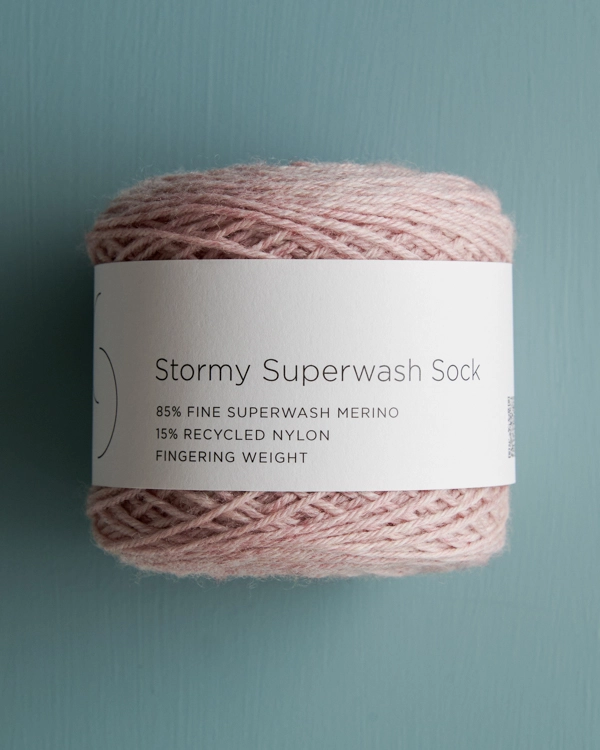
Stormy Superwash Sock’s subtly heathered palette brings depth to the fabric, especially as it plays across both garter and stockinette stitch. This Vintage Pink romper glows with warmth and gives the timeless, nostalgic feeling of an heirloom to treasure and fondly pass down.
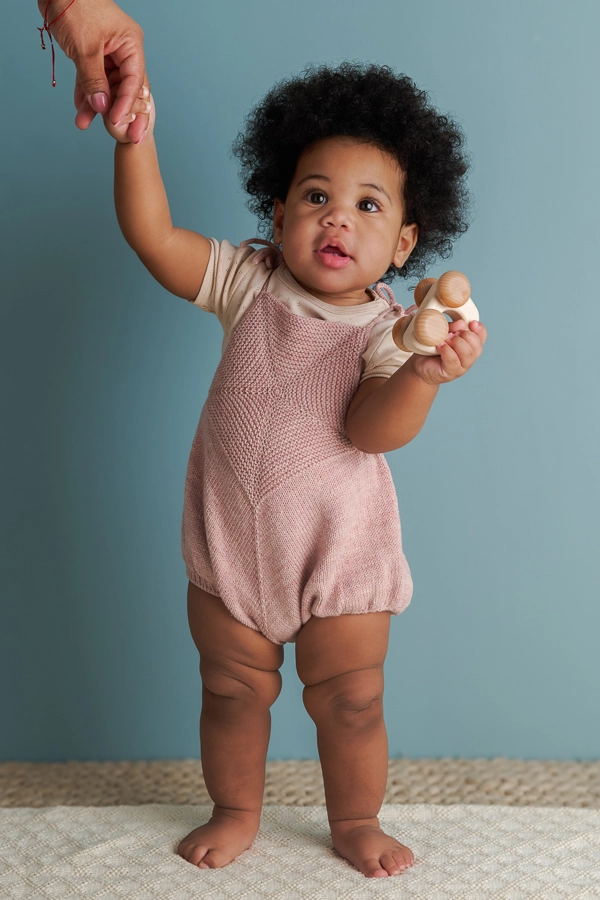
You’ll need just 2–3 balls of Stormy Superwash Sock to make a Pinwheel Baby Romper for a very lucky little one, with sizes from 3 to 18 months. Cast on for a gift that you’ll love to knit—and to see on the bright-eyed little baby in your life!
Yarn lovers, if you adore the yarn used in this project, you’ll love exploring all of our other yarn collections! Discover over 55 thoughtfully designed yarns in nearly every natural fiber and in every spectacular color you can imagine. Only available here at Purl Soho’s online yarn store, where every skein is created with care and your creativity in mind!

Pattern designed and written by Ainur Berkimbay for Purl Soho. Ainur sees the unique constraints of knitting as opportunities rather than limitations. Using her remarkable ingenuity and love of geometry, she designs beautiful and unexpected pieces for knitters who share her enthusiasm for shape, texture, and adventure. See more from Ainur on her website!
Story written by Andrea Lotz for Purl Soho.
Materials

- 2 (3, 3) balls of Purl Soho’s Stormy Superwash Sock, 85% fine superwash merino and 15% recycled nylon. Each ball of this fingering-weight yarn is 192 yards/ 50 grams; approximately 330 (410, 500) yards required. We used the color Vintage Pink.
- US 3 (3.25 mm), 24-inch circular needles
- Six US 3 double pointed needles
- Spare double pointed or circular needles, US 3 or smaller
- Stitch markers, including one unique
- Stitch holders or scrap yarn
- A Pinwheel Baby Romper Pattern PDF
GAUGE
29 stitches and 52 rounds = 4 inches in garter stitch
29 stitches and 38 rounds = 4 inches in stockinette stitch
SIZES
3–6 months (6–12 months, 12–18 months)
To fit actual chest circumference of approximately 16 (18, 20) inches with approximately 2–3 inches of ease
- Finished Waist Circumference: 16¼ (18½, 20¾) inches
- Finished Bib Width and Height: 4¼ (4¾, 5¼) inches
- Front Length from Waist to Crotch: 6 (6¾, 7½) inches
- Leg Circumference: 8¼ (9½, 10½) inches
Sample: The romper shown here is size 6-12 months. The blanket is our Arbor Blanket. You can find the free pattern here!
PATTERN
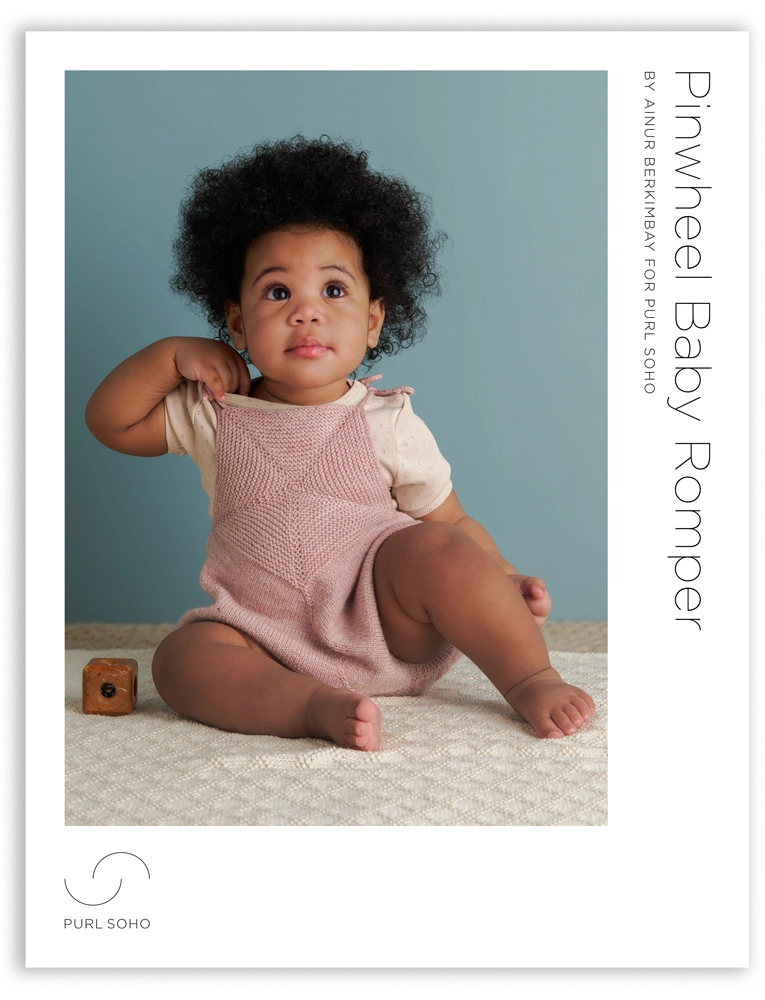
The Pinwheel Baby Romper is available as a PDF download.
Share your progress and connect with the community by tagging your pics with #PurlSoho. We can’t wait to see what you make!
LEARN ABOUT STORMY SUPERWASH SOCK + ALL OUR BEAUTIFUL YARNS
Stormy Superwash Sock is the perfect yarn to brighten a gloomy forecast and bring this project to life! This classic 85% superwash wool + 15% recycled nylon fingering-weight yarn feels soft in the hand and delightfully bouncy on your needles, with the strength to stand up to daily wear and lots of trips through the washer. The naturally luminous palette of heathered colors feels just right for gray skies and cozy days, and handy 50-gram balls encourage you to mix it up with contrasting heels and toes, stripes, and all the colorwork you can dream up!
More Knitting Patterns
- Be sure to explore our growing collection of Stormy Superwash Sock knitting patterns and cast on!
More Fingering-Weight Yarns
- Shop our entire collection of fingering-weight yarns (What does fingering-weight yarn mean, really? Our guide to fingering-weight yarn will answer your questions and more!)
- If you want to use a different yarn, be sure to take the time to get the correct gauge. Need help? Check our All About Gauge Tutorial, our Yarn Substitution article, and our Complete Guide To Yarn for lots of helpful information.
More Yarns With Similar Fibers
- Shop superwash wool yarn
- Shop merino wool yarn
- Shop machine washable yarn
Looking for more inspiration? Explore all of our knitting patterns (including tons of free knitting patterns) and knitting tutorials, buy one of our many knitting kits and yarn bundles, and shop for beautiful yarn. We have over 55 gorgeous natural fiber yarns in 1,000s of magnificent colors, designed to bring integrity, beauty, and joy to your next knitting project and only available at Purl Soho!




Would Oleander work for this pattern? I’m knitting for a baby whose mom doesn’t like wool.
Hi Amy,
Thanks so much for reaching out! I’m so glad the Pinwheel Baby Romper caught your eye. I totally understand looking for a fiber substitute, and I’m happy to help!
Oleander should be able to knit up to gauge, but I do want to note it’s sometimes a bit tricky to substitute plant fiber yarns for animal fiber yarns in a garment pattern. Oleander may be a bit less stretchy and might be a bit heavier than the original yarn (with some lovely drape).
With that in mind, I’d always suggest knitting (and blocking) a gauge swatch to see if you meet gauge and if you like the look and feel of the fabric. You can read more about yarn substitution in our handy article Yarn Substitution Made Easy.
I hope this helps, and happy knitting!
Hills
OMG is it a challenge to start the pin wheel!! Any tricks, suggestions, or a video I can watch? I’ve started it about 10 times, even tried magic loop (no less challenging but at least I’m not fiddling with 4 dpns). I know I’ll be fine once I get past the first few rounds.
Hi Margrethe,
Thank you so much for reaching out! I’m so sorry to hear you’re running into trouble here… it can sometimes be tricky getting started and I would love to help you get on track for a fun knitting project.
If you’re still running into trouble, I’d suggest scheduling time with us for a 1-On-1 Help session. We would love to get you back on track!
I also love the idea for a video tutorial and will be sure to pass the suggestion along to our team, thank you so much for sharing your thoughts with us!
Best,
Hills
I feel you! I eventually just gave up. I found this impossible to start.
Hi Lauren,
I’m so sorry to read that you had so much trouble here that it kept you from continuing the project.
We’re always here and happy to help! Please feel free to email us at [email protected] for troubleshooting tips!
Kindly,
Hills
I’m starting on the “Increase for Gusset” where the increase is BEFORE the first marker but noticed that the “Hips + Gusset” centerline starts AFTER the first marker, so it seems like the centerline would be misaligned. Should I do the “Increase for Gusset” after the first marker to keep it consistent with the rest?
Thanks!
Hi Liana,
I’m sorry to read you’ve run into some trouble here. I think I may see where the hiccup is, and I’m happy to help clear things up for you!
It looks like in the section for Hips + Gusset, you’ll be increasing before and after the marker, much like a raglan increase. You should have two of these increases, one in the center front and one in the center back. I’ve copied this section of the pattern below for ease of reference.
Hips + Gusset
I hope this helps clear things up a bit, but please feel free to reach back out with any follow-up questions you might have!
Happy knitting,
Hills
Hi Hills,
Thanks for the response! I’m actually looking at the “Increase for Gusset” section after the initial increases you shared. There, it says “knit to 1 stitch before next marker, pm, m1L, k1, m1r, sm, knit to 1 stitch before next marker”. The way I see that, it means the new increases will be to the right of the original marker, whereas the centerline in the previous section you shared was to the left (the k1 that came after the sm), so it wouldn’t be lined up with the old centerline if I followed it. Does that make sense?
Hi Liana,
I really appreciate you taking the time to clarify your question for me, and I’m so sorry I misunderstood it at first glance!
I just sent you an email with a marked-up image to help illustrate where these increases should be worked.
I so hope this helps, but please feel free to follow up with any other questions you might have or for further clarification!
Happy knitting,
Hills
Hi there! Can you provide an estimate as to how challenging this pattern is? I’ve knit hats, scarves, and blankets – but no sweaters or clothing. If this is a challenge, do you have suggestions for other easier baby wearables?
Thank you!
Hi Leanne,
Thank you so much for reaching out! I’m so glad to see the Pinwheel Baby Romper stood out to you.
This pattern features: a long-tail cast-on, M1R and M1L, German Short Rows, make one backwards loop cast-on, long tail-tubular bind-off, kitchener stitch, and an I-cord. We always want to encourage knitters to try patterns a little more challenging than their current level, and this is a bit dependent on how many new skills you want to learn in each project.
You might also consider the Little Garter Baby Set vest, the Simply The Best Baby Cardigan, or the Storybook Overalls.
I hope this helps, and you find the perfect project for you!
Happy knitting,
Hills
I have the same question as Hills about the center of the gusset not lining up with the previous center in the hips section. Liana sent her an email with a marked-up image to help illustrate where these increases should be worked. Would you send me one too? I am guessing that instructions should say knit 3 between the increases. See how I changed it below. Am I correct?
Knit to 1 stitch before next marker, pm, m1L, k3, m1R, sm, knit to 1 stitch before next marker, knitting remaining double stitches as single stitches, pm, m1L, k3, m1R, sm, knit to end of round
After looking closely at the gusset photo it looks like the instructions should remove the “knit to 1 stitch before next marker”. Somehow the instructions need to indicate the first round increases surround the center stitch.
Round 1: Knit to center marker, pm, m1L, remove marker from center stitch, k1 (center stitch), m1R, pm (move previous center marker to be after the increase),
Is this correct?
Hi Terry,
Thank you so much for your patience as we looked into this further!
The location of the increases is changing because their function is also changing. The first set of increases creates fabric on the outside of the markers, whereas the second set of increases creates the gusset fabric between the markers.
For our sample, the “center” of the increases does shift, as you observed. It should still work out perfectly for you to work the pattern as you indicated, however, and I encourage you to modify it to your liking!
I hope this helps!
Happy knitting,
Hills