Your basket is empty.
Continue Shopping
Little Dot Bandana
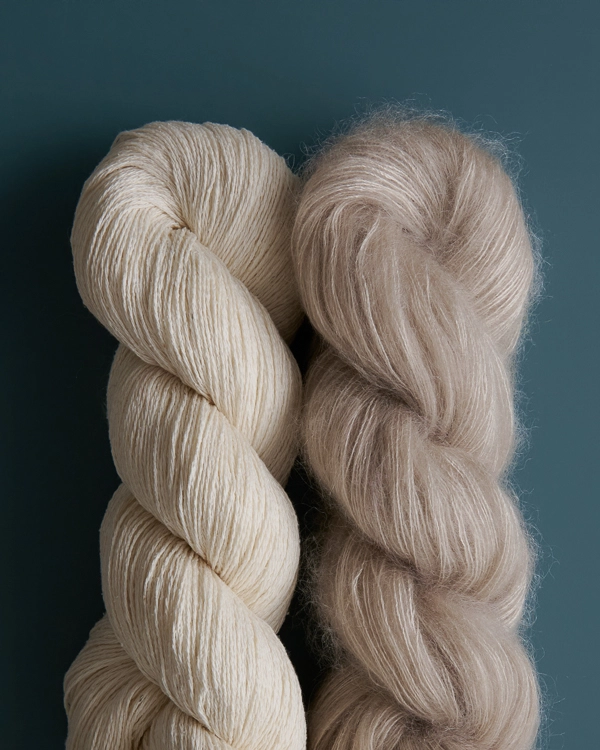
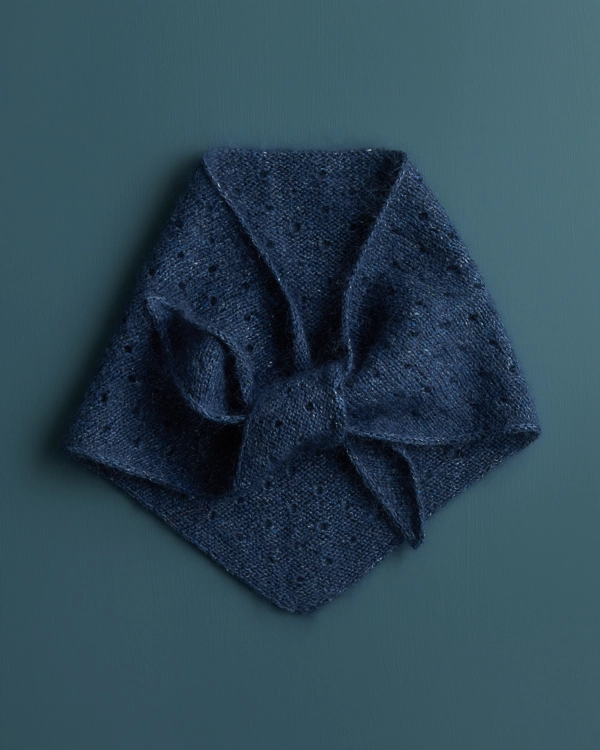
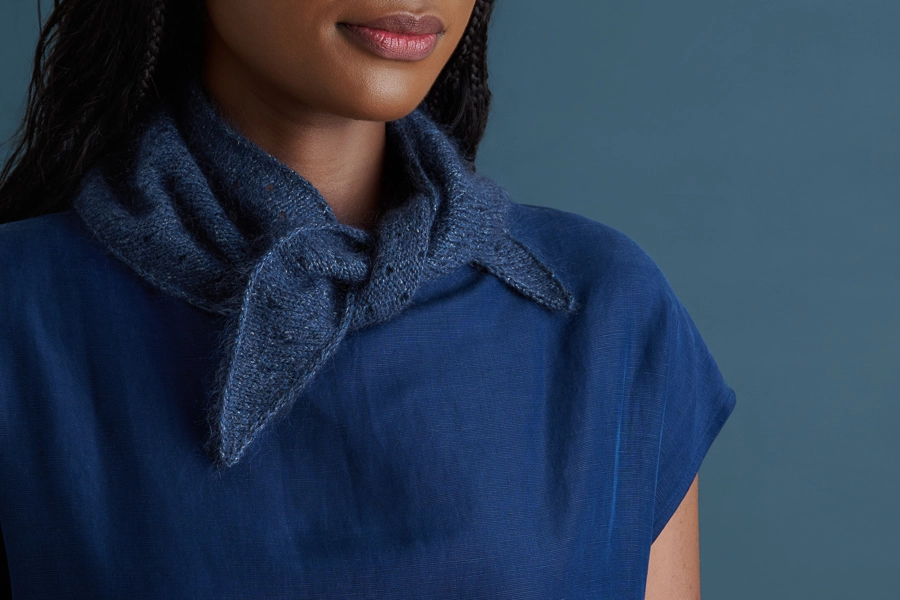
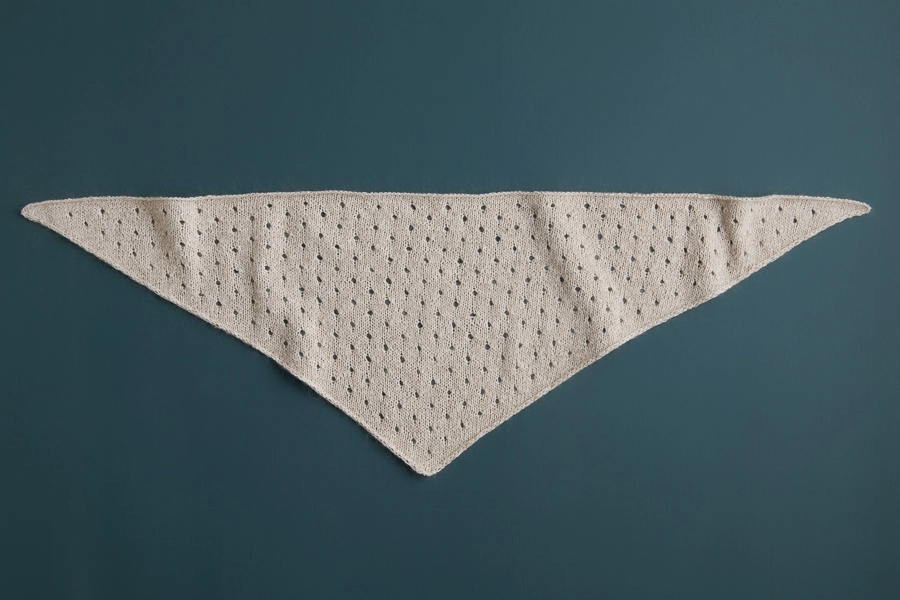
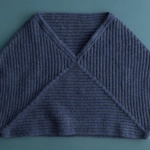
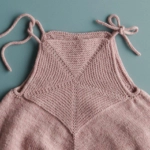
Two of our most beautiful yarns are even more stunning together in our Little Dot Bandana pattern, a soft little scarf dappled with charming eyelets. Cattail Silk’s earthy texture mingles with luminous Tussock to create a glimmering fabric with a delicate halo that floats above the surface.
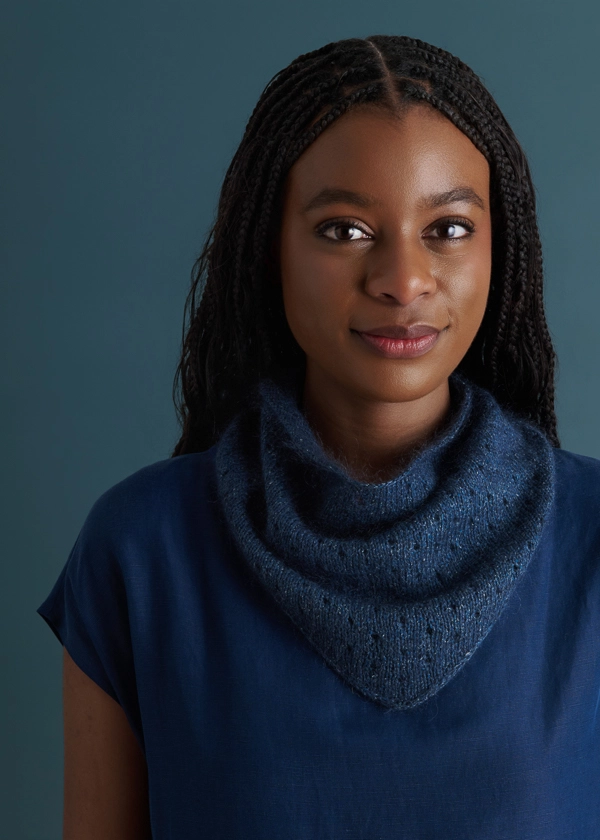
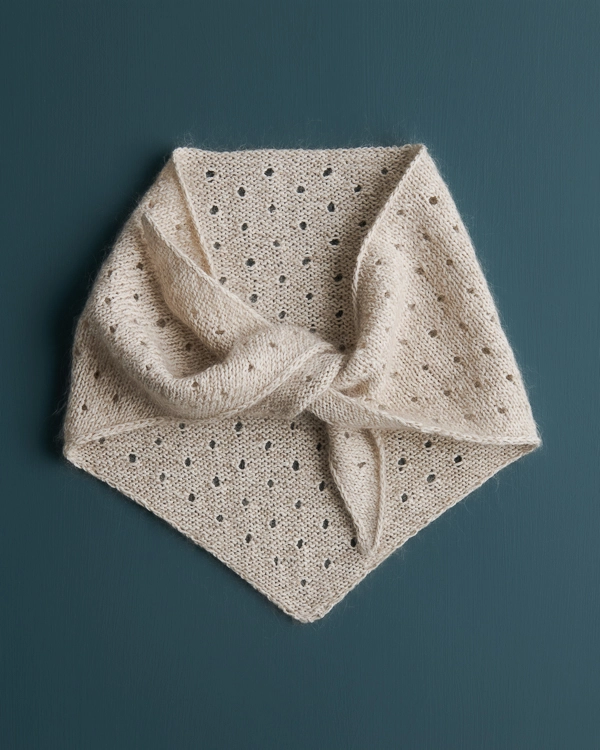
Holding these two gorgeous yarns together, you cast on for the wingspan and work toward the bottom point with simple decreases, following a four-row repeat that scatters eyelets across the fabric. It’s an easy knit that will fly off your needles, perfect for patio knitting and matching friend gifts—and the pattern also offers a larger shawl size for more time with these dreamy yarns and darling dots!
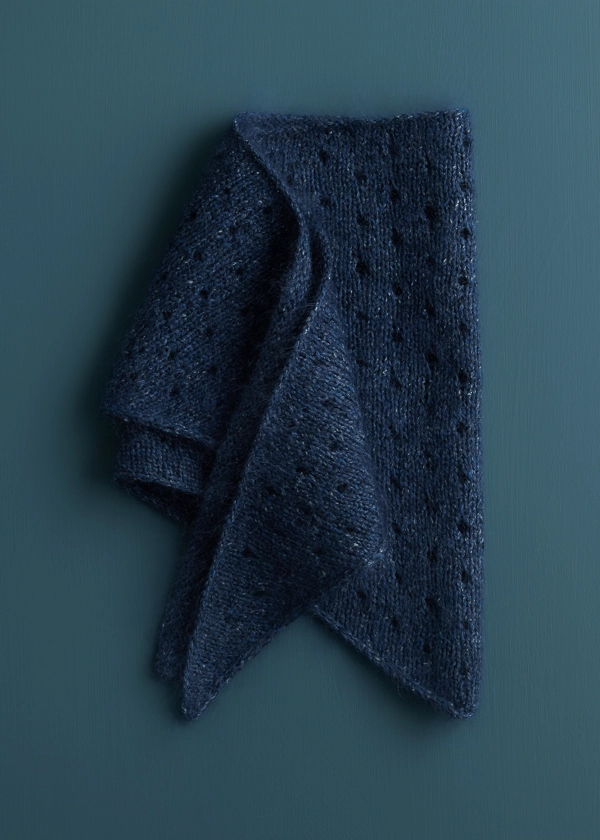
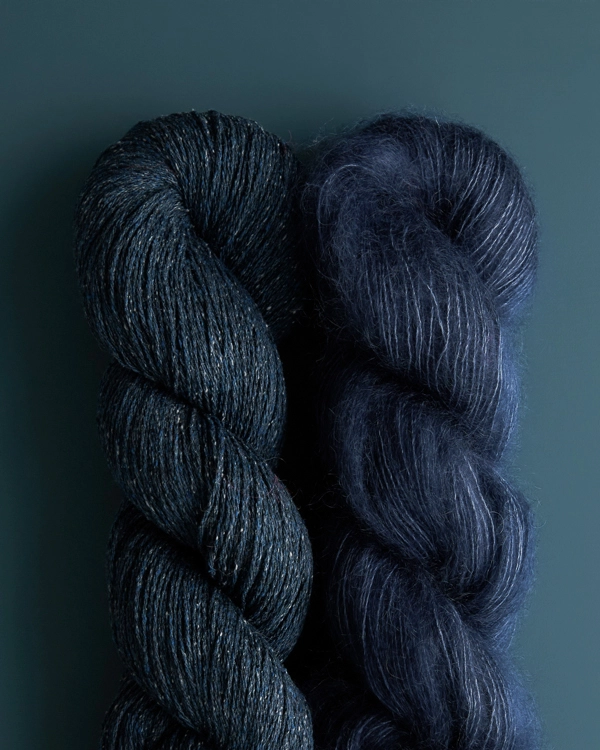
Cattail Silk grounds the project with casual elegance and subtle texture. This fingering-weight yarn is made by spinning together three plies of pure mulberry silk noil, which are the short fibers created when silk is combed and carded. Also called raw silk, the resulting fiber has a lighter drape than other silks, a more subtle shine, and bitty nubs of color and texture that bring complexity and beauty.
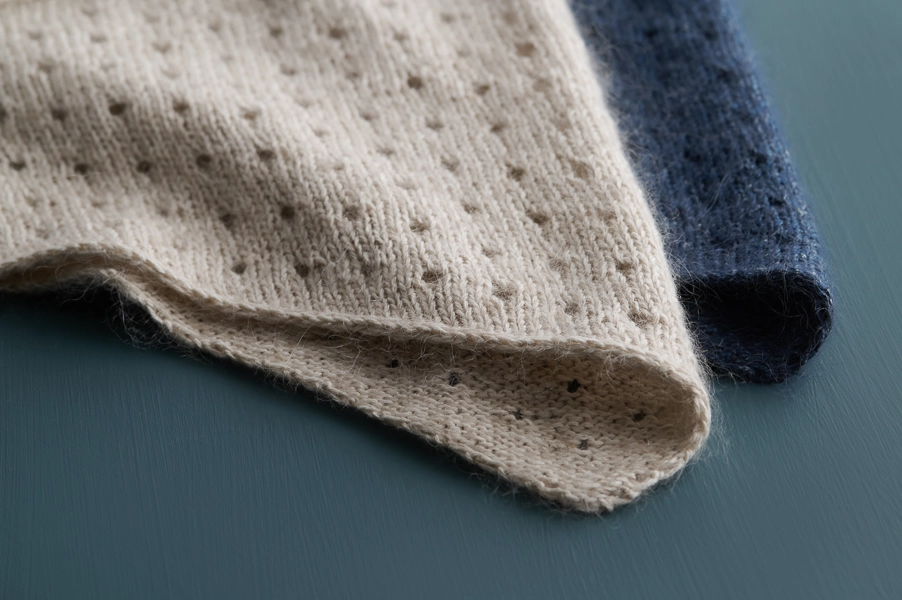

Adding radiance to the fabric is Tussock, each skein a tousled bundle of pure joy. This lace-weight yarn is 60% super kid mohair—oh-so-soft and made from the first shearing of Angora goats—plus 40% mulberry silk, which adds even more luster and incredible softness.
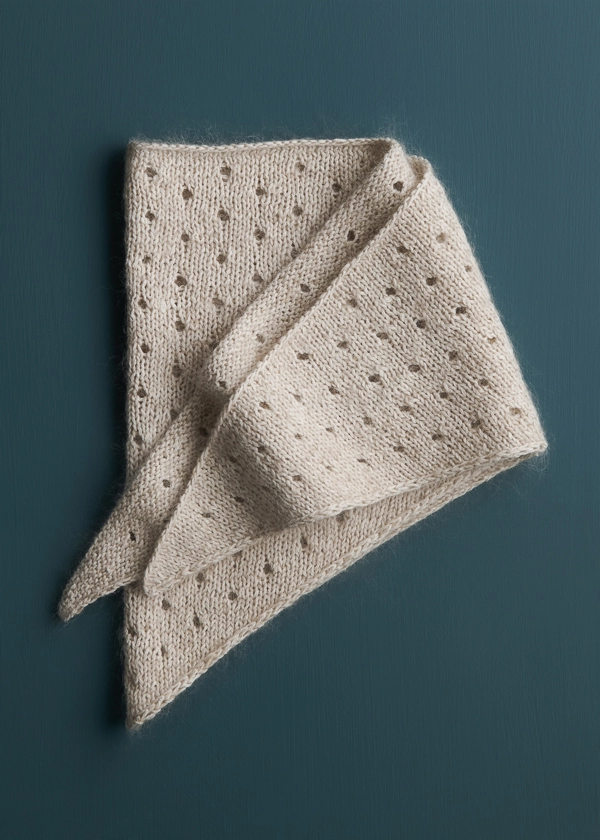
We paired similar colors of Cattail Silk and Tussock for our Little Dot Bandanas to create subtle depth and shimmer to catch the light, but you could also experiment with a more playful marled effect. Choose your favorite colors and pick up a skein of each yarn for the bandana size or just a few more for the shawl!
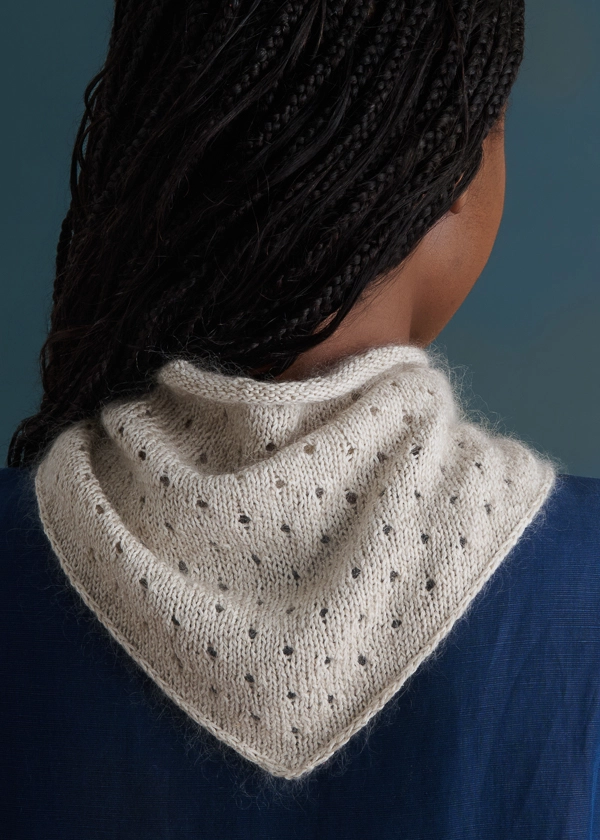
Pattern designed and written by Purl Soho designer, Gianna Mueller. See even more of Gianna’s work on her Instagram!
Story written by Andrea Lotz for Purl Soho.
Want to print this pattern? On desktop, find the “print” icon in the right margin, and on mobile, scroll to the end of the pattern for it. Use the on-screen instructions to remove anything you don’t want to print!
Materials

- Yarn A: 1 (2) skein(s) Purl Soho’s Cattail Silk, 100% mulberry silk. Each skein of this fingering-weight yarn is 618 yards/ 100 grams; approximately 220 (790) total yards required. We used the color Moon White for one version and Kingfisher Blue for the other.
- Yarn B: 1 (3) skein(s) of Purl Soho’s Tussock, 60% super fine kid mohair and 40% mulberry silk. Each skein of this lace- to fingering-weight yarn is 328 yards/ 25 grams; approximately 220 (785) total yards required. We used the color Beach Stone with Moon White and Blue Fjord with Kingfisher Blue.
- US 3 (3.25 mm), 24-inch circular knitting needles
GAUGE
26 stitches and 38 rows = 4 inches in pattern, with Yarn A and Yarn B held together
NOTE: To check your gauge, we recommend casting on 39 stitches and knitting the pattern for about 4 inches, then blocking your piece.
SIZES
Bandana (Shawl)
- Finished Length of Wingspan: 31¾ (60¼) inches
- Finished Depth from Point to Middle of Cast-On Edge: 11¼ (20¾) inches
Samples: We knit the Bandana size.
NOTES
PATTERN MULTIPLE
This pattern works over a multiple of 8 plus 23 stitches.
TIPS
To avoid having misshapen points and taut edges, follow the pattern just as written and do not slip or add selvage stitches. Keep your decreases loose and do not knit the edge stitches too tightly, and you’ll love how your piece turns out!
PATTERN
With one strand of Yarn A and one strand of Yarn B held together, cast on 207 (391) stitches. We used a basic Long Tail Cast On.
TIP: When you’re casting on so many stitches, it really helps to place a marker or piece of scrap yarn every 50 stitches. That way, if you lose count, you won’t have to recount all the stitches. Just remember to remove these markers when you work the Set-Up Row.
Set-Up Row 1 (wrong side): Purl to end of row.
Set-Up Row 2 (right side): K1, slip slip knit (ssk), knit to last 3 stitches, knit 2 together (k2tog), k1. [205 (389) stitches remain]
Set-Up Row 3: P1, purl 2 together (p2tog), purl to last 3 stitches, slip slip purl (ssp), p1. [203 (387) stitches remain]
WORK EYELETS
Row 1 (right side): K1, ssk, knit to last 3 stitches, k2tog, k1. [2 stitches decreased]
Row 2: P1, p2tog, purl to last 3 stitches, ssp, p1. [2 stitches decreased]
Row 3: K1, ssk, k8, *yarn over (yo), k2tog, k6, repeat from * to last 4 stitches, k1, k2tog, k1. [2 stitches decreased]
Row 4: P1, p2tog, purl to last 3 stitches, ssp, p1. [2 stitches decreased]
Repeat Rows 1–4 twenty-two (45) more times, ending with Row 4. [19 stitches remain]
Repeat Rows 1 and 2 three more times, then repeat Row 1 one more time. [5 stitches remain]
Next Row (wrong side): P2tog, p1, ssp. [3 stitches remain]
Next Row: Slip 1 purlwise with yarn in back, k2tog, pass slipped stitch over. [1 stitch remains]
FINISHING
Cut yarn and pull through remaining stitch.
Weave in ends and gently wet block!
Share your progress and connect with the community by tagging your pics with #PurlSoho. We can’t wait to see what you make!
Learn About These Yarns + All Our Beautiful Yarns
Our Little Dot Bandana uses just one skein of Cattail Silk and one of Tussock, two of our most special yarns! Cattail Silk is 100% mulberry silk, a fingering-weight yarn with an earthy feel, a light drape, and an offhanded elegance that you will love. Tussock combines 60% super fine kid mohair and 40% mulberry silk for a glistening lace-weight yarn as light as a dandelion-puff. Cast on for this free knitting pattern and experience the joy of these two gorgeous yarns!
More Free Knitting Patterns
- Be sure to explore our collections of (mostly free!) Cattail Silk knitting patterns and Tussock knitting patterns and cast on!
More Yarns In Similar Weights
- Shop our entire collection of lace-weight yarns
- Shop our entire collection of fingering-weight yarns (What does fingering-weight yarn mean, really? Our guide to fingering-weight yarn will answer your questions and more!)
- If you want to use a different yarn, be sure to take the time to get the correct gauge. Need help? Check our All About Gauge Tutorial, our Yarn Substitution article, and our Complete Guide To Yarn for lots of helpful information.
More Yarns With Similar Fibers
- Shop silk yarn
- Shop mohair yarn (Soft, warm, and glowing, learn more about this beautiful natural fiber in our guide to knitting with mohair yarn!)
Looking for more inspiration? Explore all of our knitting patterns (including tons of free knitting patterns) and knitting tutorials, buy one of our many knitting kits and yarn bundles, and shop for beautiful yarn. We have over 55 gorgeous natural fiber yarns in 1,000s of magnificent colors, designed to bring integrity, beauty, and joy to your next knitting project and only available at Purl Soho!




Hi, I’m wondering if you have an estimate of how much of a skein I will need to make the bandana size? I only have one skein of simply camel and wondering if it would be enough?
Hi Jane,
Thanks so much for reaching out. I’m really glad the Little Dot Bandana stood out to you. This sounds like a lovely idea.
You would need 220 yards of the Cattail Silk and Tussock for this pattern. If you’re able to achieve the gauge listed in the pattern with Simply Camel, you should need a similar yardage.
To get an exact yardage estimate, you could knit (and block) a gauge swatch and use the weight of the swatch to estimate yard/gram. From there, you could compare that with the yard/gram from the original pattern to see if the fiber matches.
I hope this helps, and please feel free to reach out with any other questions.
Happy knitting!
Hills
Hi,
This pattern sounds lovely and quick! Is there a second yarn that you recommend that can be blended with the cattail silk for this pattern that is not mohair?
Hi Sandy,
Thanks so much for reaching out. I’m so glad the Little Dot Bandana caught your eye!
I totally understand seeking a mohair alternative, and I’m happy to help. While we don’t currently offer any other lace weight yarns which would provide the same kind of halo, you might consider searching for a lace or fingering weight brushed alpaca. We have a handy guide on Yarn Substitution you might like to read, as well.
I’d always suggest knitting (and blocking) a gauge swatch to ensure you match gauge and like the look and feel of the finished fabric. It’s particularly helpful for yarn substitutions!
I hope this helps, and happy knitting!
Hills
Hello!
I’d like to know approx how many yards of each yarn are necessary for the little dot bandana—in other words, is it possible to knit two from these skeins? I’m trying to be cost effective.
Hi JBP,
Thanks so much for reaching out. I am so glad the Little Dot Bandana caught your eye! I totally understand your pursuit of cost effectiveness, and I’m happy to help.
The bandana size uses 220 yards of each Tussock and Cattail Silk. To make two, you would need one skein of Cattail Silk, but two skeins of Tussock.
I hope this helps, and please feel free to reach out with any other questions you might have.
Happy knitting!
Hills
Hi… I’d like to try the shawl size. How do I approach that rather than the bandana size?
Could I sub 4 skeins of Linen Quill fingering weight yarn doubled or use a single strand of some of your beautiful DK weight yarn, all of which I have in my stash now. Should I be concerned about gauge given these are loose fitting / relaxed items?
Thanks, Lil
Hi Lilliane,
Thanks so much for reaching out. I’m so glad you’re interested in the Little Dot Bandana!
The materials and instructions for the shawl size are listed within the parentheses throughout the pattern. You would need 2 skeins of Cattail Silk and 3 skeins of Tussock for the shawl size to reach around 790 yards at 26 stitches per 4 inches.
I definitely understand wanting to substitute yarns. I would suggest checking out our article on Yarn Substitution. We also have this amazing new article on Knitting with Mohair Yarn. I”d encourage you to knit and block a gauge swatch with Linen Quill held double or, maybe, a sport weight yarn.
Typically, when you add a lace-weight yarn (like Tussock) to a fingering-weight yarn (like Cattail Silk) you’ll create a fiber slightly thinner than DK (a sport weight). If you were to knit a gauge swatch you can use that to ensure you meet a similar gauge and that you like the look and feel of the resulting fabric.
While the gauge is less critical in accessories than garments, you could end up with an accessory with around a 10% size difference, at least, if you don’t match the gauge in the pattern.
I hope this helps, and happy knitting!
Hills
Any suggestions on estimating yardage if I want to knit this in a heavier weight yarn and larger gauge? I’m trying to work from my stash and I’m not sure how to figure out if I’ll have enough. Thanks!
Hi Whitney,
Thank you so much for reaching out! I’m so glad the Little Dot Bandana caught your eye, and I’m happy to help you dig into that stash!
You can take the original width and original length to find the square inches required for the pattern (1/2(base)xheight). You’re also given the original yardage required for the original pattern.
Once you’ve knit (and block) a gauge swatch in your desired yarn, you’ll know how many stitches per inch you have. You can divide the cast-on edge stitch count by the stitches per inch to get your new width. The row gauge can help you find the resulting height. These will give you the new area. You can divide the new area by the original area and multiply it by 100 to get a percentage change (move the decimal for a multiplier). Finally, multiply it by the original yardage to get the new yardage (be sure to round up!).
You might also enjoy this article on Yarn Substitution and this article on Knitting With Mohair as you decide which yarn in your stash to choose.
I hope this helps, but please feel free to reach out with any other questions you might have!
Happy knitting,
Hills
Hi,
I am terrible with picking out colors. Could you help me with a matching Tussock color for Patina blue Cattail? Thank you!
Carrie
Hi Carrie,
We’re so sorry for our late response! We are just coming across your comment now, and we wish we could have given you an answer sooner, but we wanted to make sure to follow up!
I think Cattail Silk in Patina Blue looks great with Tussock in both Silver Needle and Bright Verdigris. Patina Blue is a lovely blue green… Silver Needle will lighten it up a bit while keeping the original blue green shade, while Bright Verdigris will make the overall color lean more toward green. Both are beautiful!
We hope this helps! Please let us know if you have any other questions.
Kindly,
Allison
Hello:
I really appreciate the pattern for the Little Dot Bandana shawl. I have nieces I would like to make just the Bandana for, but I need the adjusted pattern for that. Would you please help me figure out how to downsize the shawl pattern?
Thank you
Hi Mary Katherine,
Thanks so much for reaching out. I’m so glad the Little Dot Bandana caught your eye, and this sounds like a lovely project for your nieces!
We’ve provided the size for the Bandana sized project before the parentheses throughout the pattern. You can follow all directions listed before the parentheses and that should work. Please let me know if you had hoped to resize beyond the measurements given for the bandana size (31.75″” wingspan and 11.25″” depth from the point to the middle of the cast-on edge).
I hope this helps, and happy knitting!
Hills
Hi- I recently made the bandana size and would love a resize for a bit smaller as well. Thank you
Hi Jessica,
A smaller version will look so cute! You can absolutely make this bandana smaller by casting on fewer stitches. This pattern is worked over a multiple of 8 + 23 stitches, so that’s something to keep in mind as you make adjustments. The original cast on numbers have those 23 stitches built in, so you can just subtract 8 stitches from the bandana-size cast on number to get the size you want. If you’re knitting at the pattern gauge, for each 8 stitches you subtract, the wingspan will be about 1 1/4″ smaller. We hope this helps!
Happy knitting,
Allison
Hi – could you please correct the colours used for Tussock in the produced examples? It lists the same colours as for Cattail Silk but those names are not on the Tussock page.
Hi Lucy!
Thanks so much for reaching out. I’m so glad to see you’re interested in the Little Dot Bandana! I can totally see how the materials section here could be a little tricky, and I’m happy to help.
It looks like we paired Cattail Silk in Moon White with Tussock in Beach Stone. We also paired Cattail Silk in Kingfisher Blue with Tussock in Blue Fjord. I’ve taken a look and it looks like all of these skeins are available in these sample shades.
I hope this helps, and please feel free to reach out with any other questions.
Happy knitting!
Hills
Thanks Hillary – looking forward to getting started on this.
Thank you for this beautiful pattern. I was thrilled to see you added the new color Ladybug Red. Is it a blue red compared to an orange red? It is really perfect in either tone but wanted to ask as I love a blue red. Thanks for your help.
Hi Pam!
Thanks so much for reaching out. I am so glad to hear you love the Little Dot Bandana as much as we do!
Yes, our newest Ladybug Red colorway in Tussock is a cool red with more blue tones than warm yellow/orange tones. I agree with you… blue reds rock! We’d love to see the results…!
I hope this helps, and happy knitting!
Hills
Thank you so much, your help is most appreciated. I will order today, can’t wait!
This is gorgeous! Thank you so much, I love it.
Am I right in thinking I can add or subtract 8 stitches to the pattern to change the size?
Hi Claire,
Thanks so much for reaching out! I’m so glad you’re thinking of knitting the Little Dot Bandana!
Yes, great work! This stitch pattern is worked in a multiple of 8 stitches + 23. Adding an additional 8 stitches would be the factor to scale up. This might impact your decreases later, but it should work out alright! You’ll want to repeat the decrease more times to get down to the last stitch.
I hope this helps, and happy knitting!
Hills
Would Quartz work for this as a single strand?
Hi Kimberly,
Thank you so much for reaching out, and I’m really glad to hear you’re considering the Little Dot Bandana for your next project!
This pattern is written for Cattail Silk (a fingering-weight yarn) held together with Tussock (a lace-weight mohair yarn). I’m including our useful tutorials on Knitting With Mohair Yarn and Yarn Substitution to help with all your yarn substitution dreams! I would suggest a sport weight yarn (like Season Alpaca to maintain a halo, or Echo Cashmere) to meet the gauge for the pattern.
I’d always recommend knitting (and blocking) a gauge swatch to ensure you achieve gauge and that you like the look and feel of the finished fabric.
I so hope this helps, and happy knitting!
Hills
Hi, what color of Tussock would look best with Cattail Silk in Patina Blue? Thanks!
Hi Julie!
Thanks so much for reaching out! I’m so glad to see the Little Dot Bandana is on your radar.
I took a look, it looks like Cattail Silk Blue Patina looks stellar with: Blue Fjord, Bright Verdigris, and Blue Black.
I hope this helps, and happy knitting!
Hills
Hello! I’m trying to knit this pattern and I’m running into an issue with the repeats not working out correctly. I’m using a different yarn at a different gauge, so I cast on 231 stitches. When I get to the last repeat of yo, k2tog, knit 6, I don’t always have enough stitches for a full repeat, so the eyelets don’t seem to be lining up properly. Any suggestions? I already ripped and reknit once, which was a hassle using 2 yarns together!
Hi Whitney,
Thanks so much for reaching out. I’m so glad the Little Dot Bandana called out to you, and I’m happy to help!
It looks like maybe you’re referring to Row 3 in WORK EYELETS.
It looks like you should continue this K2tog, k6 only until the last 4 stitches, at which point you k1, k2tog, and k1 instead of the k2tog and k6.
It’s sometimes a little tricky to visualize hiccups like this. If you’re still running into trouble, I would suggest sending a photo of your work (with the same question in the body of the email) to [email protected], and we would be happy to take a look!
I hope this helps, and happy knitting!
Hills
I am not finding any onscreen instructions on how to download and eliminate uneeded pictures. Where do I find the directions?
Hi Michele,
Thanks so much for reaching out! I’m glad to see the Little Dot Bandana caught your eye, and I’m happy to help!
If you’re on a desktop version of the site, you will find a “print” icon in the right column just below the “Save To Favorites” button. If you’re on a mobile version of the site, you will find a “print” icon below the pattern and above the comments.
Click on this button, and a window will pop up where you can delete whichever parts of the pattern you don’t want to print (including photos!). When you hover over any image or a text block, it will be highlighted in yellow and a “trash” icon will appear. Just click on this icon to delete anything that’s not necessary to the pattern! For example, you may decide to shorten the pattern by omitting certain images or the list of materials. Then, click on the “PDF” button in the upper left-hand corner of the pop-up window. Once your PDF has finished downloading, just click the “Download PDF” button, and it will be saved to your computer! (You can also just click the “Print” button if you’d like to print the pattern.)
I so hope this helps… if you’re still running into trouble, please feel free to email us at [email protected] and we would be happy to send you a formatted PDF!
Happy knitting,
Hills
Starting with the set up row, instructions are K1, slip slip knit, knit to last 3 stitches, knit 2 together, 205 stitches remain. Since slip slip knit is a decrease and no other stitches are added, how can this only result in a2 stitch decrease? What am I missing?
Hi Janet,
Thanks so much for reaching out with your question. I’m really glad to see you’re working the Little Dot Bandana, and I’m happy to help!
I think I may see where the hiccup is here! Set-up Row 2 features both a ssk and a k2tog. Both of these decreases decrease by one stitch at a time. They’re mirrors of each other with one leaning to the right and one leaning to the left.
I so hope this helps, and please feel free to reach out with any other questions you might have!
Happy knitting,
Hills
Hi there!
Still in progress, but wondering about how much the cast on edge is rolling. It says wet block gently. Will that stop it from rolling so much?
Hi Katri,
I’m so glad to see you’re starting the Little Dot Bandana…what a fun project!
I totally hear your reluctance! Typically, the rolling that you might have from a project like this will block out as the stitches relax into the fabric. I would recommend blocking the project upside down and pinning the edges flat from the wrong side to flatten any residual curling.
Please feel free to follow up here with any other questions, and wishing you happy knitting!
Kindly,
Hills
What am I doing wrong? Did the Setup rows, Did rows 1-4 and am on row 3 of my second set of the Eylet rows. But if I K1, ssk, k8 the new eylet is not in the middle of the space. If I k6, instead of 8, it is in the middle. Seems like I’m the only one having this issue.
I’m concerned the remainder of the scarf may be messed up if I make my correction. What do you suggest?
Hi Mary Lee,
I’m so sorry to see you’ve run into a bit of trouble here, and I’m happy to help!
I’m wondering if your stitch count (just after the set-up rows and eyelet section) matched the listed stitch count? It sounds like somewhere, maybe, a decrease was doubled… As a handy tip, we list the longer formal name for the abbreviated decrease and the abbreviation after so that we can refer to the decrease later by its abbreviation alone. It’s a common hiccup that some folks will double the decrease when they see this.
It can sometimes be a little tricky to get to the bottom of issues like this through words alone. Please feel free to send us a photo of your work to [email protected]. We’re eager to help you get back on track!
Kindly,
Hills
I am having this same problem, I have frogged 3 times. At the end of the first eyelet row I have more than 4 stitches left but not enough to do another repeat. My stitch count is right on. 203-4 =199. What am
I doing wrong.
Hi Pat,
I’m so sorry to read you’re having trouble here, and I’m happy to try and clear things up here!
It sounds like you may have repeated the decreases in your first eyelet row? There should have only been 2 stitches decreased…from 203 stitches to 201 stitches. After the second eyelet row, you should have the 199 stitches you mentioned.
Here is the first eyelet row for reference:
Row 1 (right side): K1, ssk, knit to last 3 stitches, k2tog, k1. [2 stitches decreased]
Please let me know if I’m misunderstanding! You’re always welcome to send us an email with a photo and the concern to [email protected], as well. Finally, we offer 1-on-1 Help sessions if you’d like to work through this together. We would love to get you back on track for a fun knitting project.
I hope this is helpful, and we’ll keep an eye out for an email!
Kindly,
Hills
Love this little project. I have a question about the care of the finished project. I am planning to make it for my very outdoorsy daughter who is always cold.
Hi Jocelyn,
Thank you so much for reaching out! This is a really thoughtful idea, and I’m happy to consider this with you!
For this garment, we recommend gently wet-blocking in cool water and laying it flat to dry. While Cattail Silk alone is durable enough for a cycle in the machine (on cold) and can withstand a tumble dry (on low), the additional strand of Tussock requires a bit more mindful care…
You might consider taking a look at alternative yarns. Cattail Silk, when paired with Tussock, knits up to a sport weight, and the pattern is worked at 6.5 stitches per inch. You could consider swatching with Daily Wool Sport or Cotton Pure to see if you reach gauge and if you like the look and feel of the fabric. If that works well, they are both machine washable (in cold water) and can be dried on low.
I hope you find the perfect yarn and project to keep your daughter warm! Please feel free to circle back with any follow-up questions you might have.
Happy knitting,
Hills
I love your pretty pattern.
I’d love to try it using a single strand of Blackbird linen or June Worsted, for a cool summer bandana.
Which might you suggest and any thoughts you might have would be very much appreciated.
With thanks in advance,
Ros
Hi Ros,
Thank you so much for reaching out. I’m really glad to see you’re interested in working on the Little Dot Bandana next, and I’m happy to help consider yarn substitutions. This sounds like a great idea.
This pattern was designed for Cattail Silk and Tussock held together. A fingering-weight yarn combined with a lace-weight yarn yields somewhere between a sport-to-DK-weight yarn. You would likely have a better chance of reaching the gauge listed in the pattern (6.5 stitches per inch) with Blackbird Linen rather than June Worsted.
You might also consider taking a look at Sketchbook Cotton, Cotton Pure, Cotton Chirp DK, and Japanese Denim Cotton.
I would always recommend knitting and blocking a gauge swatch. This will help ensure you can reach gauge (and give you a chance to adjust your needles), and help determine if you like the look and feel of the finished fabric.
I hope this is helpful. Please feel free to reach back out with any follow-up questions!
Happy knitting,
Hills
Very many thanks Hills for your helpful response.
I’ve knitted this cute bandana but have a question about knitting 3rd row of eyelets: shouldn’t it be knit 6 instead of 8 to keep the margins equal on both edges and for the eyelets to be centered on the tip of triangular bandana? Perhaps I made a mistake along the way?
Hi Monique,
Thank you so much for reaching out! I think I may see where the hiccup is, and I’m happy to help.
The 8 stitches at the beginning of the row don’t really interact with the space, creating the margins to which you refer. The spaces between the eyelets are created by the K6 within the repeating stitch pattern. You’ll be repeating YO, K2tog, k6 over and over until 4 stitches before the end of the row. Here, the K6 creates the space between the eyelets.
The margins on either edge of the bandana are created with the “K1, ssk, k8” and the “k1, k2tog, k1.”
Here is the row for reference:
Row 3: K1, ssk, k8, *yo, k2tog, k6, repeat from * to last 4 stitches, k1, k2tog, k1. [2 stitches decreased]
The stitches forming the stockinette edge on one side total 10 stitches (K1, ssk, k8). The stitches on the other end will include the last part of the repeat from the eyelet section, so it will look like… k2tog, k6, k1, k2tog, k1. This will also total 10 stitches, so you should end up with evenly spaced edges.
Please let me know if you have any other questions! I hope this is helpful for you.
Happy knitting,
Hills
Can you knit this pattern with just one skein of yarn – considering passing on the mohair and just using one skein of fingering weight cashmere. Thanks so much!
Hi Hk,
Thanks so much for writing in… I’m happy to help!
You can totally skip the mohair! This pattern is knit at 6.5 stitches per inch, which falls into the range of sport-weight, so I would recommend substituting a sport-weight yarn.
Season Alpaca would be a great match for gauge, and it boasts a gentle halo reminiscent of the original. You might also consider Japanese Denim Cotton for a lightweight alternative.
I’d suggest knitting and blocking a gauge swatch when substituting for the original yarn. This will help you check your gauge and ensure you like the fabric. If you don’t match the gague listed in the pattern, your garment will measure different dimensions than the sample.
Please feel free to reach back out anytime!
Kindly,
Hills
To help me adapt the pattern to the yarn I have, could you please clarify something for me? I think the eyelet pattern itself is over 8 stitches? So I should cast on a multiple of 8 plus how many? Or am I totally off base? Instructions in the form “multiple of X plus Y” would be helpful. Thank you!
Hi Beverly,
Thanks so much for reaching out! Below, you’ll find the instructions, which include the stitch multiple!
I hope this helps, and please feel free to reach out anytime.
Kindly,
Hills
Sorry I missed that—thanks. Love your patterns and yarn!
Hi Beverly,
I’m glad this was helpful, and no apologies needed! I understand how easy it is to overlook instructions…I’ve done it myself. I always try to read the entire pattern first to avoid missing details, but it still happens as your eyes move across a page. Once, my pages stuck together, and I only realized halfway through… Oversights like these are super common, and we can only learn from the errors we make. Luckily, there is always something to learn with knitting at every level!
We’re always here and very happy to help!
All the best,
Hills
I am thinking of using Nigh DK cashmere for this pattern. Will this work well and should I increase the needle size?
Thank you
Hi Kathy,
Thank you so much for reaching out! I am really glad to see you’re considering the Little Dot Bandana as your next project.
The original bandana was knit in Spindle + Tussock held together at a gauge of 6.5 stitches per inch. Spindle and Tussock together would typically work up to a sport-weight yarn. I think Nigh DK would make a lovely Little Dot Bandana. You may need to go up a size for your needles because lace patterns have a little extra drape. Please keep in mind, though, that if your gauge differs from that within the pattern, your finished project will have different dimensions.
With that in mind, I’d recommend knitting and blocking a gauge swatch. This is the perfect chance to see what needles create a fabric that you like the look and feel of.
I hope this is helpful! Please feel free to reach back out with any further questions!
Kindly,
Hills
What a beautiful pattern! I’d LOVE a version of this for a baby blanket- I think the eyelet pattern would lend itself perfectly to that- any chance this could be added?
Hi Megan,
While we don’t currently have a blanket in the works with this pattern, I love the idea! Thanks so much for reaching out with the suggestion, and I’ll be sure to pass it along to our team.
In the meantime, you might consider taking a look at the Chamomile Blanket, which offers an adorable texture as well.
Happy knitting!
Hills
Hi Purl Soho!
Do you have a recommendation of a cashmere yarn for this pretty bandana?
Hi El,
This sounds like a lovely alternative! I’m happy to help you consider some cashmere options.
I would suggest taking a look at Nigh DK, a 100% cashmere option. You might also consider Cashmere Merino Bloom, a DK-weight cashmere merino blend or Echo Cashmere, a sport-weight recycled cashmere blend. If you were interested in other sport-weight fibers, you might consider checking out Season Alpaca.
I would always recommend knitting and blocking a gauge swatch, especially when substituting yarns. Gauge is slightly less crucial for accessories, but it is helpful to consider working at a looser gauge than you might ordinarily (when working lace motifs). Our gauge is listed for blocked swatches, and if you match the same gauge, you would need the same amount of yarn, and your bandana should be the same size as our sample. It’s the best time to ensure you love the look and feel of the fabric you’re making, as well.
I hope this helps point you in the right direction, but please feel free to reach back out anytime.
All the best,
Hills