Your basket is empty.
Continue Shopping
Horizontal One-Row Buttonhole
The handy Horizontal One-Row Buttonhole creates a horizontal slit in your knitting, parallel to your rows of stitches. This simple method combines a Slipped Bind Off with a Cable Cast On to create a stable, sturdy buttonhole over just one row. It is especially appealing that you can adjust this buttonhole’s width to fit the exact buttons you want to use. It’s also so easy to do and looks absolutely beautiful on a cardigan button band—the Horizontal One-Row Buttonhole might just become your go-to!
Note that this technique is counterpart to the Four-Row Yarn Over Buttonhole, which creates a vertical slit in your fabric, perpendicular to your rows of stitches. Choose the one that makes sense with your design and vision!
And now, let’s learn how to make create a sturdy, tidy, horizontal buttonhole of any width with our Horizontal One-Row Buttonhole Tutorial!
Horizontal One-Row Buttonhole: Video Tutorial
Click To See Video Transcript
Hi, this is Whitney from Purl Soho, and I’m going to show you how to do a Horizontal One-Row Buttonhole. This technique uses a Slip Stitch Bind Off and Cable Cast On to create a very stable horizontal buttonhole over just one row. This is also how you create the decorative keyhole openings in Ainur Berkimbay’s Aperture Pullover pattern, with buttonholes of varying widths making a beautiful lattice-like yoke. Okay, let’s learn how to do it.
Step one is to bind off the stitches for the buttonhole. Start by slipping one stitch purlwise with the yarn in front. Next, slip one stitch purlwise with the yarn in back, and then pass that first stitch over the second stitch, just like a normal bind off, and you’ve bound off one stitch. So continue to bind off as required for the buttonhole in your pattern. Here we’re going to work a four-stitch buttonhole, so we’ll repeat three more times, slipping a stitch purlwise with the yarn in back and passing that first stitch over and off the needle. That’s two.
I’m doing this nice and loosely like you always do for a bind off so that your buttonhole doesn’t end up being too taut. That’s number three and here is number four. I’m slipping that last stitch and passing this stitch over and off the needle.
So once all of the buttonholes have been bound off, you just take that remaining stitch from your last bind off and slip it from the right needle to the left needle like this. Then turn your work; the wrong side is facing me, and the working yarn is now coming from the left side of the buttonhole, ready for step two.
Step two is to cast on stitches for the top of the buttonhole. So with the wrong side of your work facing you, move the yarn to the back of the work, and use a Cable Cast On to cast on one stitch more than you bound off in the last step. To work a Cable Cast On, insert the right needle between the first and second stitch on the left needle, right in between the stitches like that. Wrap the working yarn like you normally would for a knit stitch and pull the stitch through. Now instead of allowing this stitch to drop off the left needle, place the stitch that’s on your right needle over onto your left needle without twisting it, just like that. That’s one stitch cast on.
Let’s do that again. I’m inserting the needle between the first two stitches like that, wrapping the working yarn, pulling a stitch through, and placing the stitch on the left needle. Now you want to do this quite loosely so that when you insert your right needle, it doesn’t have to struggle like I did on that first stitch and can easily pass between those first two stitches. So I’ve cast on three stitches. Remember, I bound off four, so I’m going to cast on one more than four; I’m going to cast on five stitches. So here’s my last one, inserting the needle between the first two stitches, wrapping the working yarn, pulling a stitch through, and placing it on the left needle. So I have five cast on stitches to form the top of the buttonhole, and now I’m going to turn my work once again, so the right side is facing me, ready for the third and final step.
Step three is to close the buttonhole. The first thing to do is move your yarn to the back of your work, and now slip one stitch purlwise from your left needle to your right needle. Now pick up that last cable cast on stitch and pass it over that slip stitch, just like a bind off. And now pass that resulting stitch from your right needle back to the left needle. That’s it. You’ve closed your buttonhole and you’re ready to keep knitting.
So you just knit this stitch and keep going to the end of your row. Once you’ve knit for a while, you can see how your buttonhole sits nice and tidily in your knitting. It’s pretty easy to make. You do it over just one row and now you can make a horizontal buttonhole with any number of stitches to accommodate a button of any size and it’s going to look quite beautiful.
Horizontal One-Row Buttonhole: Step-By-Step Instructions
Prefer still photos and text? Follow along here!
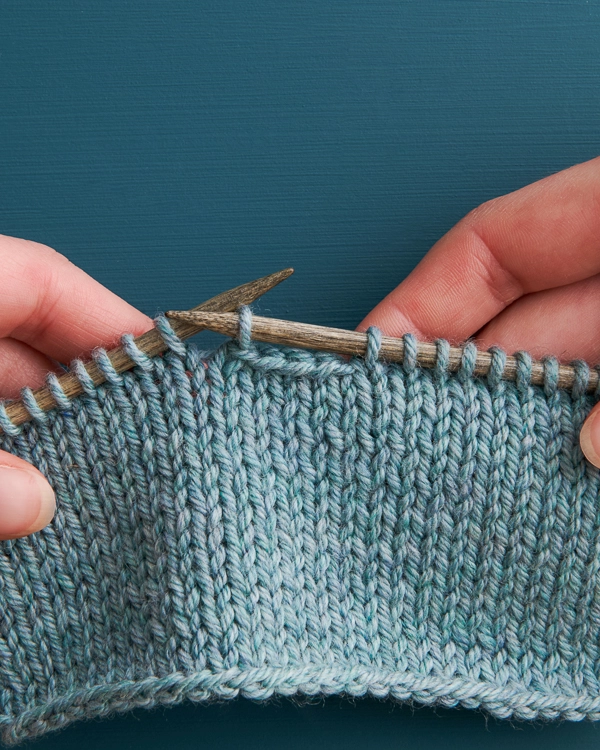
Step 1 (Bind Off): Slip one stitch purlwise with yarn in front, slip one stitch purlwise with yarn in back (wyib). Pass the first slipped stitch over the second and off the needle to bind off one stitch. Continue by slipping one stitch purlwise wyib, then passing the previous stitch over and off the needle. Repeat that last step— slip one purlwise with yarn in back, pass stitch over—as many times as required for the buttonhole in your pattern. Our example is a 4-stitch buttonhole, so we bound off a total of 4 stitches (shown above).
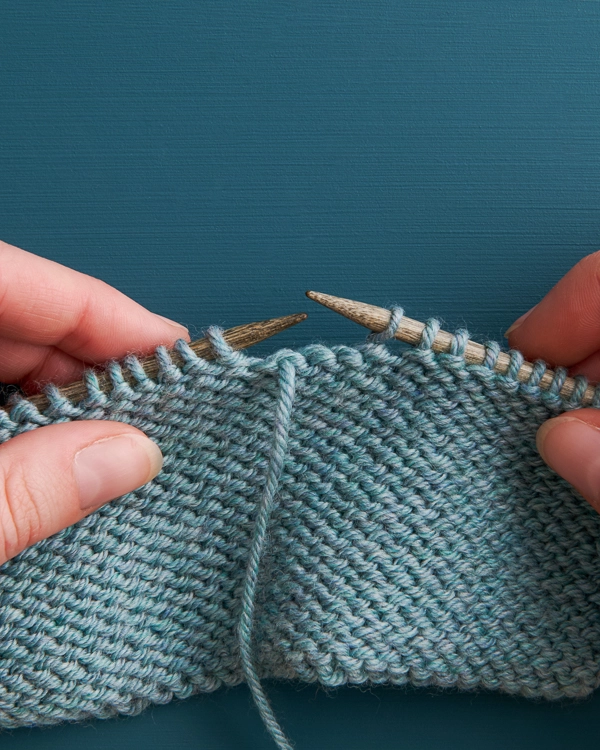
Slip the remaining bind-off stitch from the right needle to the left needle, then turn your work so the wrong side is facing you and the working yarn is coming from the left side of the buttonhole (shown above).

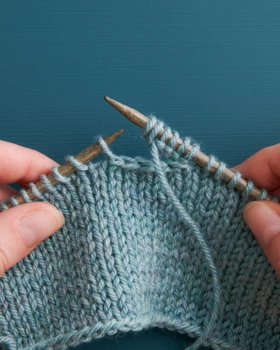
NOTE: For help with the cable cast on used in this section, either follow along with the video above or visit our Cable Cast On Tutorial for step-by-step instructions.
Step 2 (Cast On): With the wrong side of the work facing you, move the yarn to the back, and use a Cable Cast On to cast on one stitch more than you bound off—so in our example, 5 stitches (shown above left). Now turn your work so the right side is facing you once again, with the working yarn on the right needle (above right).
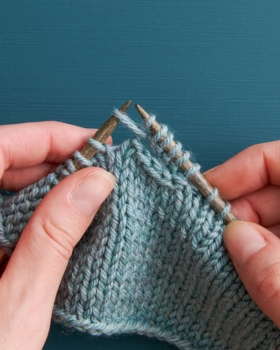
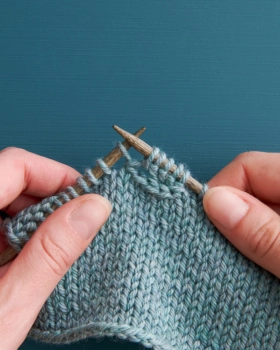
Step 3 (Close Buttonhole): With the right side of the work facing you, move the yarn to the back and slip one stitch purlwise from the left needle to the right. Pass the last Cable Cast On stitch over the slipped stitch to close the buttonhole (above left), then slip the resulting stitch back to the left needle (above right).
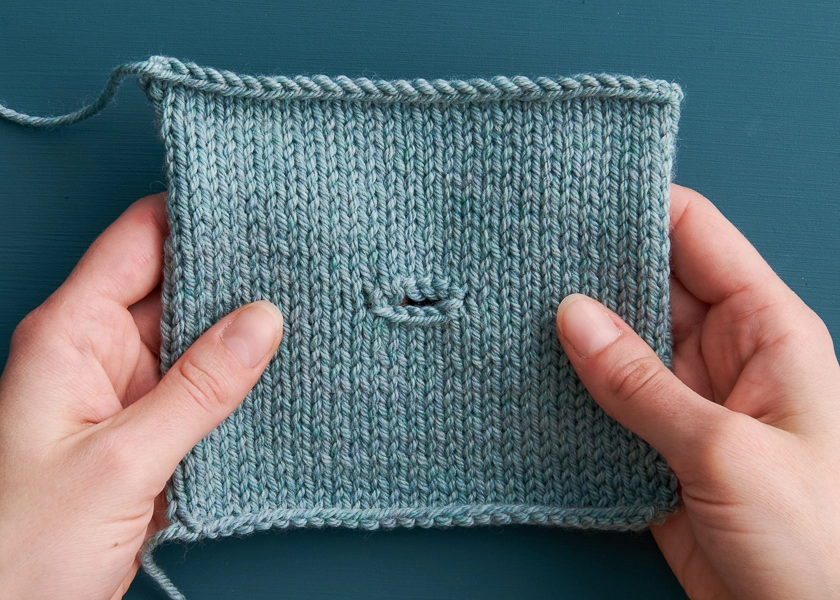
Here’s how your finished buttonhole will look! You can make it larger or smaller by changing the number of stitches you bind off and cast on.
Open Buttonholes
You can also use this to create decorative details—like in Ainur Berkimbay’s Aperture Pullover pattern—where buttonholes of varying widths create a beautiful lattice-like sweater yoke. In the Aperture Pullover, you’ll work Open Buttonholes just before a section of Yoke shaping, then return to close the buttonhole once the shaping is complete. Here’s how…
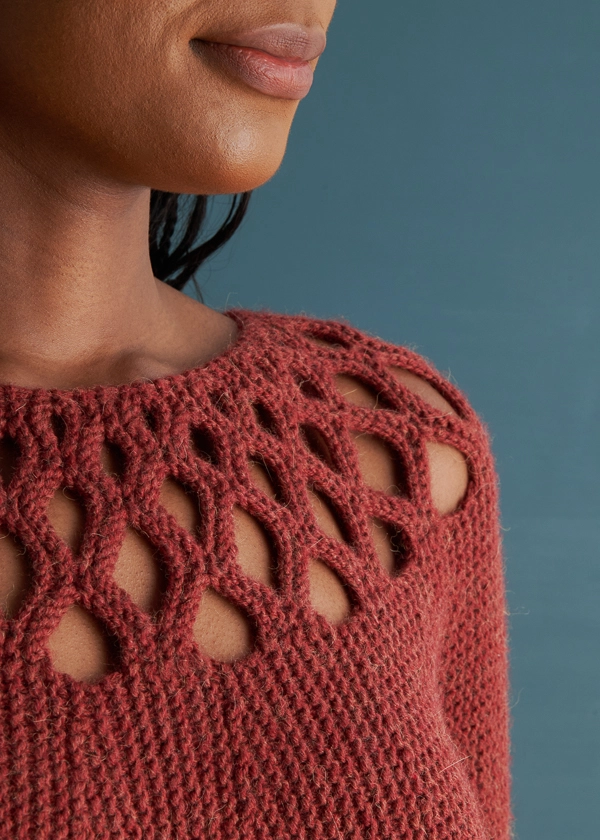
To work an Open Buttonhole, work Steps 1 and 2 of the Horizontal One-Row Buttonhole Tutorial above, but do not go on to Step 3 to close the buttonhole. Instead, continue with the pattern instructions and work the shaping, then work Step 3 of the Horizontal One-Row Buttonhole Tutorial when instructed to by the pattern. An easy way to make amazingly beautiful openwork knitting!
Tutorial written by Andrea Lotz + Whitney Van Nes for Purl Soho.
Looking for more inspiration? Explore all of our knitting patterns (including tons of free knitting patterns) and knitting tutorials, buy one of our many knitting kits and yarn bundles, and shop for beautiful yarn. We have over 55 gorgeous natural fiber yarns in 1,000s of magnificent colors, designed to bring integrity, beauty, and joy to your next knitting project and only available at Purl Soho!


Similar Posts You Might Enjoy:




Wow! Thank you. My button holes will look much better in future!
Hi Joy!
You’re so very welcome! That makes us so happy to hear. We’re thrilled the tutorial helped. Here’s to beautifully tidy buttonholes in all your future projects!
Warmly,
Megan